
Card Combination
Meaning of The Hanged Man and Nine of Pentacles Combination: Luxury Surrendered for Truth
Abundance questioned from within
Picture a pair of kitchens. In the first, every surface gleams. Copper pots from a Parisian supplier hang in descending order. A marble countertop holds a single perfect lemon, positioned as if for a photograph. The chef who owns this kitchen can prepare any classical dish flawlessly — and increasingly prepares nothing at all, because the kitchen has become a monument to competence rather than a place where actual cooking happens. In the second kitchen, the counters are cluttered, the stove has burn marks, and someone is hanging upside down from a ceiling rack, discovering that the kitchen looks entirely different from this angle. That person is about to cook the most honest meal of their life.
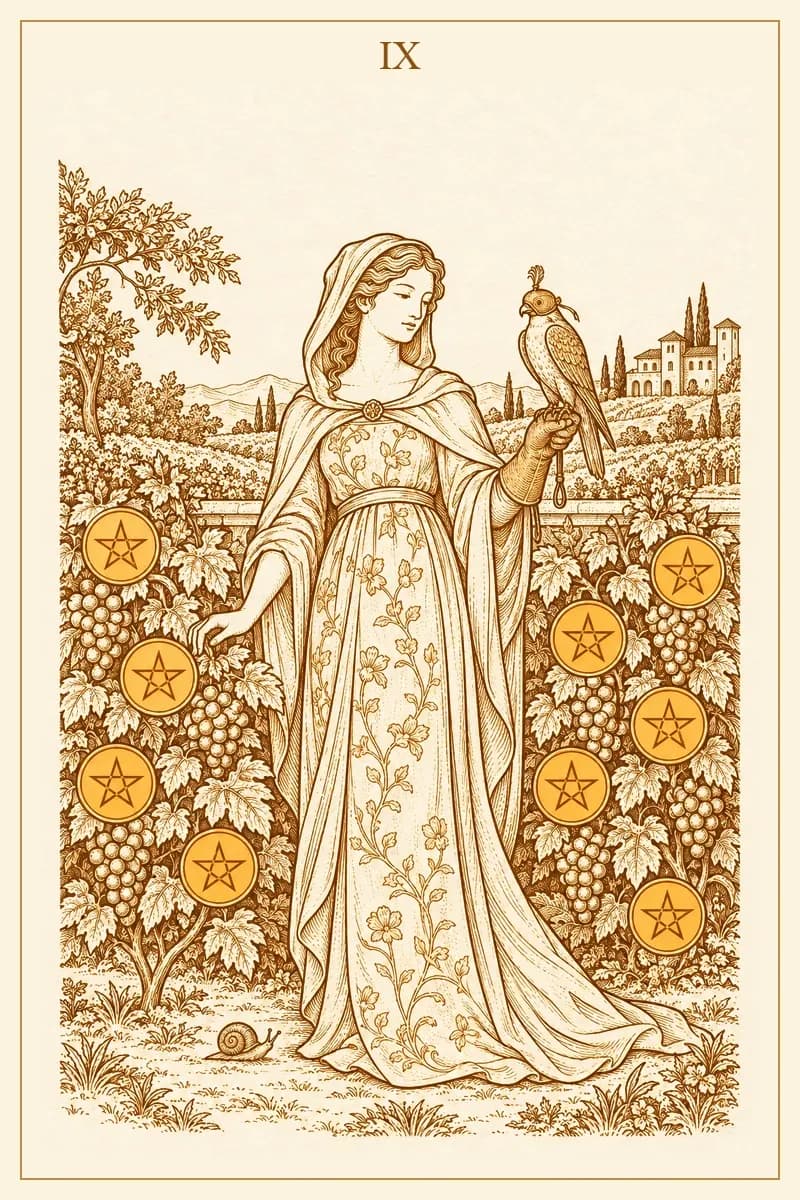
The Nine of Pentacles depicts a woman standing in a lush garden, a falcon perched on her gloved hand. She is self-sufficient, elegant, and surrounded by abundance she built herself. This is not inherited wealth — it is earned comfort, the reward of disciplined effort and excellent taste.
The Core Tension
The Nine of Pentacles has achieved what most people spend their lives pursuing: material security combined with personal refinement. Her garden is beautiful because she cultivated it. Her falcon is trained because she trained it. Her independence is real because she built it herself, one deliberate choice at a time. There is nothing false about her accomplishment.
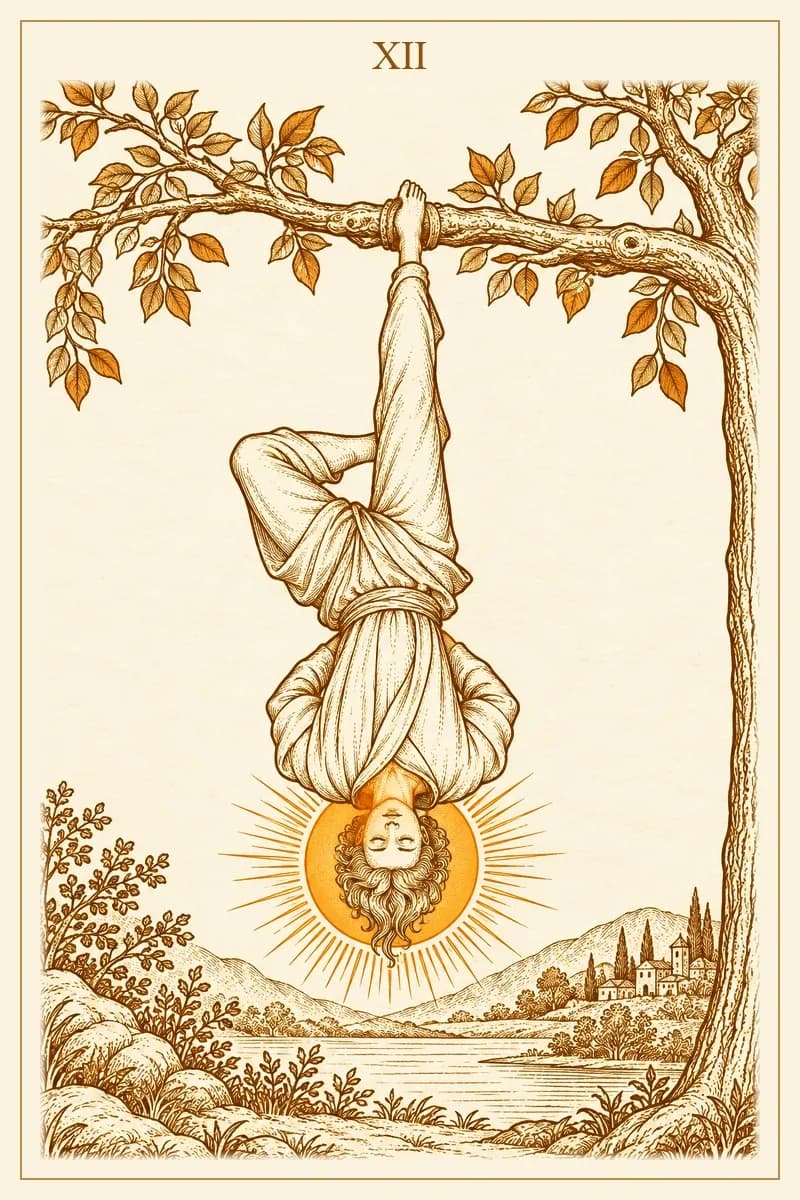
The Hanged Man enters this garden not to destroy it but to question its completeness. He does not doubt the abundance — he doubts whether the abundance has become the boundary of her world. The garden is stunning. But she has not left it in a long time. The falcon hunts on her command. But she has not flown herself. The comfort is genuine. But it has become a container rather than a platform.
Like the chef whose kitchen has become too precious to cook in, the Nine of Pentacles risks turning her achievement into a museum of her own success — perfectly maintained and fundamentally static.
Love & Relationships
This combination in romantic contexts often describes someone who has built such a complete life that there is no obvious space for another person in it. The Nine of Pentacles' independence is attractive — people are drawn to self-sufficiency — but the same completeness that attracts can also repel. Where does a partner fit in a garden that has no unmaintained corners?
The Hanged Man suggests that the vulnerability required for deep partnership means allowing your carefully cultivated life to be disrupted. Not demolished — disrupted. Inviting someone into a finished space is decorating. Inviting someone into a space you are willing to rearrange is intimacy.
For those in established relationships, this pairing can indicate a period where one partner's self-sufficiency has become isolating. The ability to handle everything alone is a strength that, unchecked, eliminates the need for partnership. The Hanged Man asks: is your independence serving this relationship or protecting you from it?
Career & Purpose
Professionally, The Hanged Man and Nine of Pentacles describe the accomplished professional at a crossroads they may not recognize. The career is successful. The reputation is established. The income is comfortable. And somewhere beneath this polished surface is a restlessness that comfort alone cannot address.
This combination frequently appears when someone is considering a radical professional shift — not because their current path is failing but because it has succeeded so thoroughly that it no longer challenges them. The executive who considers teaching. The successful consultant who wants to create rather than advise. The chef who abandons fine dining to open a street food cart.
The Hanged Man validates this impulse. The Nine of Pentacles' garden will not disappear while you explore what exists beyond its walls. Your skills, your reputation, your financial foundation — these remain. What changes is your relationship to them. They shift from destination to launching point.
Shadow Side
The shadow is golden cage syndrome — using accomplishment as an excuse to avoid growth. The life is too comfortable to risk, the garden too beautiful to leave, the kitchen too perfect to mess up with actual cooking. Abundance becomes a justification for stagnation.
The reverse shadow is performative renunciation. Publicly surrendering comfort while privately maintaining every safety net. The Hanged Man's sacrifice is genuine. Reducing it to aesthetic — the wealthy person who talks about simplicity while retaining every advantage — drains both cards of their power.
Action Steps
- 1Identify one area of your life where your success has become a container rather than a platform, and take one specific action that reintroduces the creative discomfort you have been avoiding.
- 2Invite genuine feedback from someone who has nothing to gain from flattering you, specifically about whether your current trajectory reflects your deepest interests or merely your established competence.
- 3Deliberately do something this week that your curated life would normally exclude — something messy, uncertain, or below your usual standard — and notice what it reveals about what you have been protecting.
Related Pairings
Continue through published pairings that share The Hanged Man or Nine of Pentacles.

Momentum versus surrender
Meaning of The Chariot and The Hanged Man Combination: Momentum Meets Stillness
Earned independence
Meaning of The Chariot and Nine of Pentacles Combination: Victory and Solitude

Control vs release
Meaning of The Emperor and The Hanged Man Combination: When Control Meets Surrender

Freedom that imprisons
Meaning of The Devil and Nine of Pentacles Combination: Gilded Solitude
Fertile suspension
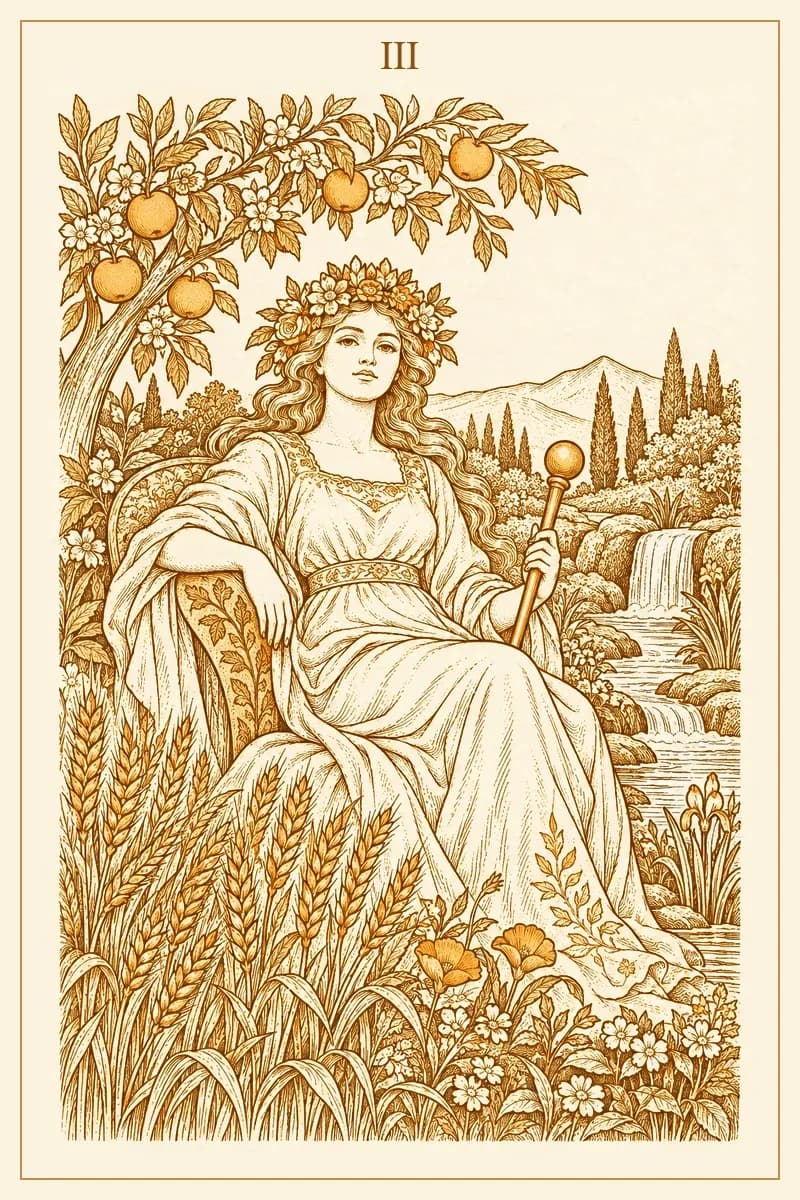
Meaning of The Empress and The Hanged Man Combination: Fertile Pause
Discipline, abundance, self-mastery
Meaning of The Emperor and Nine of Pentacles Combination: Discipline Earns Abundance
✦ Bring it to the cards ✦
Bring The Hanged Man and Nine of Pentacles into your own reading
Use this pairing as a starting point, then let a spread listen to the situation that is actually yours.
Begin a contextual reading