
Card Combination
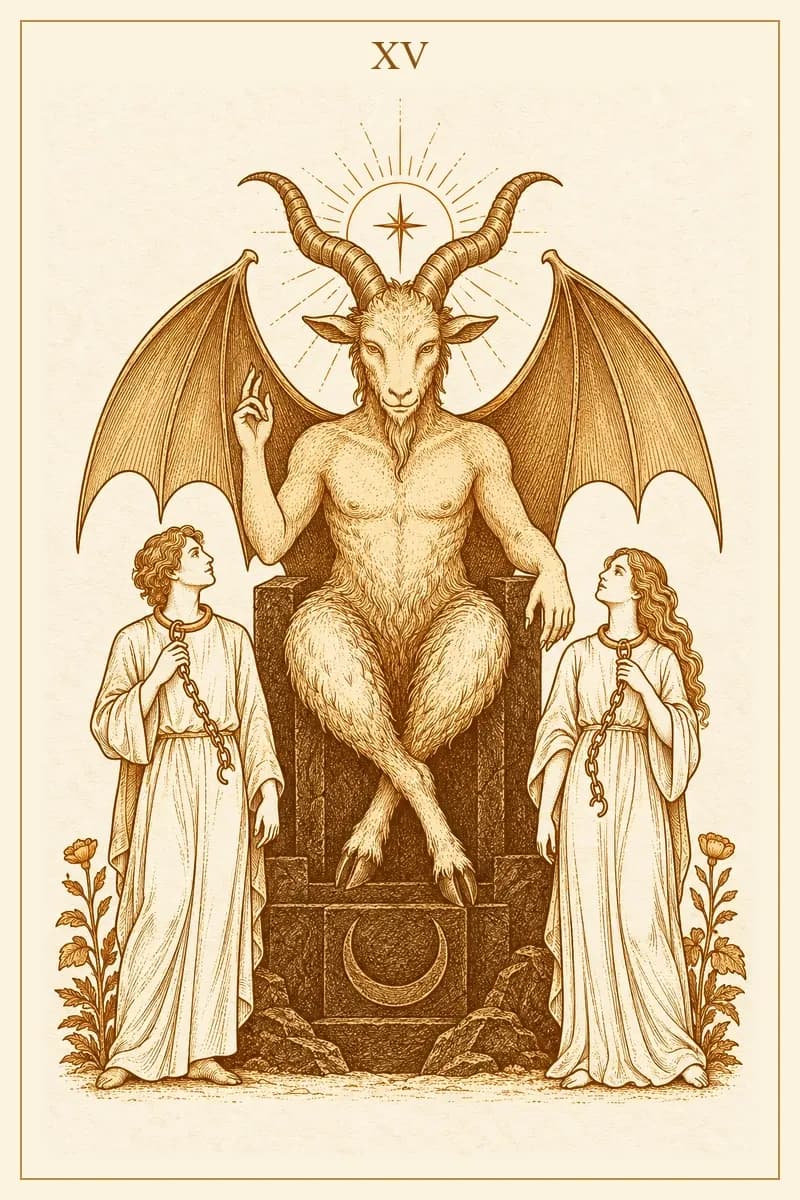
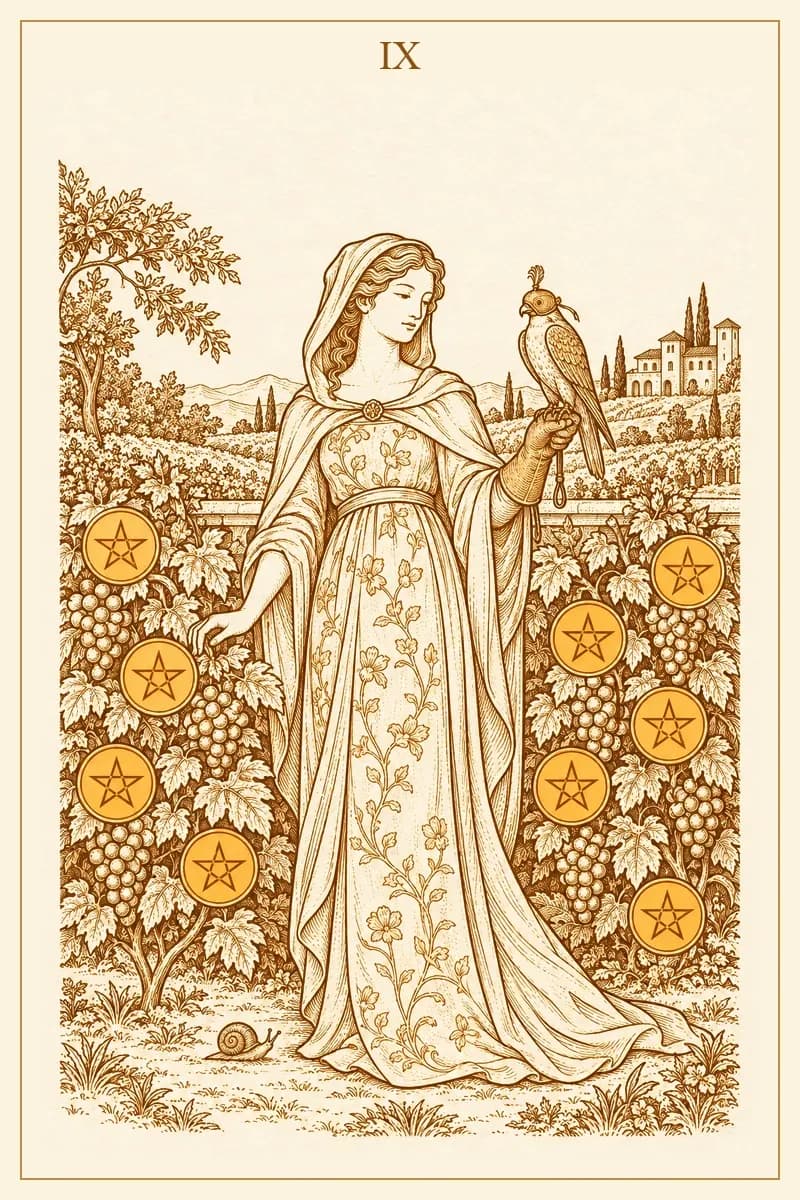
Meaning of The Devil and Nine of Pentacles Combination: Gilded Solitude
Freedom that imprisons
The tea is already steeped. She poured it at exactly the right moment — she always does — and now she is sitting in the garden she cultivated herself, in the silence she engineered, with the falcon on her wrist that she trained from a fledgling. Everything is perfect. And she has not spoken to anyone in four days. Not because she is unhappy. Because she stopped needing people so thoroughly that solitude stopped feeling like a choice and started feeling like the water she swims in.
The Nine of Pentacles enters this reading already mid-ceremony. The tea has been chosen, measured, heated to the precise temperature of mastery. The Devil enters not with chains rattling but with the quiet understanding that some chains are made of pride, and some prisons are built with exquisite taste. The pairing of these two cards is not about dramatic enslavement. It is about the moment the ceremony meant to center you starts to contain you instead.
The Devil's signature is compulsion dressed as preference. He does not always appear as excess. Sometimes he appears as control — the need to manage every variable, the refusal to be vulnerable to another person's timing, the way "I prefer to be alone" gradually covers over "I am afraid of needing anyone." The Nine of Pentacles has earned everything she has. The question the Devil introduces is: at what point did earning become hoarding, and self-sufficiency become self-imprisonment?
The Core Tension
The Nine of Pentacles represents one of the deck's most genuinely admirable achievements — someone who has worked for her independence, cultivated her own life, and now stands in the middle of it with real dignity. This is not a performance of competence. It is actual competence, actual beauty, actual self-possession.
The Devil does not attack that achievement. He infiltrates it. He uses the legitimate pride of the Nine's position to make the cost of that position invisible. The compulsion here is not toward excess but toward control — toward a self-sufficiency so total that it forecloses the kind of intimacy that requires you to be insufficient, to need something, to let another person's presence actually change the shape of the room. The tension is between sovereignty and openness, and the question is whether the Nine has chosen her solitude or simply stopped being able to imagine an alternative.
Love & Relationships
In romantic terms, this pairing describes someone who has become so good at being alone that partnership now presents as a logistical problem rather than an emotional possibility. The Nine of Pentacles has organized her life with precision. She knows what she needs, when she needs it, and how to provide it for herself. This is real. And it can become a wall.
The Devil in this context is not a bad partner — it may be the pattern of choosing partners who don't challenge the wall, or leaving before anyone gets close enough to see over it, or finding the demands of genuine intimacy so disruptive to the established order that love starts to feel like a threat to the self rather than an extension of it. What makes this difficult is that the Nine's independence is not pathological. It was probably hard-won. The work is in distinguishing what she genuinely values from what she has simply stopped being willing to risk.
Career & Purpose
Professionally, the Nine of Pentacles and the Devil together describe someone who has built impressive individual accomplishment at the cost of collaboration, mentorship, or institutional belonging. The work is excellent. The portfolio is real. And they have done it largely alone, not because no one offered to help but because accepting help felt like a debt, or a vulnerability, or evidence that they weren't as capable as they needed to be.
The Devil's contribution here is the compulsive nature of that independence — the way declining collaboration stops being a preference and becomes a reflex. The cost shows up in missed opportunities that required someone else's network, in work that is technically masterful but that nobody knows about because the Nine built it in isolation.
Shadow Side
The shadow of this pairing is the life that is correct but not alive. Everything is arranged perfectly. The beauty is real. The skill is real. The autonomy is real. And something — connection, surprise, the experience of being genuinely affected by another person — has been quietly excised from the arrangement.
There is also a shadow around the relationship between material security and emotional risk. When you have enough, you have enough to lose. The Nine's prosperity can become a reason not to gamble, not to open up, not to let anything in that hasn't been vetted and controlled.
Action Steps
- 1Notice one place where your self-sufficiency is protecting you from something that would actually nourish you if you let it in.
- 2Invite someone into a part of your life that you usually manage alone — and sit with the discomfort of being seen in the middle of it.
- 3Distinguish, honestly, between one thing you do out of genuine preference and one thing you do because it keeps you safe.
Related Pairings
Continue through published pairings that share The Devil or Nine of Pentacles.
Ambition vs obsession
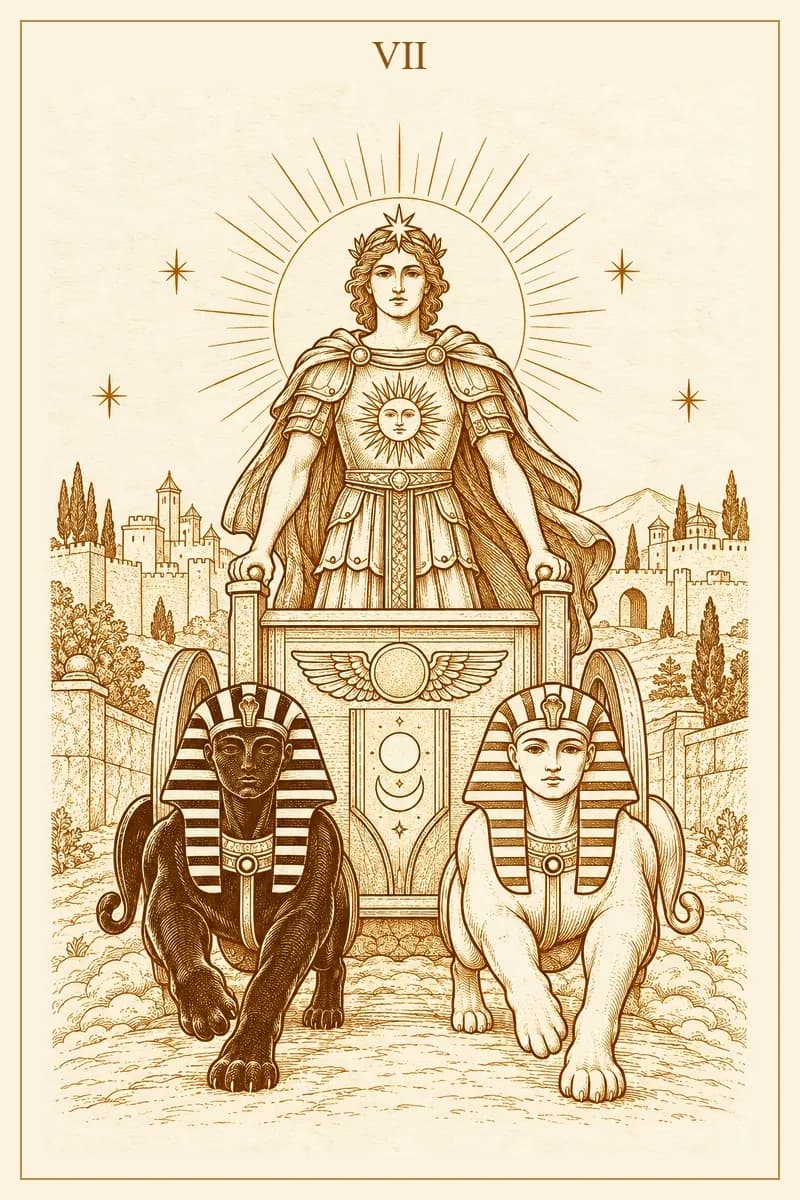
Meaning of The Chariot and The Devil Combination: Ambition in Chains
Earned independence
Meaning of The Chariot and Nine of Pentacles Combination: Victory and Solitude
Hidden compulsion
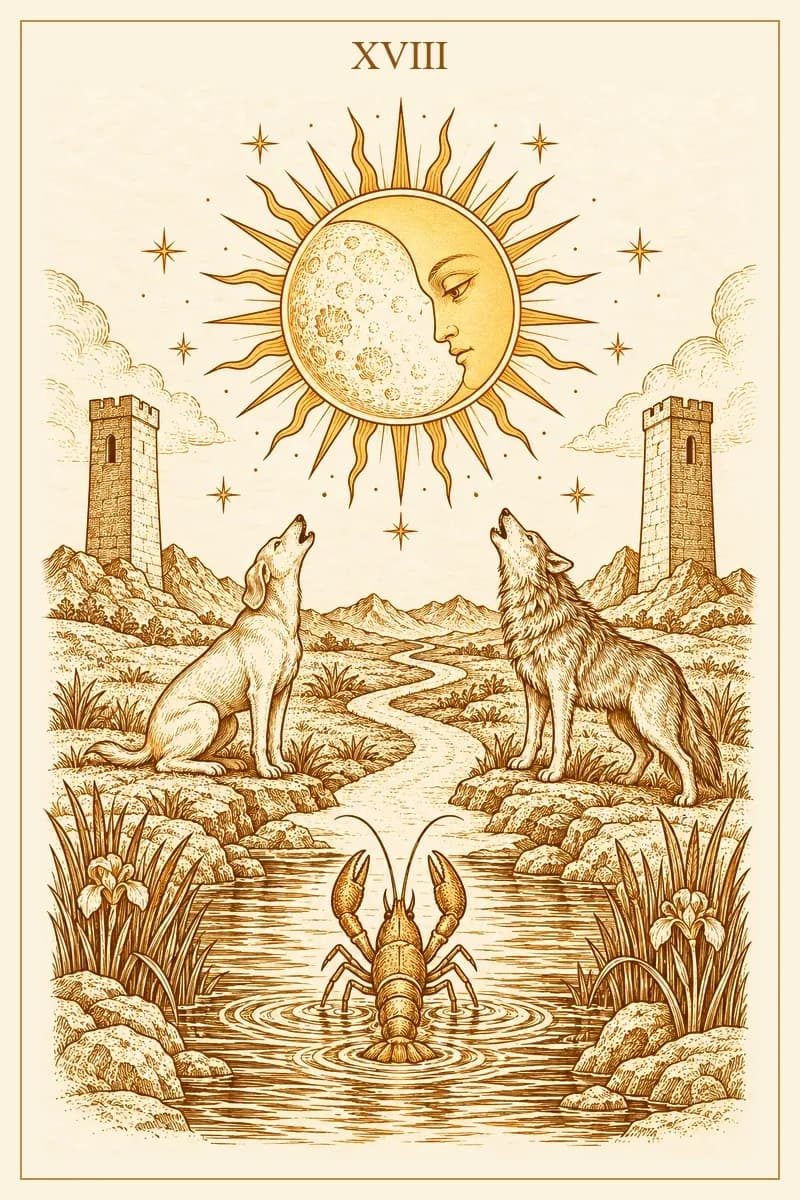
Meaning of The Devil and The Moon Combination: Shadows That Bind
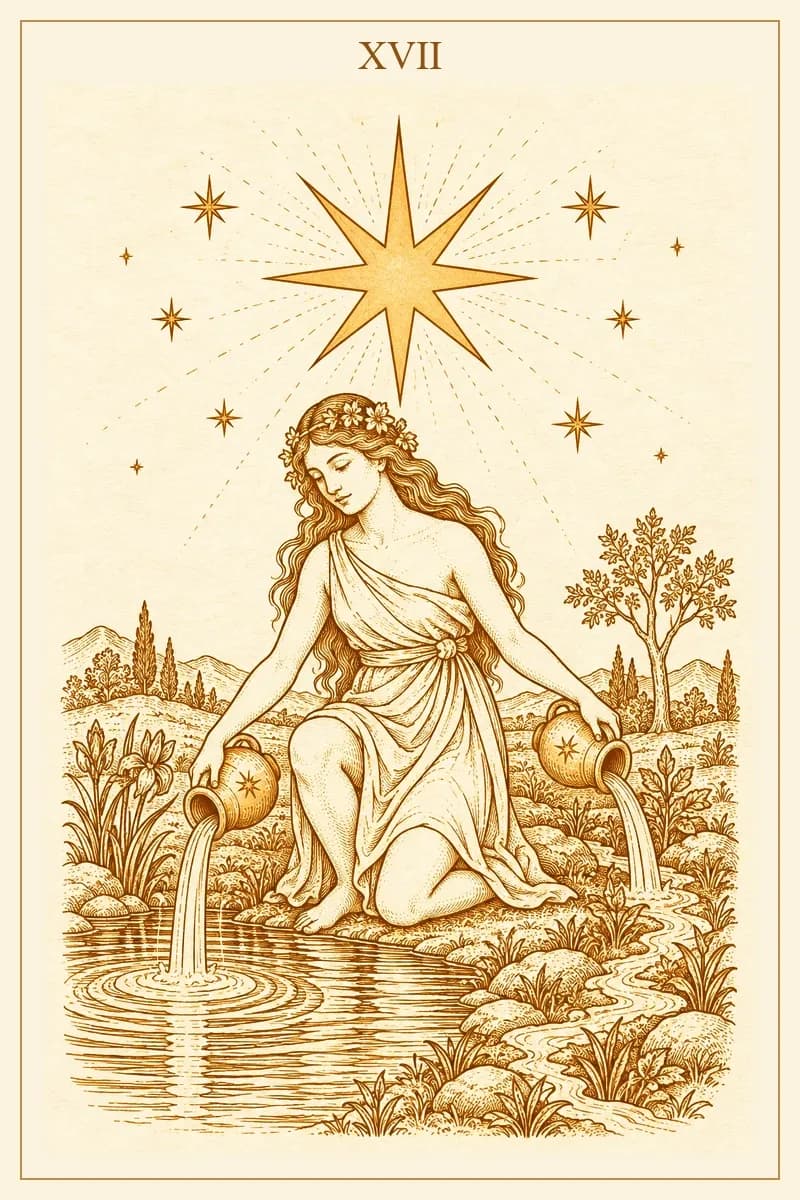
Bondage versus healing
Meaning of The Devil and The Star Combination: Addiction vs. Recovery
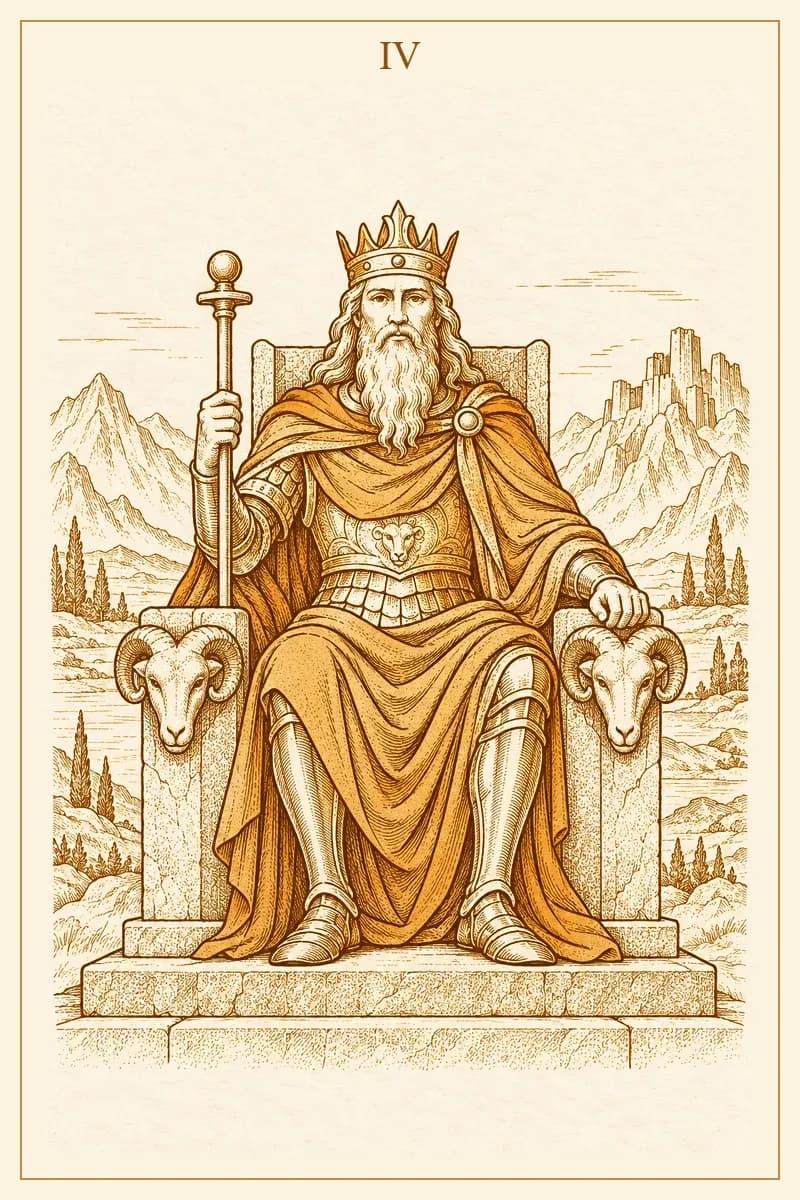
Discipline, abundance, self-mastery
Meaning of The Emperor and Nine of Pentacles Combination: Discipline Earns Abundance
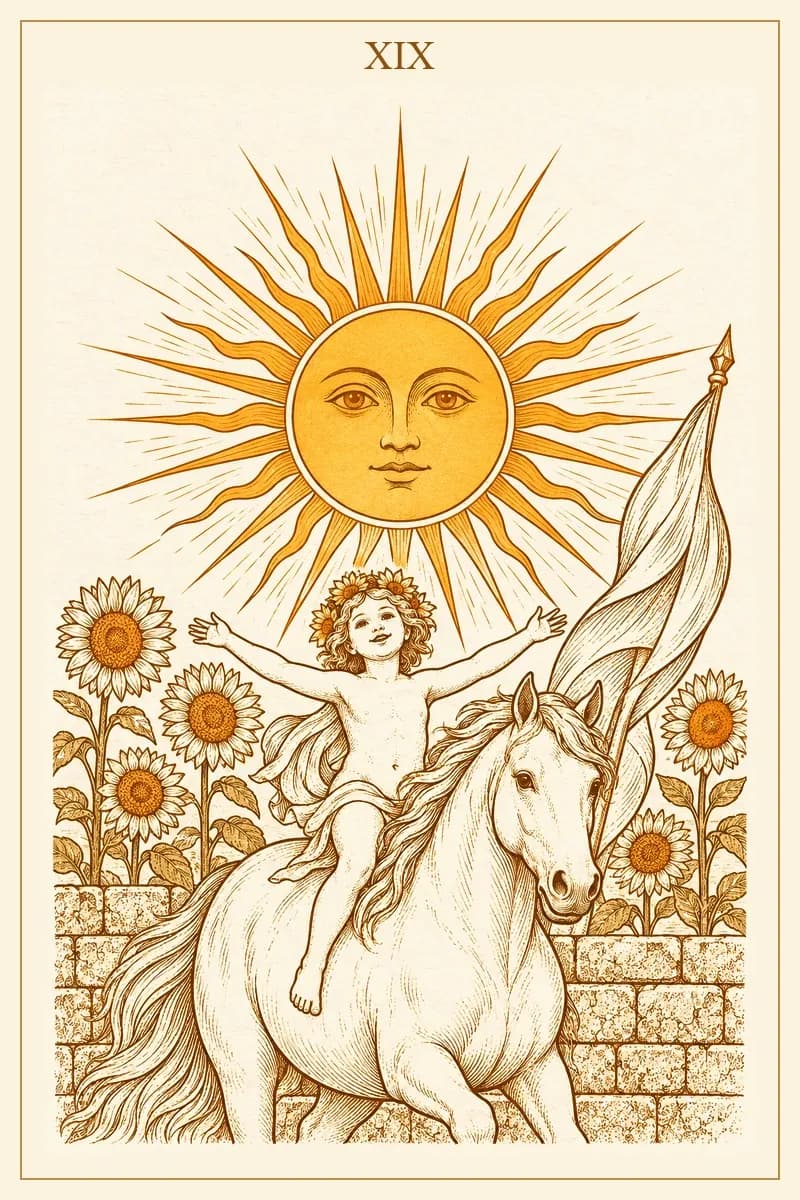
Liberation through exposure
Meaning of The Devil and The Sun Combination: Chains in the Light
✦ Bring it to the cards ✦
Bring The Devil and Nine of Pentacles into your own reading
Use this pairing as a starting point, then let a spread listen to the situation that is actually yours.
Begin a contextual reading