
Card Combination
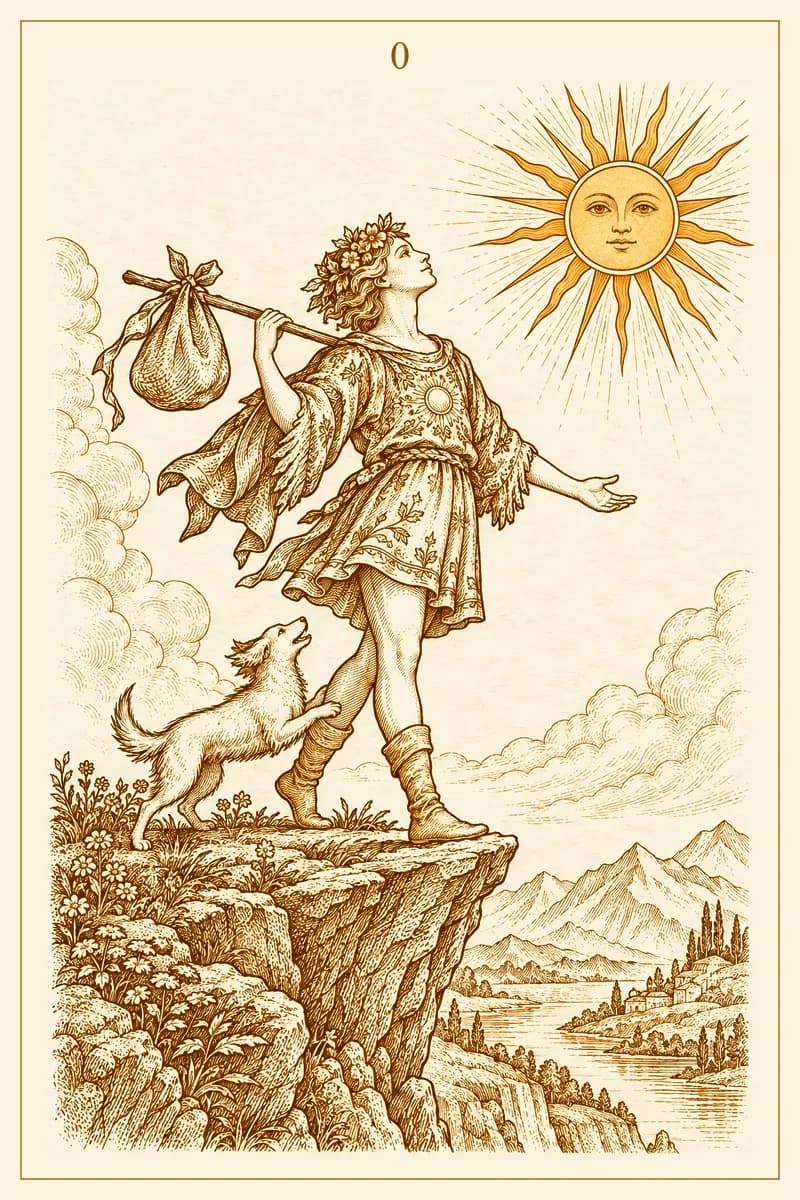
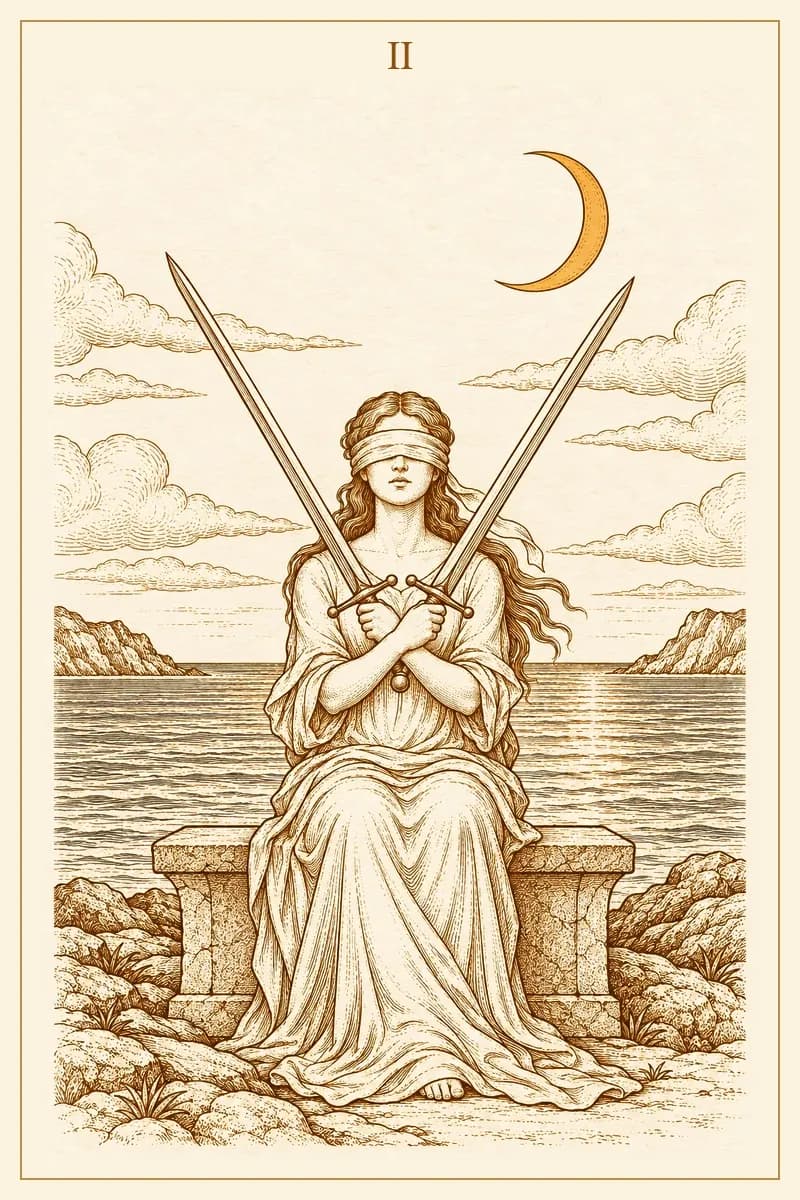
Meaning of The Fool and Two of Swords Combination: The Blindfolded Gamble
Paralysis versus momentum
She is sitting at the poker table with two cards face-down in front of her, blindfold tight across her eyes, arms crossed over her chest like a woman who has decided that not looking is the same as not losing. The pot has been building for hours. Everyone else folded or went all-in rounds ago. She remains, frozen in the specific posture of someone who believes that refusing to act is a form of strategy. Then the Fool walks in, pulls up a chair, and pushes his entire stack to the center without glancing at his hand.
The table goes silent. Not because his move is brilliant — it might be catastrophic — but because his willingness to act without certainty exposes the precise nature of her stillness. She isn't waiting for more information. She has enough information. She is waiting for a guarantee that no card game has ever offered anyone.
The Two of Swords holds two blades in balance, eyes covered, the sea behind her calm and the moon above her thin. She has constructed a position where no choice can wound her because no choice has been made. The Fool doesn't construct positions. He walks off edges. And the question this pairing forces to the surface is whether her crossed swords are protecting something worth protecting or simply preventing a hand from being played.
The Core Tension
The Fool moves without analysis. The Two of Swords analyzes without moving. Neither approach is complete on its own, but they fail in opposite directions — the Fool risks everything on insufficient data, the Two of Swords risks nothing and watches the data become irrelevant.
What makes this pairing volatile is that each figure holds exactly what the other lacks. The Fool carries the capacity for decisive action, the willingness to commit chips to the center without knowing the outcome. The Two of Swords carries the awareness that choices have consequences, that some gambles destroy what they cannot rebuild. Together, they describe the gap between knowing you need to decide and actually deciding.
The tension is not intellectual. It is physical. The Two of Swords feels it in the arms that ache from holding blades too long, in the blindfold that has become comfortable because removing it means seeing what the decision costs. The Fool feels nothing — and that absence of feeling is its own kind of blindness.
Love & Relationships
In romantic readings, this pairing exposes the specific deadlock where one person has already leaped emotionally and the other is still sitting with crossed arms, weighing options that grow stale the longer they are weighed. The Fool is the partner who says what they feel before calculating whether it is safe. The Two of Swords is the partner who has feelings but has filed them behind a locked door marked "pending review."
The danger here is not conflict but stagnation. The Two of Swords' refusal to choose is itself a choice — it is the choice to let the relationship remain undefined, to hold both attraction and fear in suspension until the person who leaped first gets tired of hovering midair. The Fool's openness can either melt the impasse or crash against it and shatter.
Career & Purpose
Professionally, this combination surfaces wherever a decision has been delayed past its useful shelf life. The Two of Swords is the project that has been in "evaluation phase" for six months, the hire that nobody approves or rejects, the strategy meeting that produces another strategy meeting. The Fool is the colleague who skips the committee and builds the prototype.
The productive version of this pairing is the Fool whose bias toward action forces the Two of Swords to finally commit resources, to pick a direction even if the data is incomplete. The destructive version is the Fool who acts so recklessly that the Two of Swords feels vindicated in never acting at all — proof that movement leads to disaster, so stillness must be wisdom.
Shadow Side
The Two of Swords' shadow in this pairing is the comfort of indecision disguised as prudence. There is a version of caution that is simply cowardice wearing analytical clothing, and the Two of Swords knows this but cannot admit it because the admission would require removing the blindfold. The shadow is not the crossed swords — it is the preference for the blindfold.
The Fool's shadow is momentum without conscience. Leaping is not inherently virtuous. Some cliffs have rocks at the bottom, and the Fool who dismisses the Two of Swords' hesitation entirely misses the legitimate warning encoded in those crossed blades: not every bet should be placed, not every river should be forded at night.
Action Steps
- 1Identify one decision you have been postponing not because you lack information but because you fear the consequence of choosing. Set a deadline — forty-eight hours — and commit to one direction when it arrives.
- 2Notice where someone else's willingness to act is making you uncomfortable. Examine whether your discomfort comes from genuine risk assessment or from the exposure of your own stalling.
- 3Pick one low-stakes area where you have been holding two options in suspension and deliberately fold one hand. The practice of choosing in small matters builds the muscle for choosing in large ones.
Related Pairings
Continue through published pairings that share The Fool or Two of Swords.
Reckless Momentum
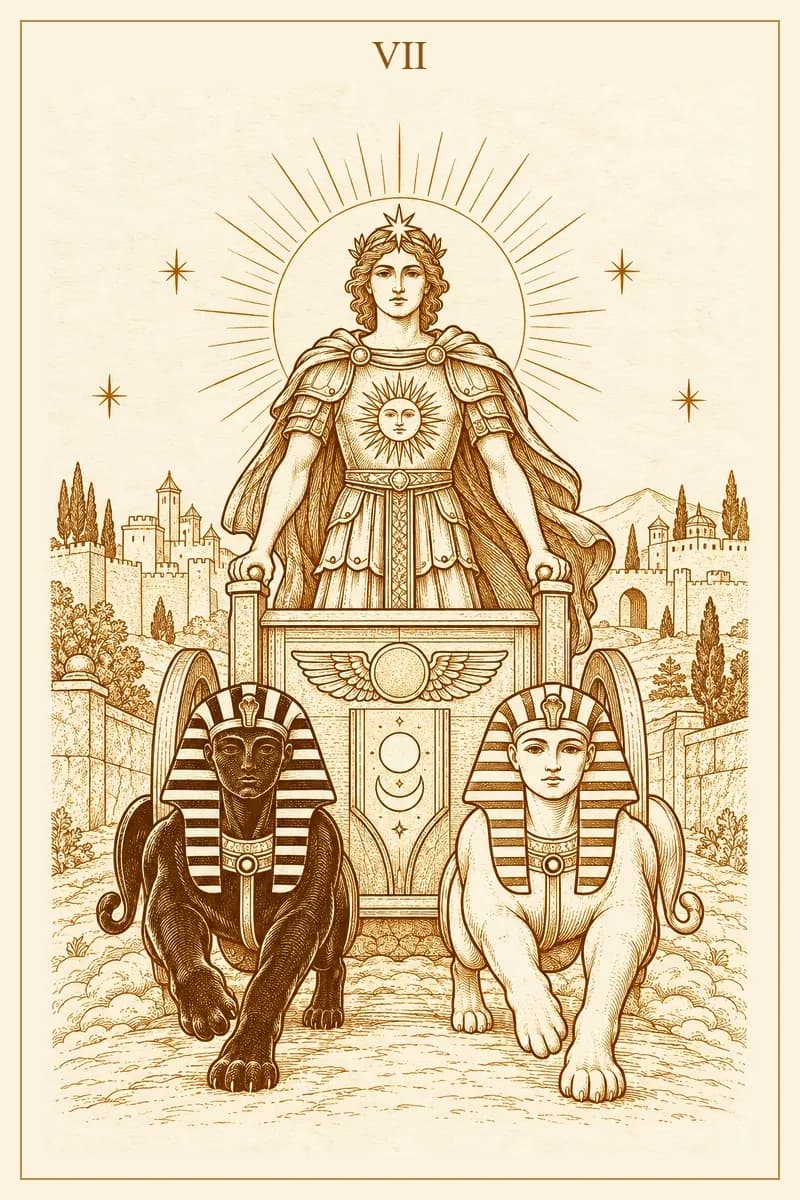
Meaning of The Fool and The Chariot Combination: Reckless Momentum
Blocked momentum
Meaning of The Chariot and Two of Swords Combination: Stalled Drive
Innocence Meets Appetite
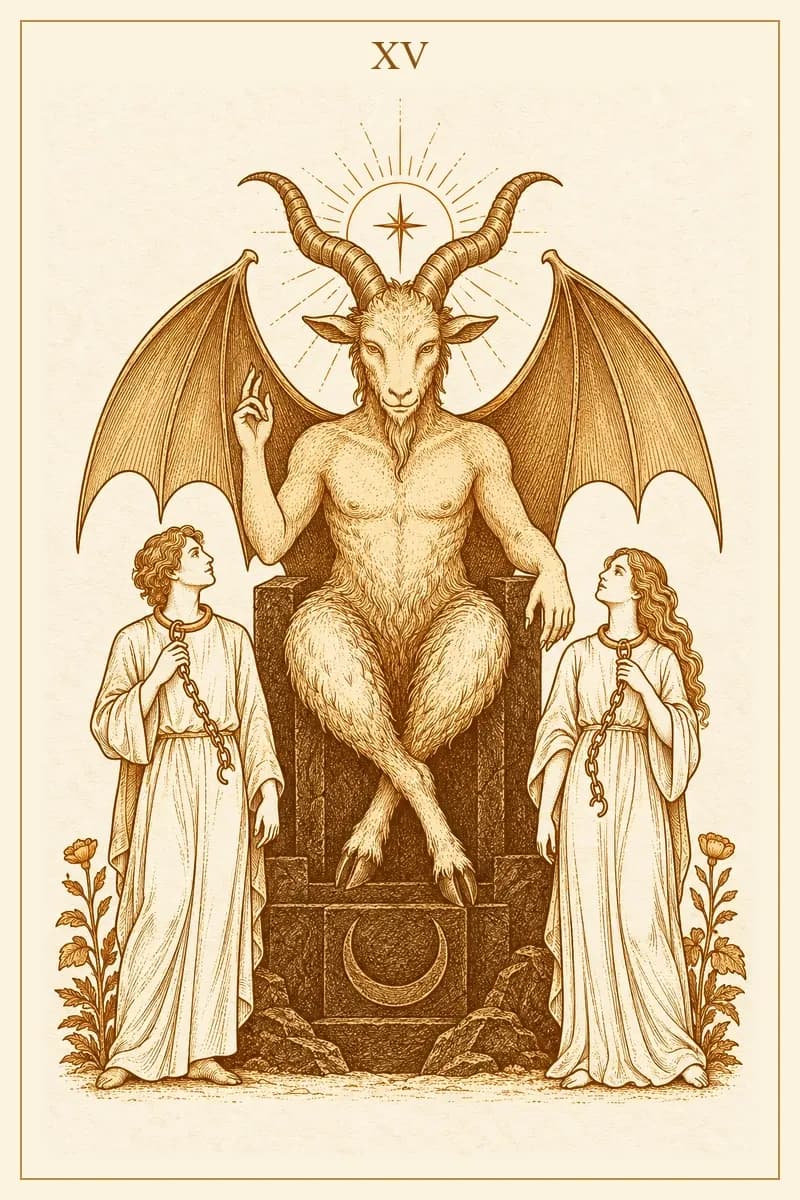
Meaning of The Fool and The Devil Combination: Innocence Meets Appetite
Willing blindness
Meaning of The Devil and Two of Swords Combination: Frozen Chains

Structured Freedom
Meaning of The Fool and The Emperor Combination: Structured Freedom
Forced decision
Meaning of The Emperor and Two of Swords Combination: Authority Meets Stalemate
✦ Bring it to the cards ✦
Bring The Fool and Two of Swords into your own reading
Use this pairing as a starting point, then let a spread listen to the situation that is actually yours.
Begin a contextual reading