
Card Combination
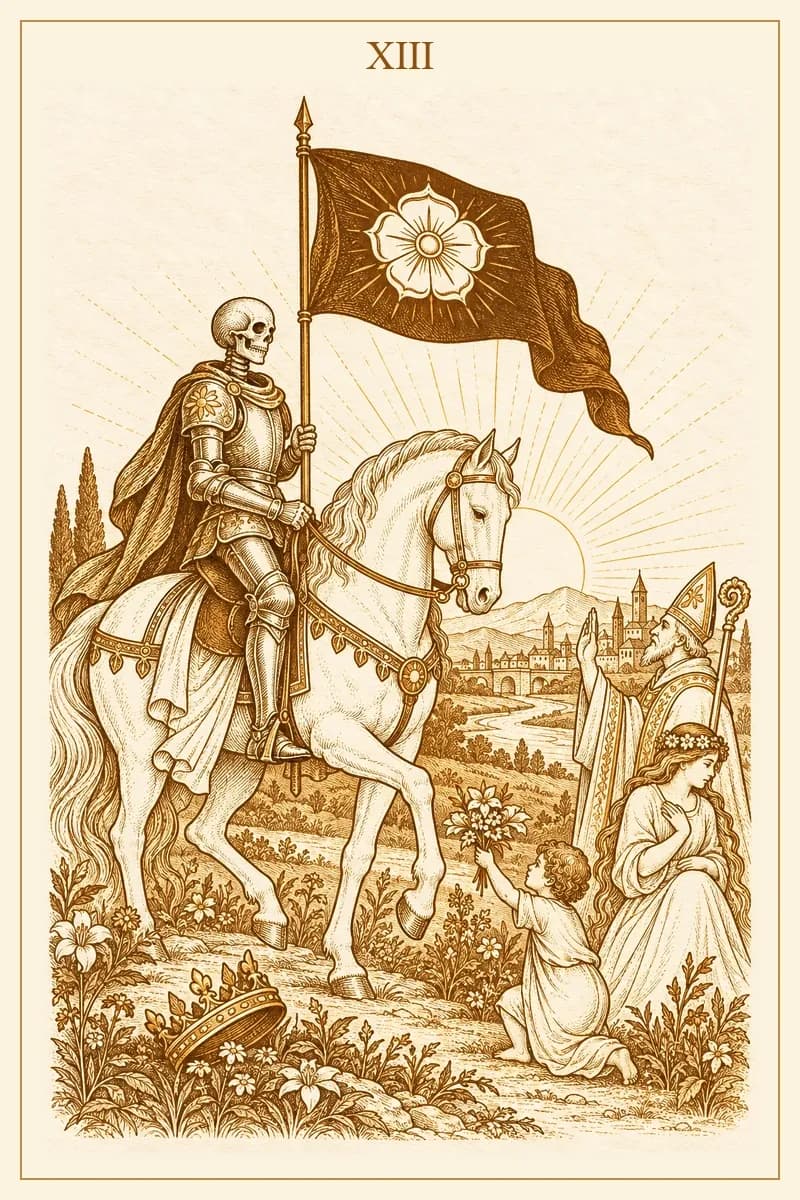
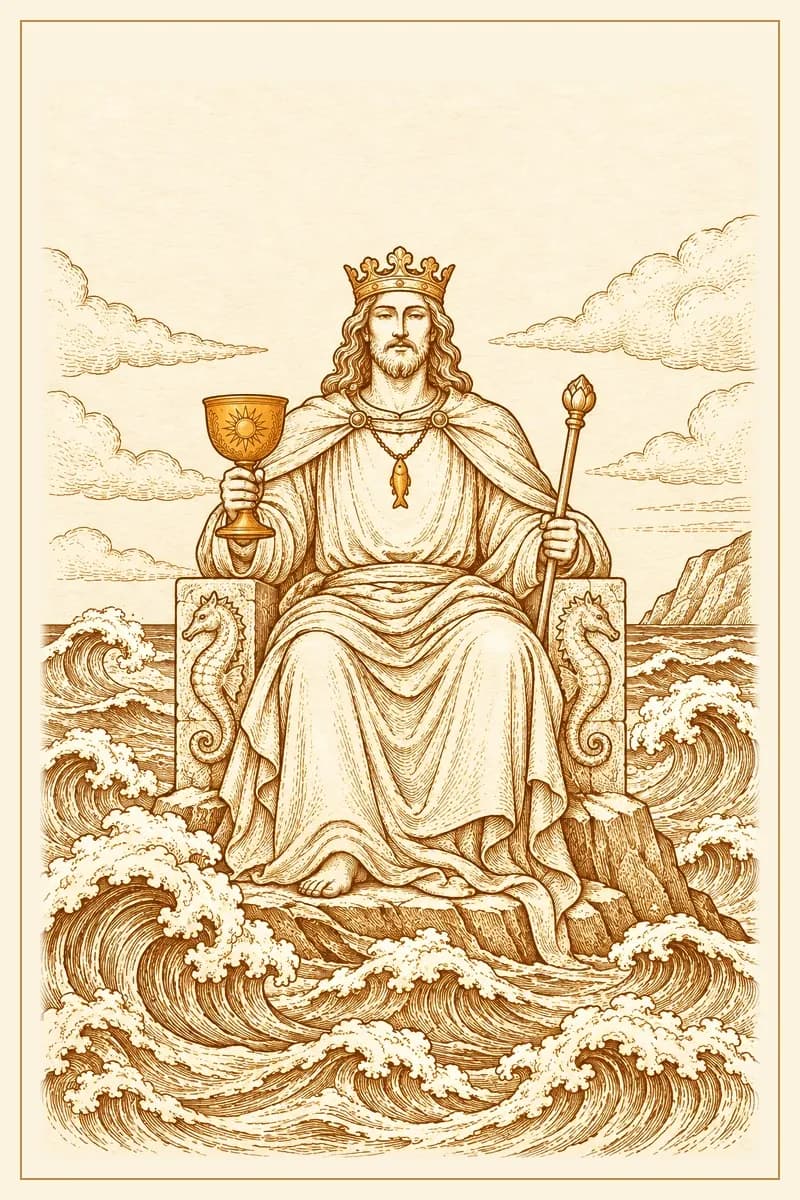
Meaning of Death and King of Cups Combination: Emotional Mastery Through Loss
Composed dissolution
The most convincing actor on stage is the one whose character dies mid-scene yet continues directing the orchestra from behind the curtain. Death and the King of Cups present exactly this contradiction: something is ending, irrevocably and completely, yet the hand holding the scepter refuses to tremble. One card strips away every familiar structure. The other sits on a throne surrounded by turbulent water, unmoved, sovereign over feelings that would drown lesser figures.
This is not denial. The King of Cups has always understood that mastery over emotion does not mean absence of emotion. He feels the tide pulling everything out to sea. He simply chooses which waves deserve his reaction and which deserve only his steady gaze. Paired with Death, that composure faces its most severe audition — the kind where the script burns and the actor must improvise in a language he barely speaks.
The paradox cuts both ways. Death demands authenticity. The King of Cups demands control. Together, they stage a performance where the protagonist must surrender the role he has played for years while maintaining enough presence to walk off-stage with dignity intact.
The Core Tension
Death operates without negotiation. It arrives as the final scene of an act that has run too long, pulling the curtain whether the performers are ready or not. The King of Cups, meanwhile, is the director who insists the show must continue with grace. He does not panic. He does not improvise recklessly. He adjusts.
The tension lives in this gap: radical ending versus measured response. Something in your emotional landscape — a relationship dynamic, a coping mechanism, an identity you built around being the calm one — is being dismantled. The King does not fight the dismantling. He watches it happen with the same steady expression he wears through every storm. But watching is not the same as processing. The real question is whether composure serves as a bridge to genuine transformation or merely a beautifully constructed wall against it.
Love & Relationships
In romantic contexts, this pairing signals the death of an emotional pattern rather than the death of love itself. The King of Cups partner — the one who always stays measured, always absorbs conflict without flinching — faces a relationship shift that his usual diplomacy cannot manage. The old dynamic is collapsing backstage while the audience still expects a flawless performance.
If you are this King, the transformation asks you to stop performing emotional availability and actually feel the disruption. If your partner is this King, understand that their calm exterior during a painful transition is not indifference. It is the only script they know. The relationship survives this passage only when both parties allow the old act to close without rushing to rehearse the next one.
Career & Purpose
Professionally, Death and the King of Cups point toward a leadership transition conducted under pressure. A project ends. A team dissolves. A role you occupied with quiet competence is eliminated. The King's gift here is real: he can manage the emotional fallout of an ending without creating additional chaos. Colleagues look to him because he does not amplify anxiety.
The danger is that this emotional steadiness becomes a performance that delays necessary grief. Organizations need leaders who can acknowledge that something valuable has ended, not leaders who smile through demolition as though the building was supposed to come down. Use the King's composure to guide others through the transition honestly, not to pretend the transition costs nothing.
Shadow Side
The shadow of this combination is emotional tyranny disguised as emotional maturity. The King of Cups, facing Death's insistence on total transformation, may weaponize his composure. He becomes the person who makes others feel irrational for grieving. He becomes the director who fires actors for crying during the final scene, forgetting that the scene was written to produce tears.
There is also the shadow of stalled transformation. Death requires something to actually die. The King's mastery can keep a dying thing on life support indefinitely — maintaining the appearance of a functioning relationship, career, or identity long after its vitality has departed. Composure without surrender is just a more elegant form of resistance.
Action Steps
- 1Identify one emotional role you have been performing past its expiration date and consciously step out of it, even if no replacement role exists yet
- 2Sit with discomfort for ten full minutes daily without managing, narrating, or resolving the feeling — let the curtain fall on your need to direct every internal experience
- 3Have one conversation where you speak from disruption rather than from composure, allowing someone to witness you without the costume of unshakeable calm
Related Pairings
Continue through published pairings that share Death or King of Cups.
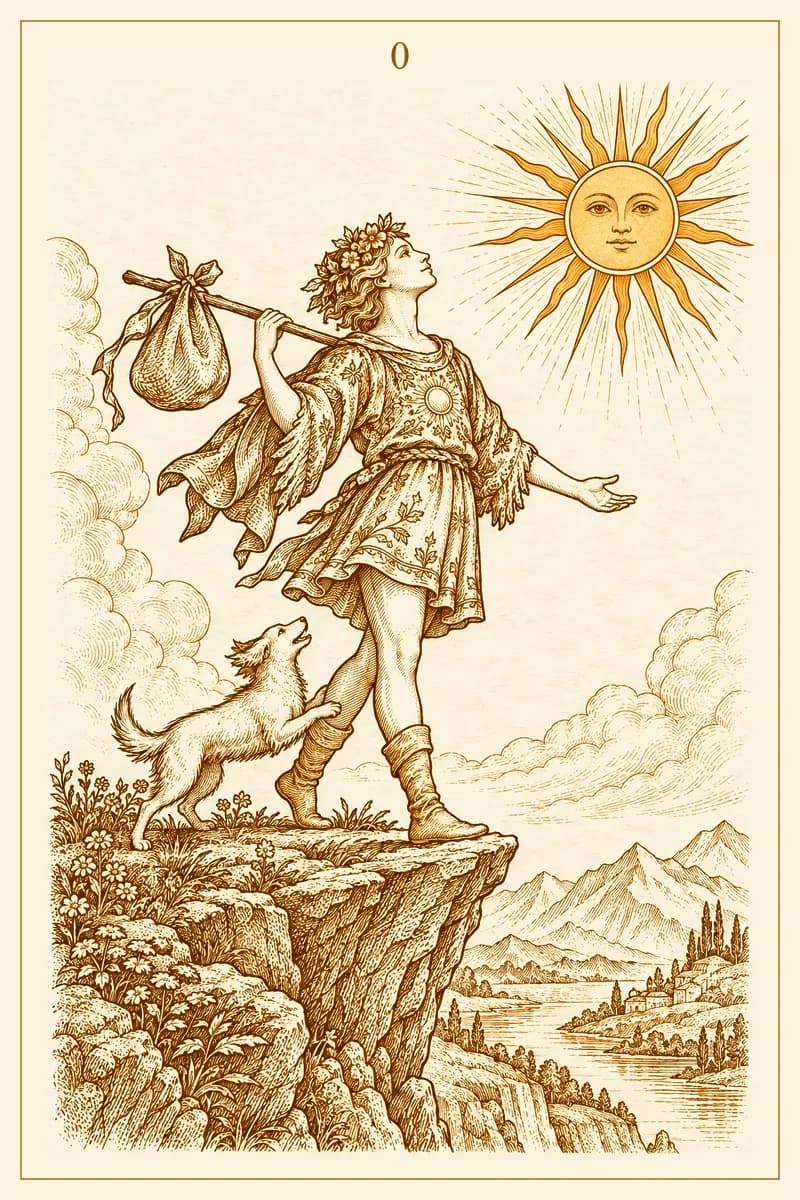
Ending births beginning
Meaning of The Fool and Death Combination: Ending Births Beginning
Unarmed diplomacy
Meaning of The Fool and King of Cups Combination: Unarmed Diplomacy
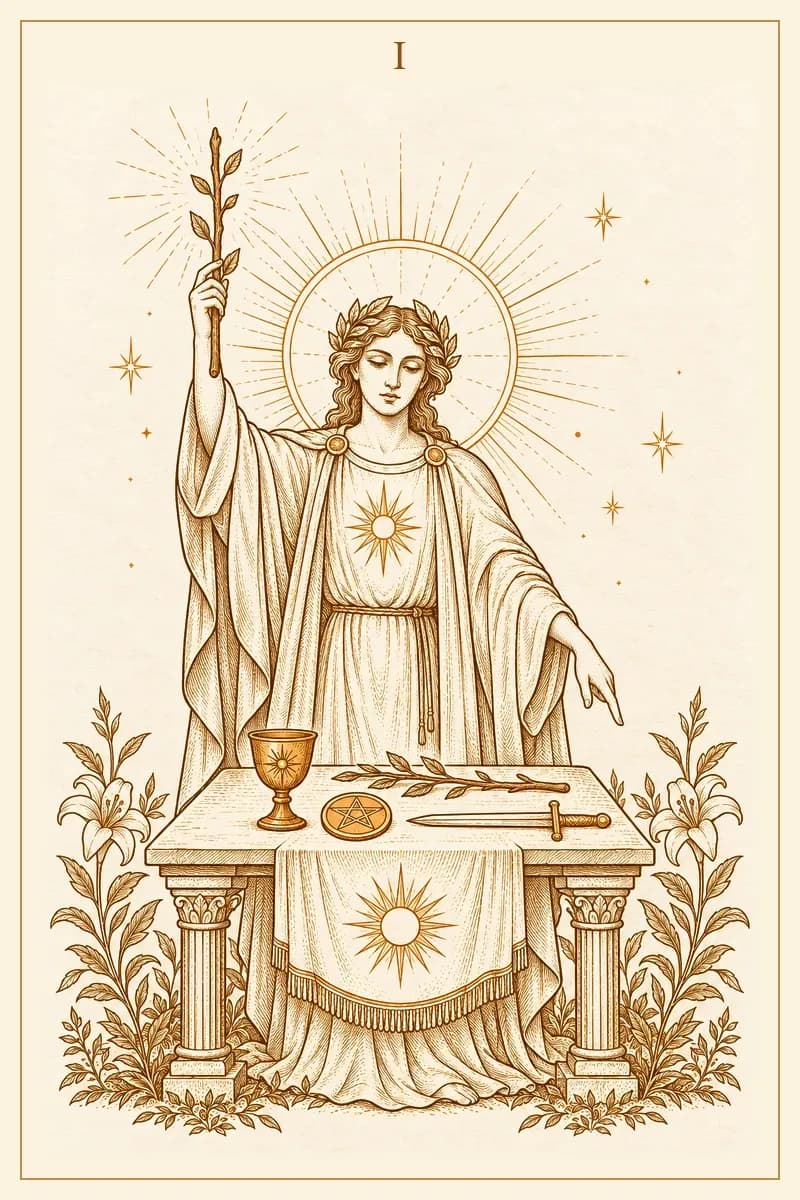
Craft confronting transformation
Meaning of The Magician and Death Combination: Skill Meets the Knife
Commanding emotion with skill
Meaning of The Magician and King of Cups Combination: Mastery in Two Languages
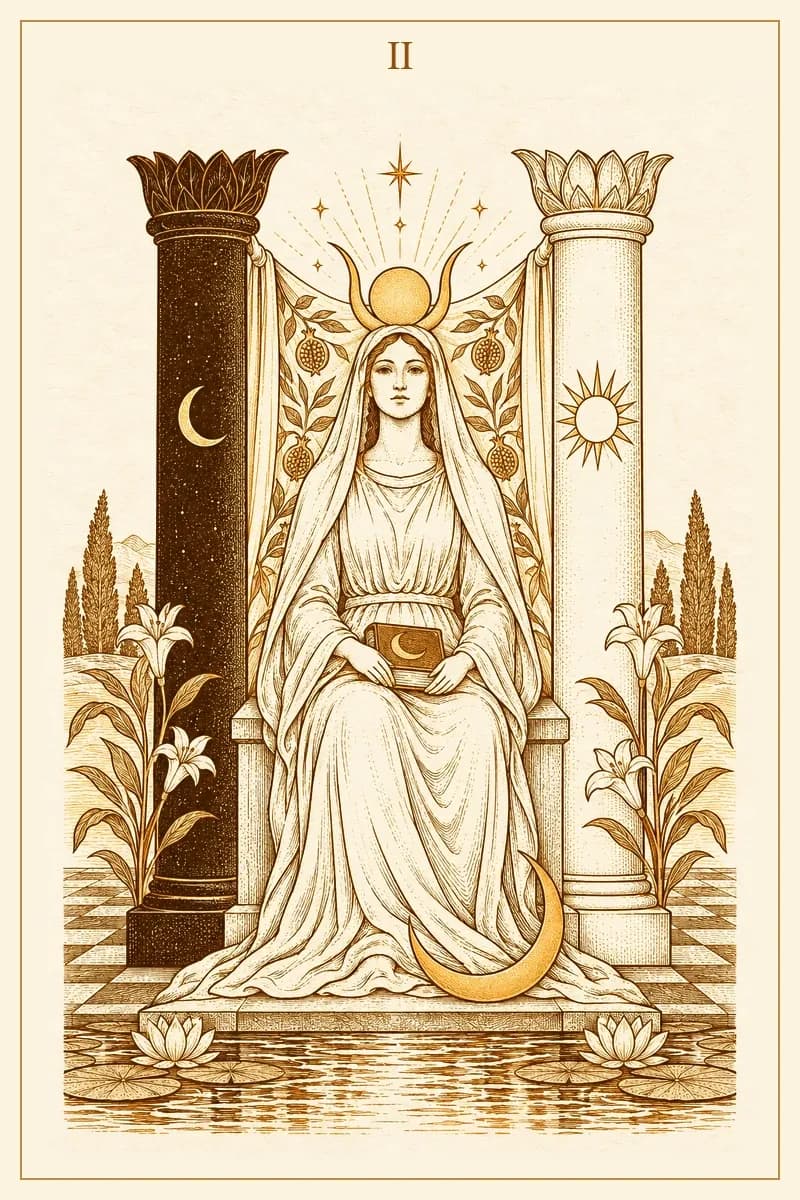
Silent dissolution
Meaning of The High Priestess and Death Combination: Hidden Transformation
Intuitive composure
Meaning of The High Priestess and King of Cups Combination: Quiet Emotional Mastery
✦ Bring it to the cards ✦
Bring Death and King of Cups into your own reading
Use this pairing as a starting point, then let a spread listen to the situation that is actually yours.
Begin a contextual reading