
Card Combination
Meaning of Wheel of Fortune and Ten of Pentacles Combination: The Turning Legacy
Inevitable cyclical change meeting established generational legacy
A building that has stood for three generations and a fault line that moves on geological time exist in the same landscape but operate on different assumptions. The building assumes the ground is stable. The fault line makes no assumptions at all — it moves when the pressure requires it, indifferent to what has been constructed above. The question is never whether the fault line will move. The question is whether the building was designed for a ground that moves.
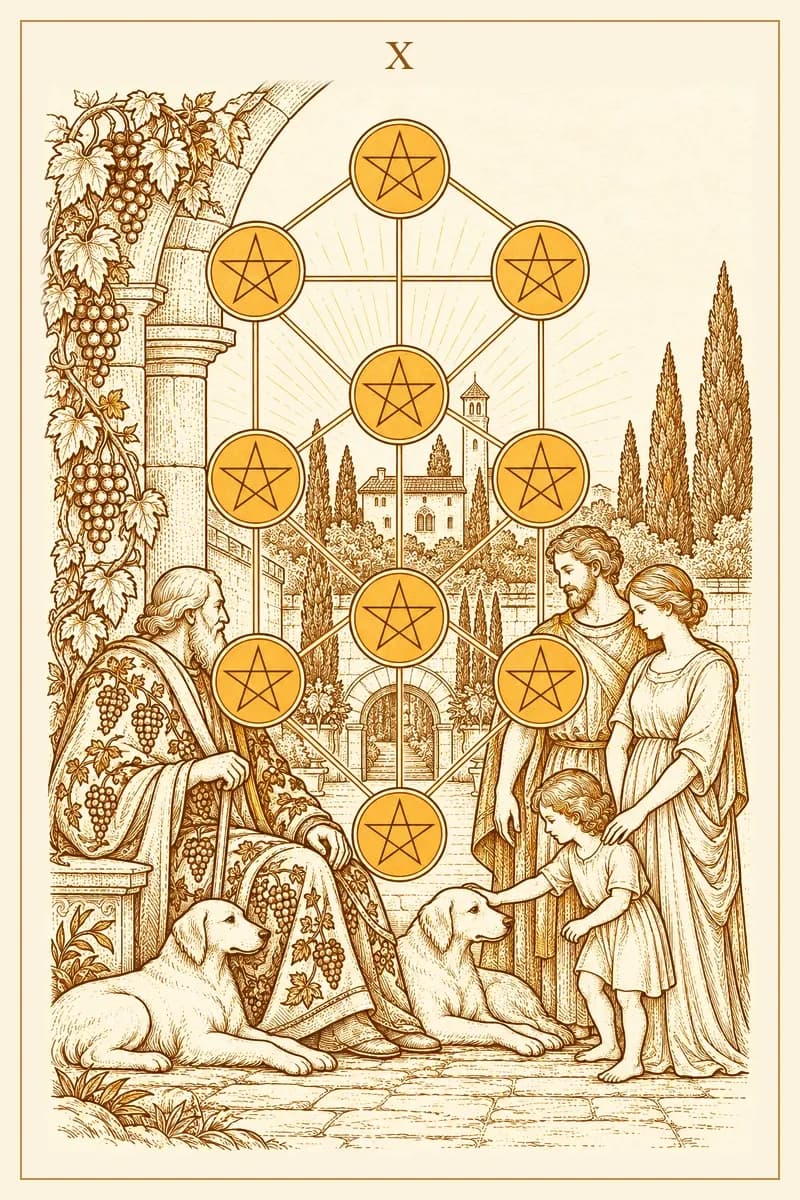
The Ten of Pentacles is the building: three generations visible in the archway, wealth accumulated and displayed, the family dynasty that has converted effort into permanence. Everything about this card suggests stability achieved — not the promise of stability, but the thing itself, tested by time, proven by continuity.
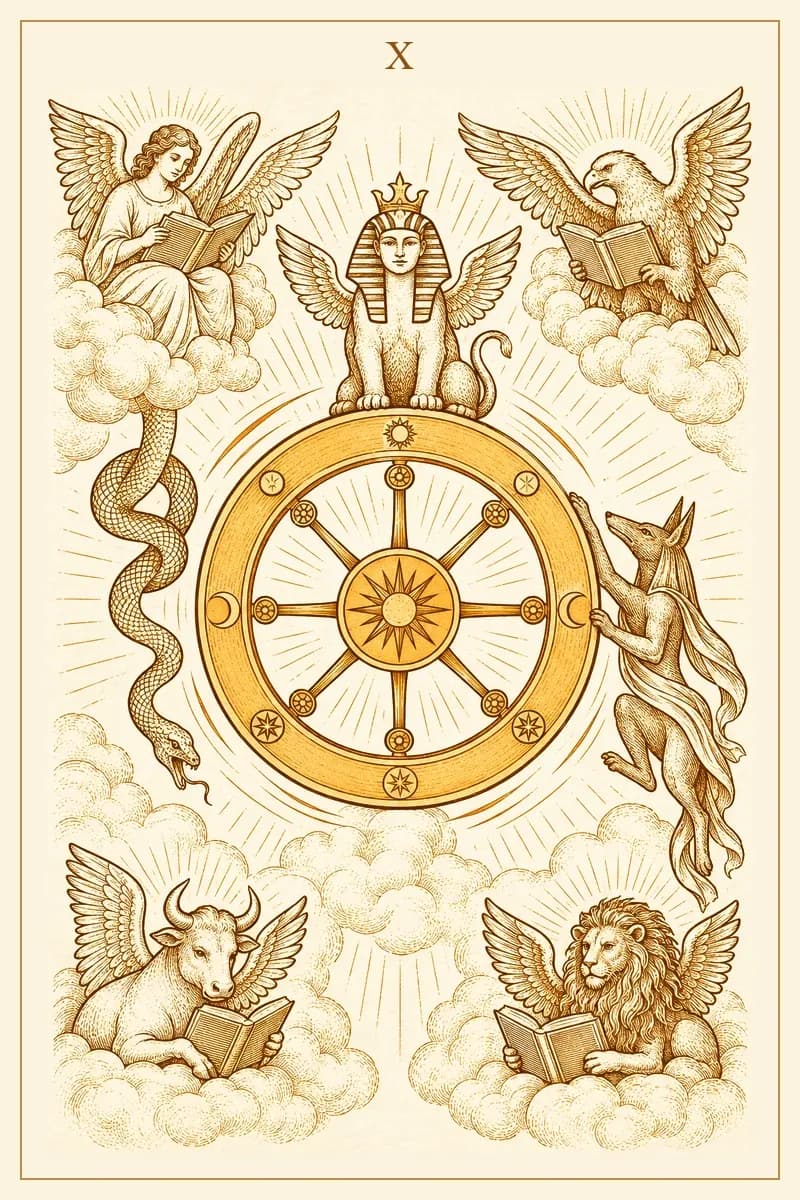
The Wheel of Fortune is the fault line. It turns not because something went wrong but because turning is what it does. The sphinx at the top, the serpent descending, the figures rising and falling — all of this describes the fundamental impermanence of every condition, including the conditions that feel most permanent.
The Core Tension
The Ten of Pentacles represents the highest material achievement in its suit: generational wealth, family continuity, the successful transmission of what was built from one generation to the next. This is not quick money or lucky money — it is the product of sustained effort across lifetimes, the pentacles arranged not in the pattern of a windfall but in the pattern of a tree of life. The old man, the couple, the child, the dogs — everyone is included in the structure.
The Wheel of Fortune doesn't care about the structure. This is not cruelty — it is the nature of cycles. What goes up comes down. What was built can be unbuilt. The Wheel's rotation is not punishment for success; it is the reminder that all material conditions are temporary, including the most impressive ones.
Together, they ask: what part of the legacy is genuinely durable, and what part only appeared durable because the wheel hadn't turned yet?
Love & Relationships
The Ten of Pentacles in romantic readings describes the established relationship — the one that has become family, that includes shared property, shared history, shared people. This is love that has been institutionalized in the best sense: given structure, given continuity, given the kind of stability that allows generations to grow within it.
The Wheel of Fortune alongside this introduces the change that institutional love doesn't always anticipate. The turning may be external — financial shifts, health changes, relocations — or internal: the slow rotation of what each person needs from the structure they built together. The combination asks whether the relationship's foundations are deep enough to survive the Wheel's turn, or whether the stability was always contingent on conditions that are now changing.
Career & Purpose
The Ten of Pentacles at work is the established organization: the family business, the institution with decades of history, the company that has survived enough cycles to believe it has figured out permanence. The Wheel of Fortune arrives as the market shift, the technological disruption, the generational change in values that the institution's architecture wasn't designed for.
This combination is particularly relevant for legacy organizations facing transformation. The Ten's accumulated wisdom is genuinely valuable — but only if it can be distinguished from accumulated habit. The Wheel doesn't destroy what's genuinely durable; it reveals what was merely stable by circumstance.
Shadow Side
The Ten of Pentacles' shadow in this combination is the legacy that has confused longevity with invulnerability. Three generations of success can produce the specific blindness of believing that what has always worked will always work — that the architecture is permanent because the ground has been stable so far. The Wheel's turning arrives as a shock because the possibility of turning was excluded from the model.
The Wheel of Fortune's shadow here is change treated as inherently superior to stability. Not everything that turns improves. The Wheel that destroys the Ten of Pentacles' genuine achievements — the relationships, the accumulated wisdom, the structures that actually serve people — in the name of inevitable change produces waste rather than renewal. Some legacies deserve to survive the turning.
Action Steps
- 1Identify one structure in your life — a relationship, a financial arrangement, a career — that you've been treating as permanent. Ask what would need to change about it if the Wheel turned tomorrow. Not to catastrophize, but to test the foundations.
- 2Find one place where you are resisting a change that has already begun because it threatens something the Ten of Pentacles has built. Determine whether you're protecting genuine value or protecting the comfort of permanence.
- 3Look at one legacy you've inherited — a method, a belief, a way of operating — and ask whether it was designed for a ground that moves or a ground that was assumed to be still.
Related Pairings
Continue through published pairings that share Wheel of Fortune or Ten of Pentacles.
Control vs fate
Meaning of The Chariot and Wheel of Fortune Combination: Control Meets Chance
Ambition versus legacy
Meaning of The Chariot and Ten of Pentacles Combination: Drive Meets Dynasty
Control vs cosmic flux
Meaning of The Emperor and Wheel of Fortune Combination: When Control Meets the Spin
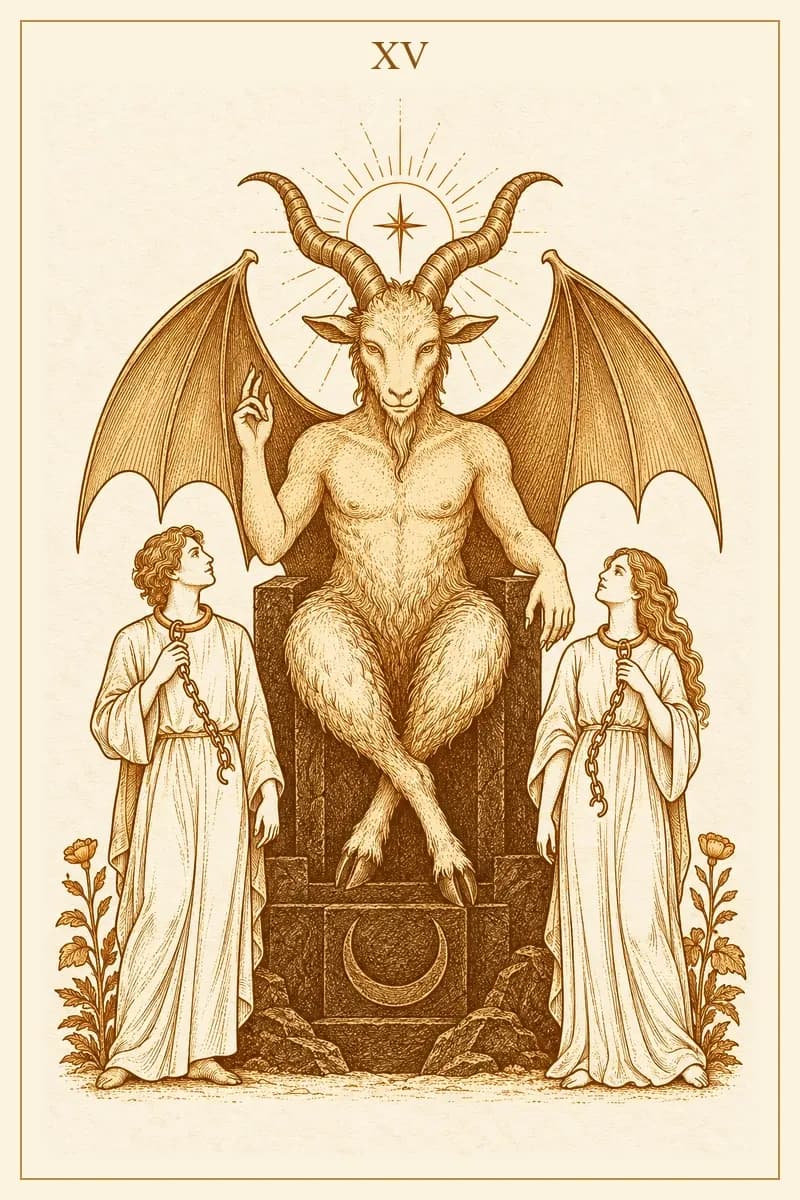
Gilded imprisonment
Meaning of The Devil and Ten of Pentacles Combination: The Golden Cage
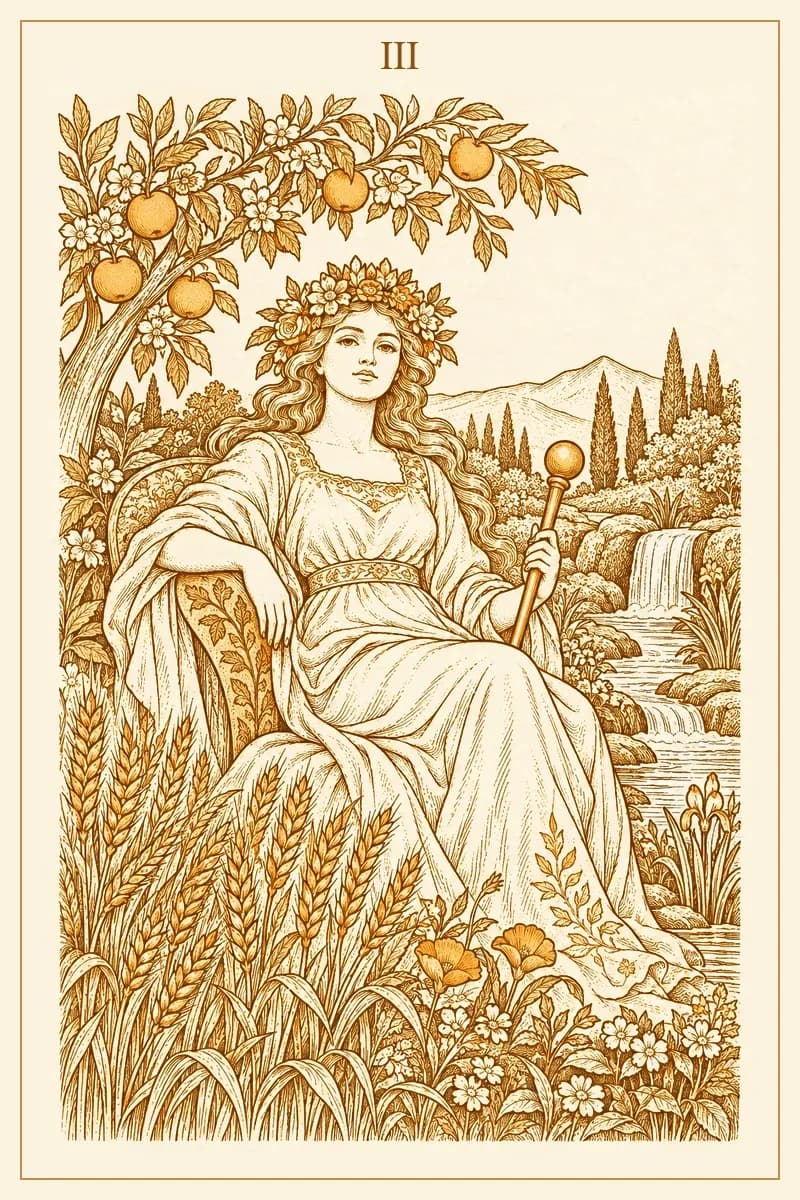
Cycles of abundance
Meaning of The Empress and Wheel of Fortune Combination: Cycles of Abundance
Structured legacy
Meaning of The Emperor and Ten of Pentacles Combination: Lasting Legacy
✦ Bring it to the cards ✦
Bring Wheel of Fortune and Ten of Pentacles into your own reading
Use this pairing as a starting point, then let a spread listen to the situation that is actually yours.
Begin a contextual reading