Loading your view
The page is gathering the latest information.
The page is gathering the latest information.
Fate and consequence
You are sitting in a doctor's office waiting for results. Two tests came back. One shows the virus that entered your body two months ago — the thing that arrived without invitation, that followed no logical schedule. The other shows exactly how your immune system responded: every choice you made about sleep, stress, and nutrition for the past decade, rendered legible in a chart.
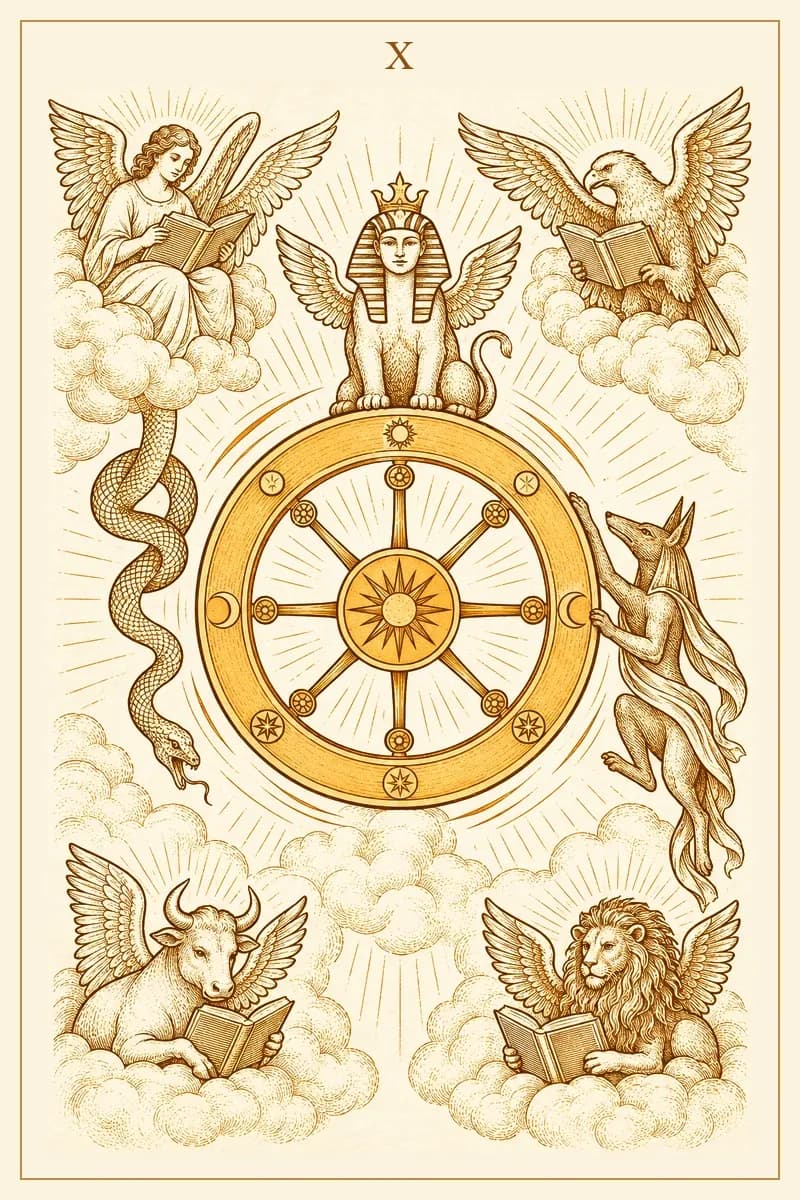
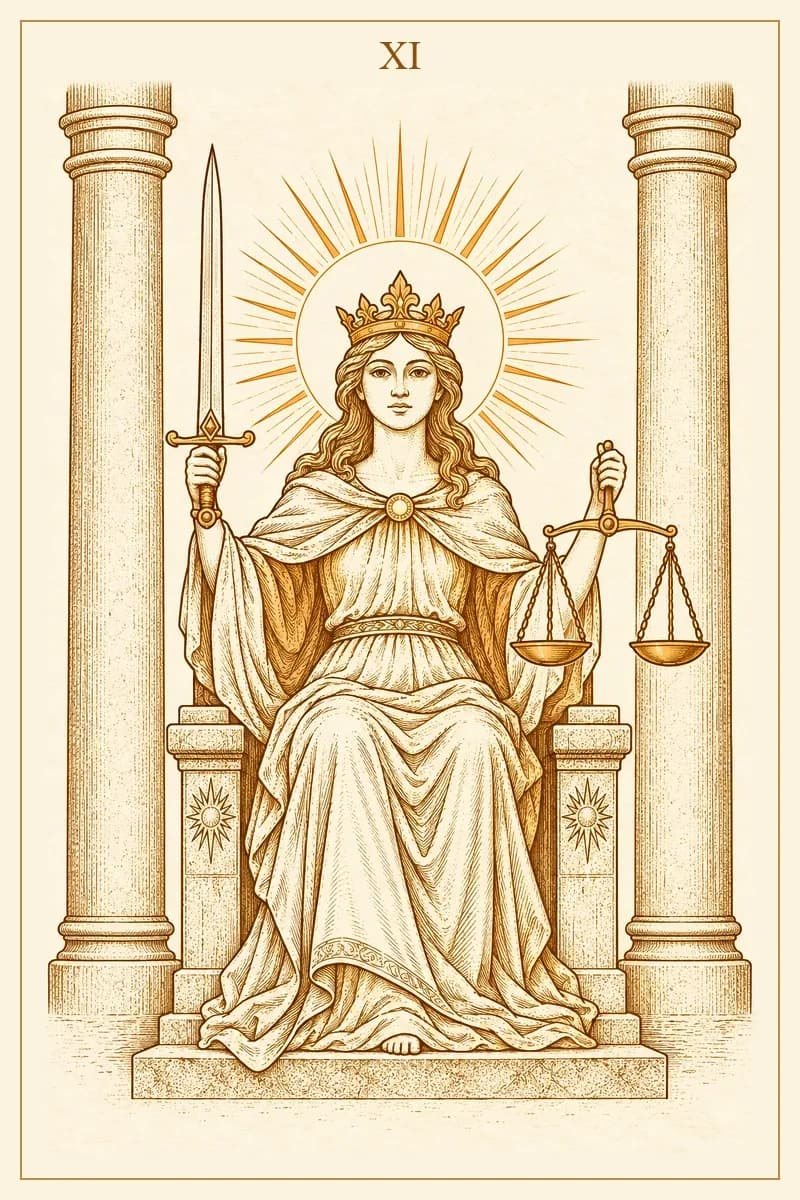
That is what it feels like to draw the Wheel of Fortune alongside Justice. One card is the thing that happened to you. The other is the record of everything you did before it happened, and what you do now that it has.
The Wheel of Fortune is not merely about luck. It is about cycles, about the rotation of circumstances that no individual controls entirely. Fortune rises. Fortune falls. Empires that seemed permanent dissolve. Individuals who seemed irrelevant suddenly find their moment. The Wheel does not ask permission and does not offer explanations.
Justice, by contrast, is almost entirely about explanation. She holds scales because she believes — with cold, methodical confidence — that outcomes can be weighed. Her sword is not for punishment. It is for cutting through the confusion that clouds a fair assessment of cause and effect. She sees the patterns that the Wheel appears to obscure.
The tension between them is ancient and genuinely unresolved. Is the Wheel truly random, or does Justice quietly govern its rotation? Do good people suffer because the Wheel turned without fairness, or does every outcome carry within it the legible signature of choices made and paths taken?
This combination does not resolve that philosophical question. It does something more useful: it asks you to hold both possibilities simultaneously. Some of what is happening to you was set in motion by forces outside your control. Some of it traces directly back to decisions you made. The skill — and it is a skill, not an insight that arrives automatically — is learning to distinguish between the two.
In relationships, this pairing can arrive during a period of significant upheaval — a sudden change in a partnership that feels unearned, or an unexpected shift in how two people relate to each other. The Wheel of Fortune describes the disruption. Justice asks you to look at what preceded it.
This is not about assigning blame. Justice at her best is not punitive. She is diagnostic. She asks: what patterns existed before this change occurred? What was being avoided, minimized, or left unaddressed? The Wheel turned, yes. But the ground it turned on was not neutral.
For people entering or navigating a significant relationship decision — a commitment, a separation, or a renegotiation of terms — Justice advises slowing the process enough to see clearly. The Wheel creates urgency. Justice recommends that urgency be treated with suspicion until the full picture has been assessed.
Professionally, this combination often appears at inflection points — a sudden promotion, an unexpected layoff, a business opportunity that seemed to materialize from nowhere. The Wheel placed these events on your path. Justice asks what you are going to do with them.
The deeper message here is about accountability without self-punishment. Something changed in your professional environment. Some of it you did not cause and could not have prevented. Some of it you contributed to through inaction, over-caution, or choices made without sufficient reflection. Justice wants you to see both halves clearly, not to spiral into guilt, but to make decisions going forward with open eyes.
If you are in a position of leadership or management, this combination carries a specific warning: the people under your authority are watching how you handle the turns of the Wheel. Decisions made during upheaval reveal character more precisely than any test administered during calm conditions.
The shadow of this pairing runs in two directions. The Wheel of Fortune, over-emphasized, becomes an excuse. Everything is fate. Nothing is my responsibility. The Wheel turned and here I am. This is the reading of someone who has given up authorship of their own story.
Justice, over-emphasized, becomes punishing. Everything is consequence. There are no accidents. You are exactly where you deserve to be. This reading is merciless — and also false. It cannot account for inherited disadvantage, for systemic pressure, for the genuine randomness that does govern some portion of what happens to people.
The synthesis is the whole point. Neither pure fate nor pure consequence. Both, at once, in proportions that vary by situation and require honest assessment to get right.
Keep or share this combination reference
Continue through published pairings that share Wheel of Fortune or Justice.
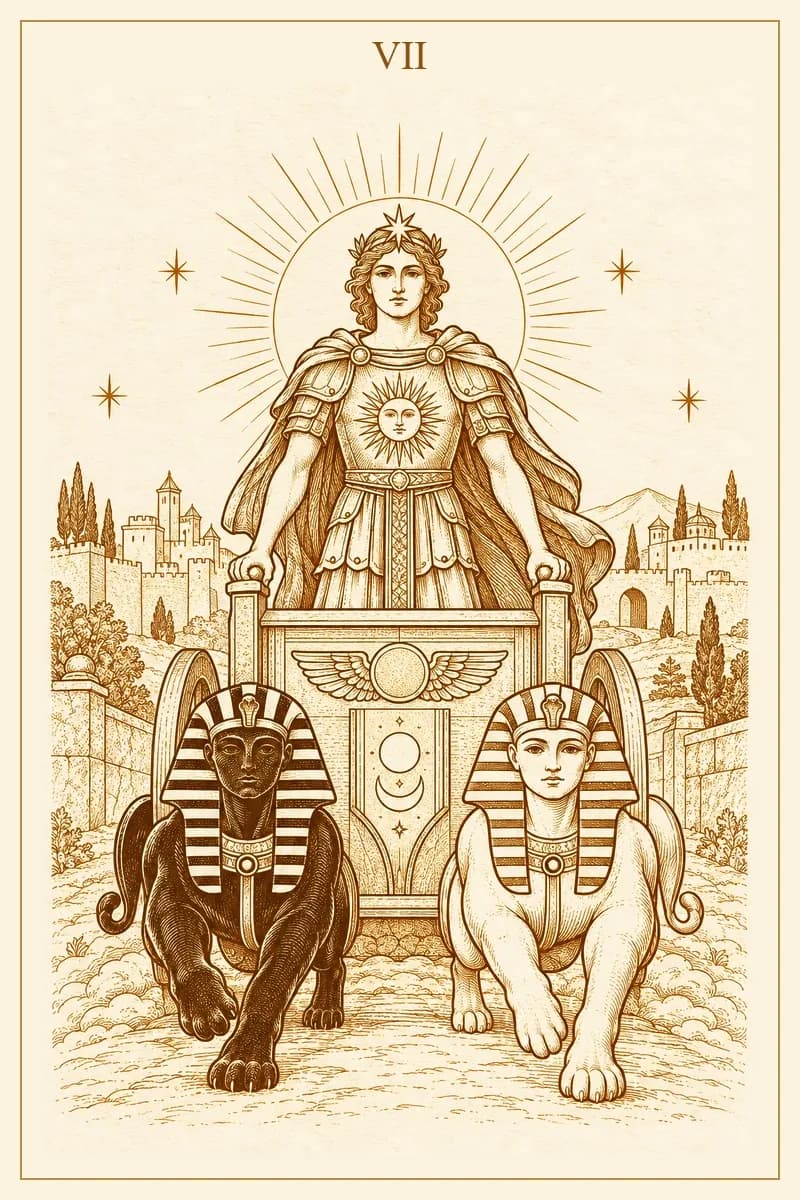
control vs fate
earned victory
control vs cosmic flux
authority meets accountability
cycles of abundance
abundance under judgment
✦ Bring it to the cards ✦
Use this pairing as a starting point, then let a spread listen to the situation that is actually yours.
Begin a contextual reading