Loading your view
The page is gathering the latest information.
The page is gathering the latest information.
collapse into clarity
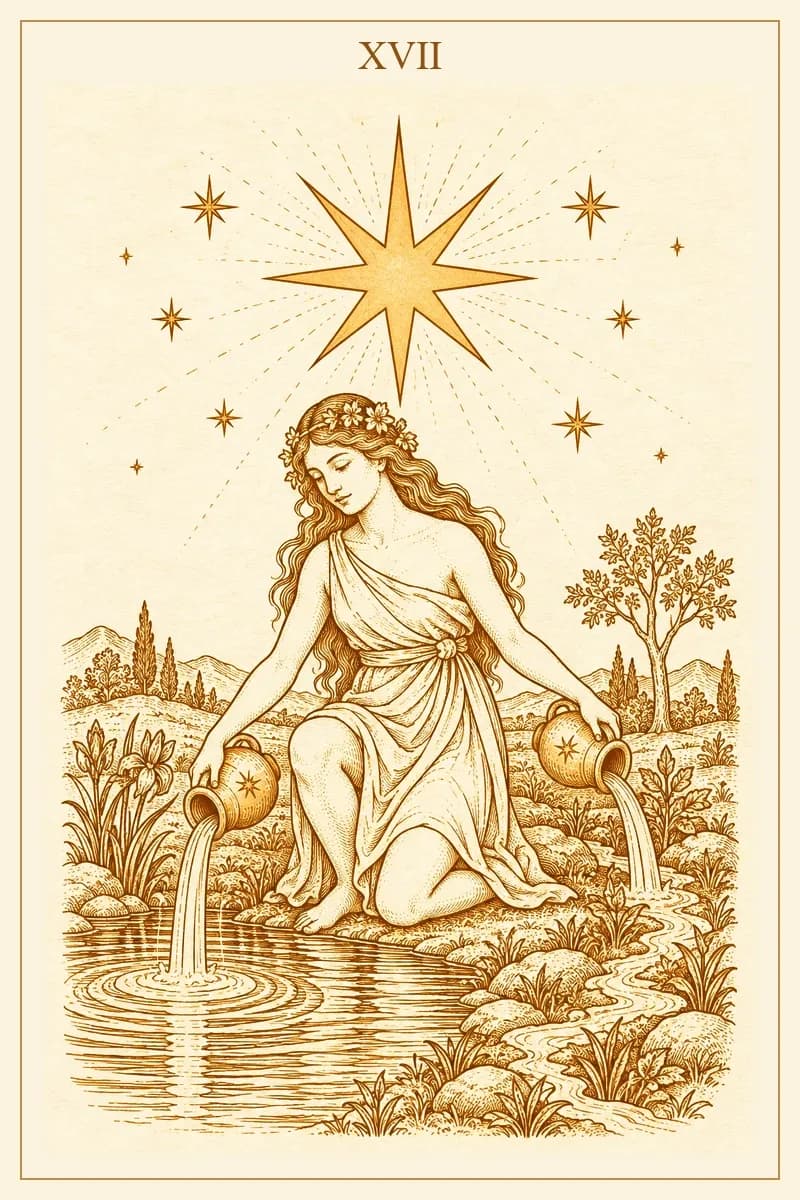
A building does not become rubble by accident. The Tower falls because something in the foundation was wrong—a miscalculation, a shortcut, a weight-bearing wall that was never really bearing the weight. Architects know this: the most catastrophic failures are the ones that looked fine for years. And then, in the cleared field where the structure stood, you see for the first time what the ground actually looks like. The Star rises over exactly that kind of clearing.
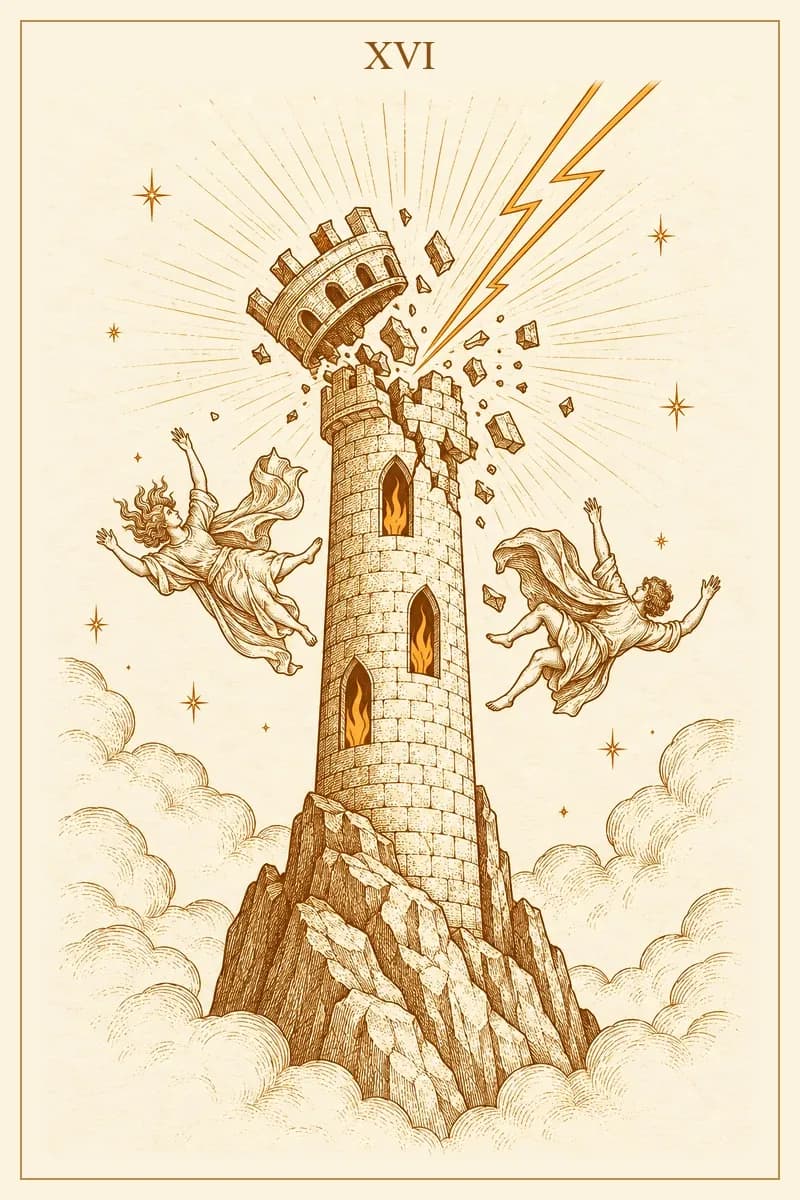
This pairing does not soften the blow. The Tower is still the Tower—lightning strike, walls giving way, figures in freefall. But the presence of The Star shifts what the wreckage means. Where Tower alone speaks of shock and disorientation, Tower-with-Star speaks of the specific silence that follows when the noise finally stops. The night sky becomes visible again. You remember there are stars. You remember you can navigate by them.
The architectural metaphor holds: the demolition crew and the surveyor work the same site. One tears down what cannot stand; the other maps what can be built true. Both are necessary. The question this combination poses is not whether you will survive the fall—The Star guarantees you will—but what you will choose to build next, now that you know what the ground can and cannot hold.
The Tower destroys certainty; The Star restores orientation. That sounds like resolution, but it is more accurately a handoff that requires you to move through genuine disorientation before the starlight becomes useful. The tension here is between the instinct to rebuild immediately—to fill the cleared space as fast as possible—and the wisdom of staying in the rubble long enough to understand what failed. The Star does not rush. It has been shining before you looked up, and it will keep shining. The Tower, however, demands an immediate reckoning.
This is not a comfortable pairing for people who process grief through action. The architectural truth is that a building site must be assessed before it can be used. Pouring a new foundation over unstable ground just recreates the original error with more material. The Tower-Star combination asks for that uncomfortable pause between destruction and construction, between what ended and what begins—not as passivity, but as the most load-bearing work you will do.
In relationships, this combination often surfaces after a revelation that changes the shape of the connection—a disclosed secret, a confrontation that cannot be walked back, a realization that what you thought you were building together was based on an agreed-upon fiction. The Tower moment is the conversation that cannot be unhad. The Star is the quiet afterward, when both people are sitting in separate rooms, wondering if there is anything salvageable.
The good news—and it is real news, not consolation—is that The Star does not appear over lost causes. Its presence here suggests that what survives the Tower is genuine: the actual foundation rather than the facade. Relationships that come through this combination are not what they were. They are more structurally honest. The vulnerability required to stand in the rubble together and say "this part was real, this part wasn't" is the kind that either ends things cleanly or builds something that can actually hold weight.
Professionally, Tower-and-Star often marks the moment a career narrative collapses. The position you were certain about disappears. The company restructures. The project you staked your reputation on fails publicly. The Tower does not traffic in near-misses. But The Star in this position speaks specifically to vocational clarity—the kind that only comes when the noise of a particular structure falls away.
People who have lived this combination often report that the collapse, in retrospect, was the moment they stopped pretending to want what they had been trained to pursue. The demolished building was someone else's blueprint. The cleared ground finally shows what direction the light actually comes from. The work that follows a Tower-Star moment professionally is often more aligned, more personally legible, and built on competencies that were always there but were obscured by the structure that was busy falling.
The shadow of this combination is the romanticization of collapse. The Star is beautiful enough that there is a temptation to welcome destruction without reckoning with its cost—to treat the Tower as a gift rather than a rupture. People, relationships, and careers are not buildings. The rubble is not aesthetically neutral when it contains other people's lives. The Star does not retroactively justify careless demolition.
The other shadow is the opposite error: so traumatized by the Tower that The Star's light registers as threat rather than guidance. Some people spend years rebuilding the exact same structure in the exact same spot, using the fallen stones, refusing to let the collapse mean anything. The Star is still there. The navigation is still available. But it requires looking up.
Keep or share this combination reference
Continue through published pairings that share The Tower or The Star.

controlled force shattered
disciplined hope
forced liberation
bondage versus healing

authority meets collapse
control meets healing
✦ Bring it to the cards ✦
Use this pairing as a starting point, then let a spread listen to the situation that is actually yours.
Begin a contextual reading