
Card Combination
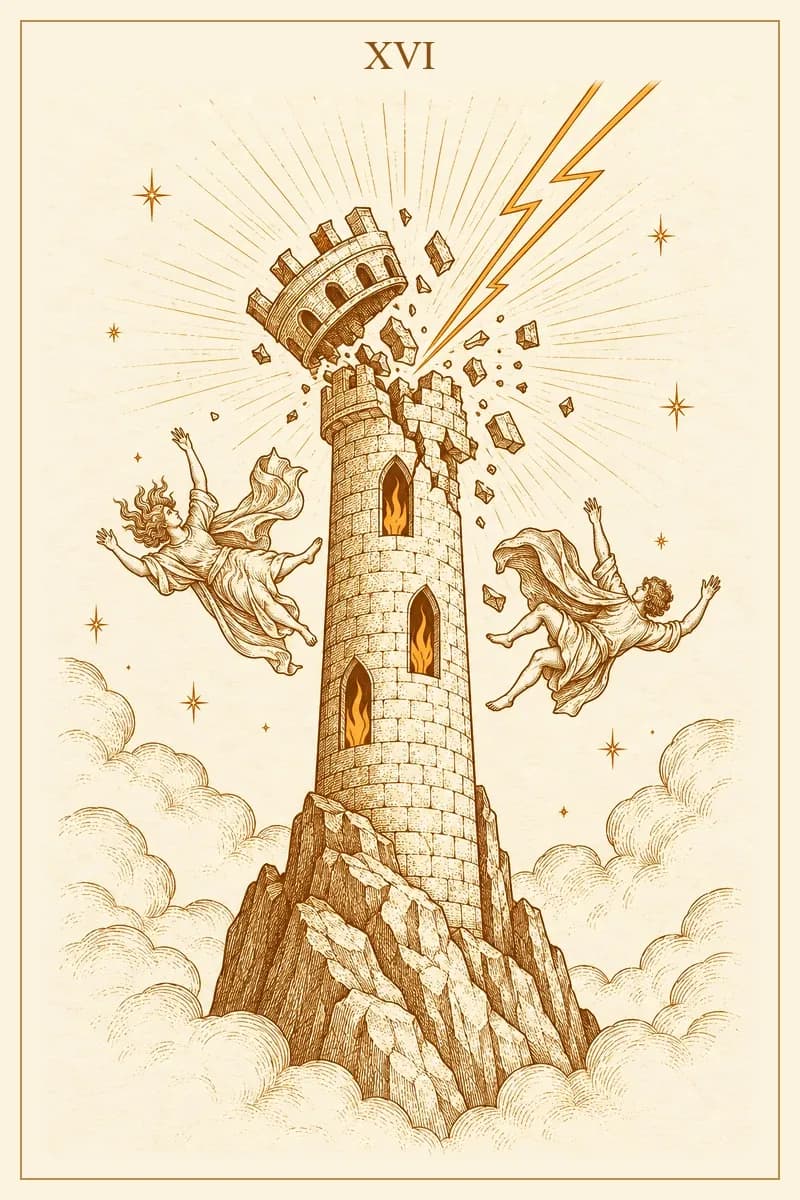
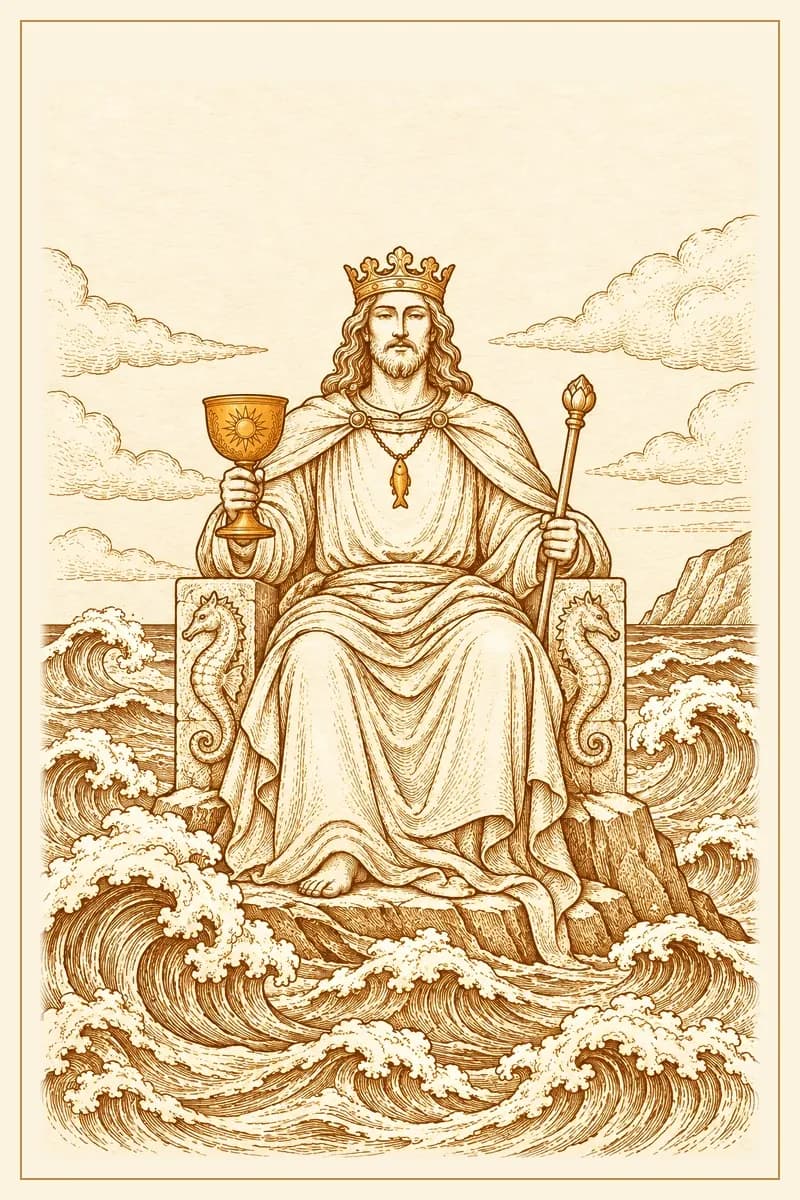
Meaning of The Tower and King of Cups Combination: Controlled Collapse
Controlled collapse
Some structures were never meant to stand forever — and the King of Cups knows exactly what it feels like to watch one fall while keeping his face composed.
Lightning doesn't negotiate. It finds the tallest point, the proudest architecture, and it splits it open. The Tower represents that moment of catastrophic revelation — when whatever you built on a faulty foundation gets exposed for what it always was. The King of Cups sits in that storm with his golden cup steady, his throne unmoved by the waves. He has spent years mastering the interior weather. But even a king of emotional discipline cannot stop a building from burning.
The Core Tension
The Tower destroys. The King of Cups contains. That is the central friction of this pairing.
Most people assume that emotional maturity means remaining unaffected by chaos. The King of Cups offers a different lesson: he doesn't escape the storm, he navigates it. But when The Tower appears alongside him, the question sharpens — what happens when the storm is internal? When the collapse is not external circumstance but the emotional scaffolding you built your identity around?
The Tower tears down illusions. The King of Cups has spent his life constructing a particular self-image: the calm one, the wise counselor, the man who doesn't lose his composure. This pairing indicates that the very walls he built to protect his emotional world are the ones most at risk of coming down. Not because he's weak, but because no architecture — however elegant — survives a lightning strike to its foundation.
This is not destruction for its own sake. The Tower always reveals something true. The King of Cups, when his carefully maintained exterior cracks, often discovers that the emotions he thought he had processed were simply stored. Contained, but not resolved.
Love & Relationships
In a relationship reading, this combination points to a rupture that cannot be diplomatically managed. The King of Cups is a partner who leads with empathy, who tends to absorb conflict rather than escalate it. That quality is genuinely valuable — until The Tower arrives and the relationship hits something too big for absorption.
A partner may reveal something they've been holding back. A long-suppressed resentment finally surfaces. An emotional truth that was gently avoided for years erupts at full volume.
The King of Cups in this context must resist his default behavior: smoothing things over before they've been truly seen. The Tower doesn't care about smooth. It wants the truth out, whatever the structural damage. The most difficult thing a person with King of Cups energy can do in this moment is tolerate the mess without immediately moving to fix it.
If you are on the receiving end of this pair, know that the person across from you is capable of enormous emotional depth — they are simply accustomed to managing depth privately. The collapse happening now is also an opening.
Career & Purpose
Professionally, this combination often appears when a leader's composure is tested by sudden organizational upheaval. The King of Cups in a leadership role has built trust through steadiness — colleagues come to him because he doesn't panic. The Tower introduces a situation that makes composure look like avoidance.
A project falls apart. A key structure within a team or institution is exposed as fundamentally unsound. Budget collapses. A trusted alliance dissolves publicly.
The King of Cups' skill set is genuinely useful here — the ability to hold space for a team in crisis without amplifying panic is rare. But this combination warns against one specific trap: performing calm while actually being in denial. Stability offered too quickly after a Tower moment often means the real damage hasn't been assessed yet.
The work ahead requires sitting inside the rubble long enough to understand what actually failed.
Shadow Side
The shadow of this combination lives in the gap between emotional intelligence and emotional honesty. The King of Cups knows feelings well — he can name them, hold them, reflect them back to others. But knowing and expressing are different acts.
When The Tower strikes, the King's shadow is the possibility that all his mastery was actually sophisticated suppression. That composure and containment became a way to avoid the vulnerability of being visibly shaken.
The shadow asks: has your emotional fluency been in service of genuine connection, or in service of control?
Action Steps
- 1Let the inventory be incomplete. You don't need to understand the full extent of the damage before you respond. Resist the urge to produce a calm, coherent narrative before you've actually felt what happened.
- 2Say the thing you usually hold. One conversation this week should involve speaking something you would normally manage internally — not catastrophizing, just naming it plainly to someone who can hear it.
- 3Distinguish the structure from the ground. Something collapsed, but identify with precision what that was. The Tower destroys buildings, not foundations. Locate what remains solid beneath the rubble before you decide what gets rebuilt.
Related Pairings
Continue through published pairings that share The Tower or King of Cups.
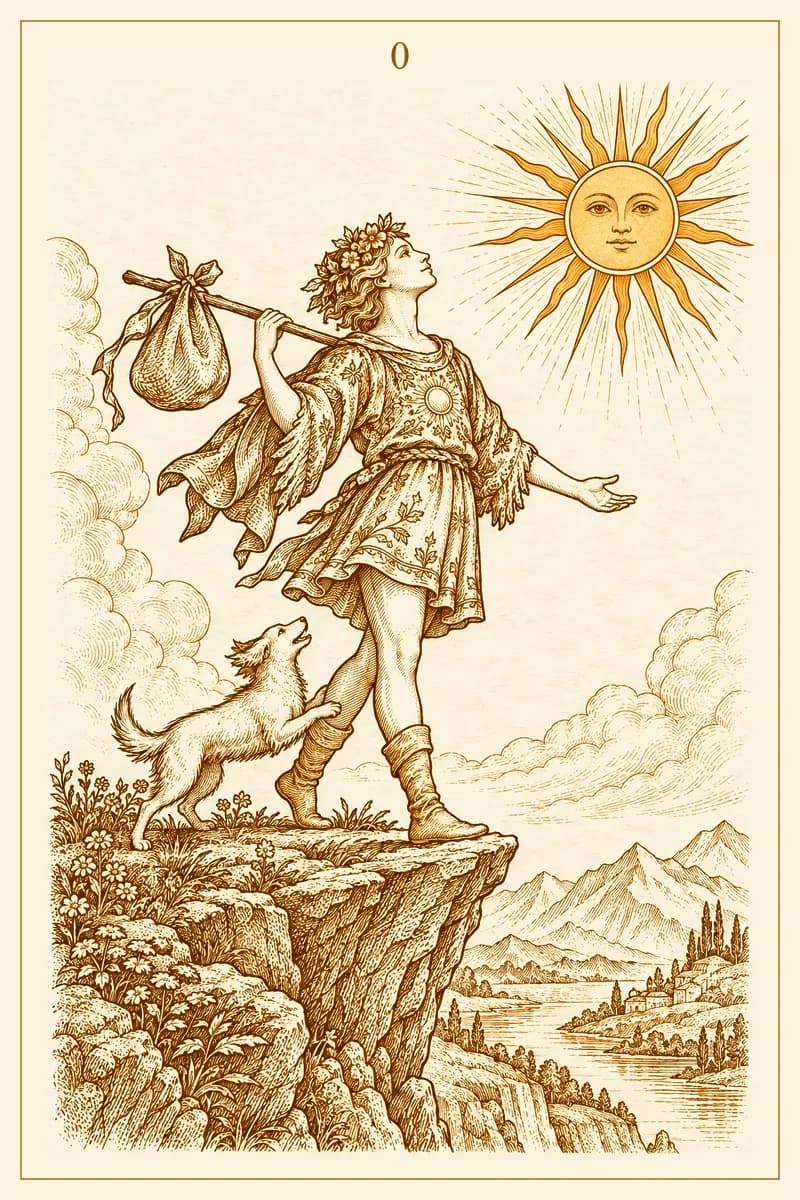
Reckless dismantling
Meaning of The Fool and The Tower Combination: Unplanned Demolition
Unarmed diplomacy
Meaning of The Fool and King of Cups Combination: Unarmed Diplomacy
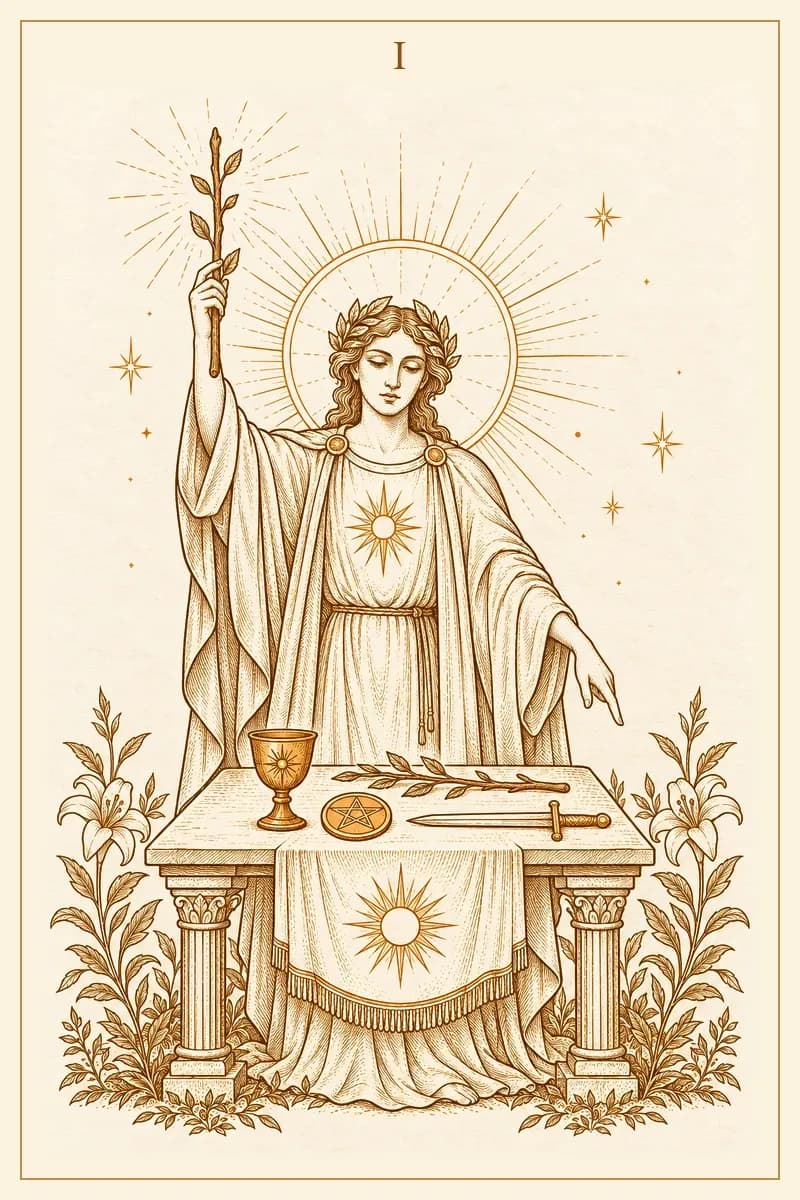
Constructed collapse
Meaning of The Magician and The Tower Combination: When the Builder Meets the Wrecker
Commanding emotion with skill
Meaning of The Magician and King of Cups Combination: Mastery in Two Languages
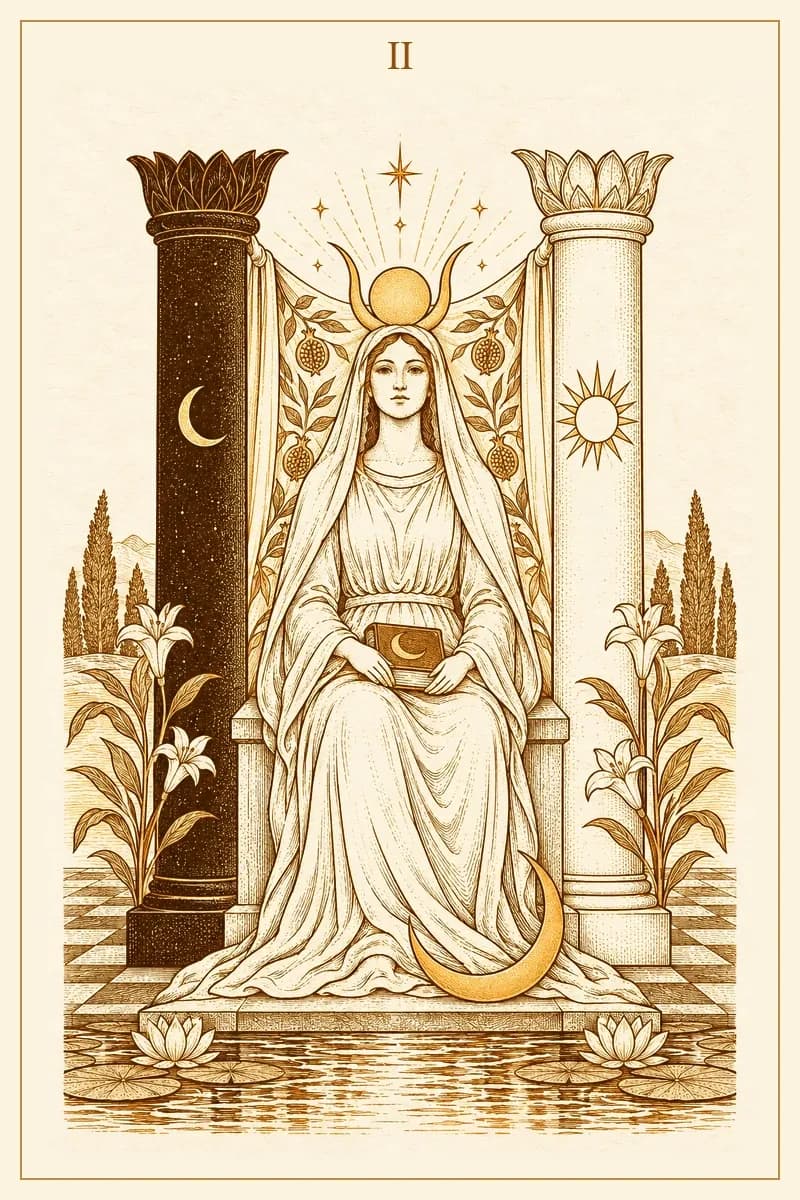
Revelation through collapse
Meaning of The High Priestess and The Tower Combination: Revelation Through Collapse
Intuitive composure
Meaning of The High Priestess and King of Cups Combination: Quiet Emotional Mastery
✦ Bring it to the cards ✦
Bring The Tower and King of Cups into your own reading
Use this pairing as a starting point, then let a spread listen to the situation that is actually yours.
Begin a contextual reading