
Card Combination
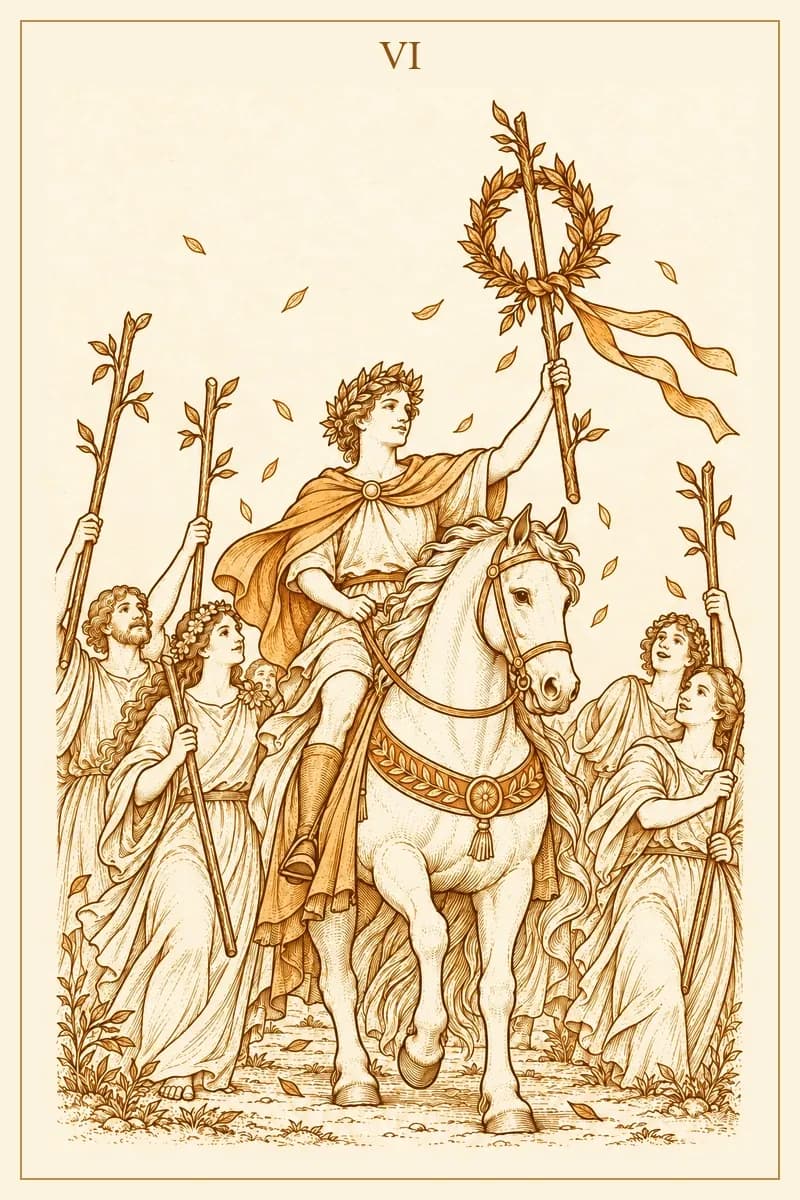

Meaning of Six of Wands and Page of Swords Combination: Victory Under Surveillance
Earned recognition facing intellectual challenge and critical observation
The general returns from the battlefield to cheering crowds and waving banners. Flowers land at the feet of his horse. The city celebrates. But in the back of the crowd, a young intelligence officer is already writing a different report — one that documents the supply lines that nearly broke, the flanking maneuver that succeeded more by luck than by strategy, the casualty numbers the parade conveniently omits. The Six of Wands rides through the gates. The Page of Swords has already found the cracks in the armor.
This combination sets two very different energies against each other: the warmth of public celebration and the cold precision of analytical scrutiny. One card rides high. The other watches from the shadows with a notebook and a sharp pen.
If you're reading this pairing, you're likely standing in both positions simultaneously — enjoying a win while something inside you, or someone around you, refuses to let the victory go unexamined.
The Core Tension
The Six of Wands operates on the logic of momentum. In military terms, it's the victory that creates political capital — the win that justifies the war, that silences critics, that turns a commander into a hero. It doesn't ask whether every tactic was sound. It cares about the flag on the hill.
The Page of Swords operates on the logic of intelligence. This is the scout, the codebreaker, the analyst who knows that yesterday's victory creates tomorrow's vulnerability if the lessons aren't extracted. The Page doesn't care about flags. The Page cares about facts.
The tension is between narrative and analysis. The Six wants the story to be clean: we fought, we won, celebrate. The Page wants the debrief: what actually happened, what almost went wrong, what needs to change before the next engagement. Both are necessary. Neither is comfortable with the other.
Love & Relationships
Romantically, this combination often surfaces when a relationship that appears successful is being quietly interrogated — either by you, by your partner, or by someone outside the relationship entirely. You've reached a milestone together. Maybe you moved in, maybe you went public, maybe you survived a rough patch and came out looking stronger.
But the Page of Swords is asking questions. Not malicious ones, necessarily — just sharp ones. Are we happy or are we performing happiness? Did we actually resolve that argument or just agree to stop talking about it? The Page is the voice that notices inconsistencies between what's said and what's felt.
In healthy doses, this energy is invaluable. It prevents the relationship from coasting on appearance. In excessive doses, it becomes surveillance — monitoring your partner for signs of betrayal or inconsistency until trust becomes impossible.
Career & Purpose
Professionally, this combination describes the moment after a big win when the review process begins. You delivered the project. The client is happy. Management sent a congratulatory email. But now someone — a colleague, a supervisor, an auditor — is looking at the details.
This isn't necessarily adversarial. In strategic terms, the after-action review is where real growth happens. The Six of Wands got you the territory. The Page of Swords helps you hold it. Welcome the scrutiny if it comes from a place of improvement rather than sabotage.
However, if the Page energy comes from a rival who resents your success, the dynamic shifts. This becomes intelligence warfare — someone gathering ammunition to undermine your victory. Know the difference between a debrief and an interrogation. Protect your supply lines: documentation, communication trails, and clear evidence of your process.
Shadow Side
The shadow here splits along two axes. The Six of Wands shadow is refusing scrutiny altogether — treating any question about your success as an attack, surrounding yourself with yes-men who confirm the narrative without examining it. The general who court-martials anyone who questions the battle plan.
The Page of Swords shadow is weaponized criticism. Using intelligence not to improve but to destroy. The analyst who leaks the report not to strengthen the army but to humiliate the general. Curiosity that has been corrupted into cynicism, analysis that serves ego rather than truth.
Action Steps
- 1Review one recent success with honest eyes — not to diminish it, but to extract the lessons hiding behind the celebration, the way a strategist debriefs after a campaign regardless of the outcome.
- 2If someone has been questioning your work or your relationship, determine whether their scrutiny is the Page's healthy intelligence or the Page's shadow sabotage — and respond accordingly.
- 3Document one process or decision you're proud of in enough detail that it could withstand external review — this protects the Six of Wands victory from the Page of Swords critique.
Related Pairings
Continue through published pairings that share Six of Wands or Page of Swords.

✦ Bring it to the cards ✦
Bring Six of Wands and Page of Swords into your own reading
Use this pairing as a starting point, then let a spread listen to the situation that is actually yours.
Begin a contextual reading