
Card Combination
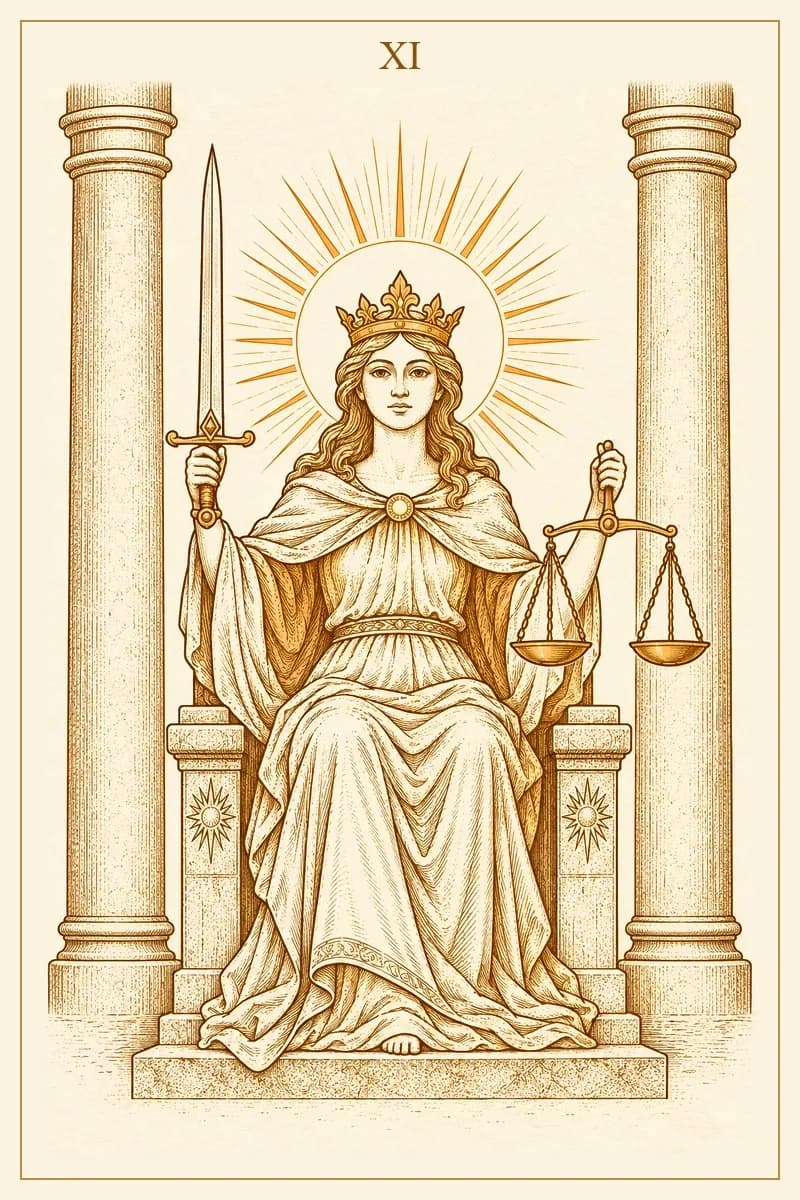
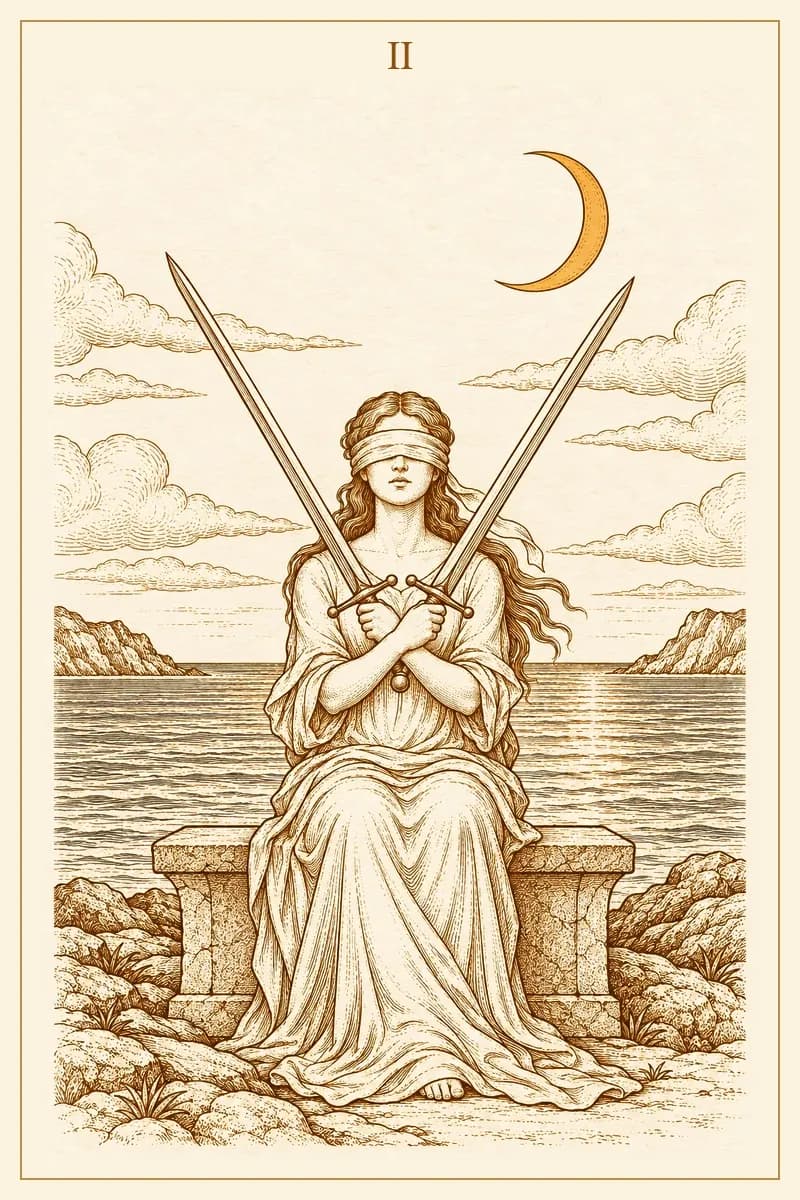
Meaning of Justice and Two of Swords Combination: The Verdict You Already Know
Avoidance as false balance
The most dishonest thing you can do is pretend you haven't already made up your mind. That is the uncomfortable theater playing out when Justice and the Two of Swords share the stage together. One card wears robes and carries scales; the other sits blindfolded with crossed blades, refusing to let a single actor step forward. The audience — your life — waits in silence.
The Core Tension
Justice is not gentle. It is precise. It measures, it weighs, and it delivers a verdict with the cool detachment of a seasoned director who has seen every performance before. The Two of Swords is something else entirely: a figure frozen mid-scene, arms crossed, blades raised, eyes deliberately shut. The character knows the lines. The character refuses to speak them.
Together, these cards expose a specific kind of paralysis — not the paralysis of ignorance, but of knowing too much and acting on too little. The scales of Justice have already tipped. The verdict is in. But the Two of Swords holds the curtain closed, insisting the final act hasn't arrived yet.
This combination asks: are you postponing a decision because you genuinely need more information, or because clarity feels more threatening than confusion?
The two cards are not in conflict so much as they are in a standoff. Justice insists the performance must end honestly. The Two of Swords grips its props and refuses to exit the stage. Something has to give — and it will.
Love & Relationships
In a romantic context, this pairing often surfaces around a relationship that has reached a crossroads neither party wants to name out loud. You may already sense — or outright know — that a conversation is overdue. Perhaps someone has been unfair, or a silent agreement has quietly expired, yet both people continue rehearsing old roles as though nothing has changed backstage.
Justice here does not automatically signal a breakup or a reunion. It signals an accounting. The Two of Swords warns that you are avoiding that accounting, perhaps out of fear that naming the imbalance will shatter what remains. But suppressed truth in relationships does not stay quiet indefinitely; it accumulates interest.
If you are single, this combination may reflect an internal standoff — you know what you want in a partner but have crossed your own arms against pursuing it. Some old wound or past experience is keeping the blindfold firmly in place.
The invitation is to lower the swords, lift the cloth, and speak what the scales have already shown you.
Career & Purpose
Professionally, Justice paired with the Two of Swords often appears when a decision about fairness — a contract, a dispute, a long-overdue performance review, a fork in a career path — is being delayed beyond its natural deadline. Someone in this situation may be waiting for a perfect moment that the calendar refuses to deliver.
This combination can also indicate a workplace dynamic where power is unevenly distributed and nobody is yet willing to name it. The Two of Swords suggests that calling for a recess has become a strategy in itself — but Justice is a card that does not allow indefinite recesses. Sooner or later the judge returns to the bench.
If you are facing a professional choice between two options, the Two of Swords is telling you that additional deliberation is not the same as additional wisdom. Justice is telling you the answer has a due date.
Shadow Side
The shadow side of this combination is self-deception dressed up as impartiality. It is easy to confuse "I am carefully weighing all sides" with "I am afraid of what a clear answer requires of me." The Two of Swords, at its worst, is not neutral — it is willfully blind. And Justice, when avoided long enough, stops being a liberating force and becomes a debt.
There is also a shadow of rigidity here. Justice can tip into harsh judgment, not just of others but of yourself. If you are in a season of relentless self-criticism — measuring every action against an impossible standard — the Two of Swords may be the part of you that has simply shut down to escape the verdict. That is not balance. That is exhaustion performing as strategy.
Watch for a tendency to gather more and more information as a way of postponing commitment. At some point, the scales have enough weight on them. Knowing that is itself a form of justice.
Action Steps
- 1Name the thing you already know. Write down — privately, if needed — the decision or truth you have been circling. Getting it out of your head and onto paper breaks the loop the Two of Swords thrives in.
- 2Separate fairness from fear. Notice whether the hesitation you feel is rooted in genuine ethical complexity or in the discomfort of a clear outcome you'd rather not face. Justice and anxiety feel similar but lead in opposite directions.
- 3Set a deadline for the decision. Justice respects process but not procrastination. Give yourself a concrete date — not distant — by which you will act on what you already understand to be true.
Related Pairings
Continue through published pairings that share Justice or Two of Swords.
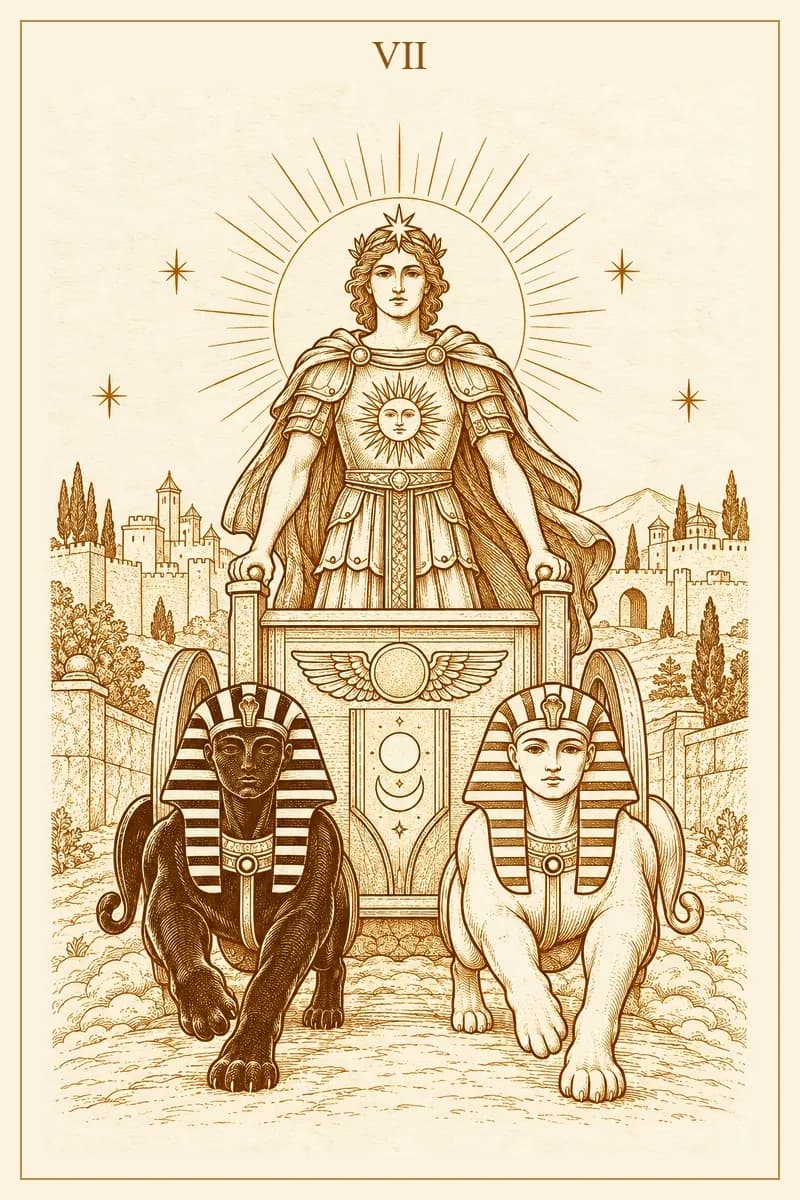
earned victory
Meaning of The Chariot and Justice: Victory Demands a Price
Blocked momentum
Meaning of The Chariot and Two of Swords Combination: Stalled Drive
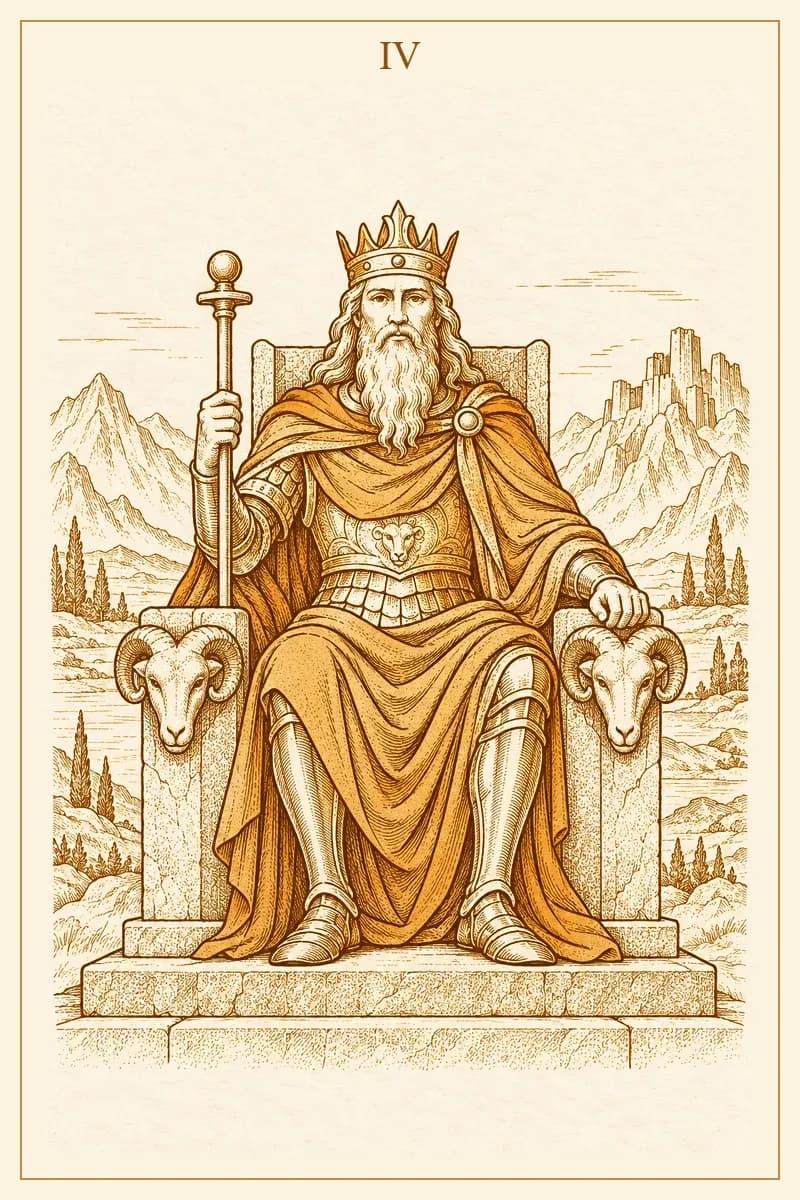
authority meets accountability
Meaning of The Emperor and Justice: Authority Meets Accountability
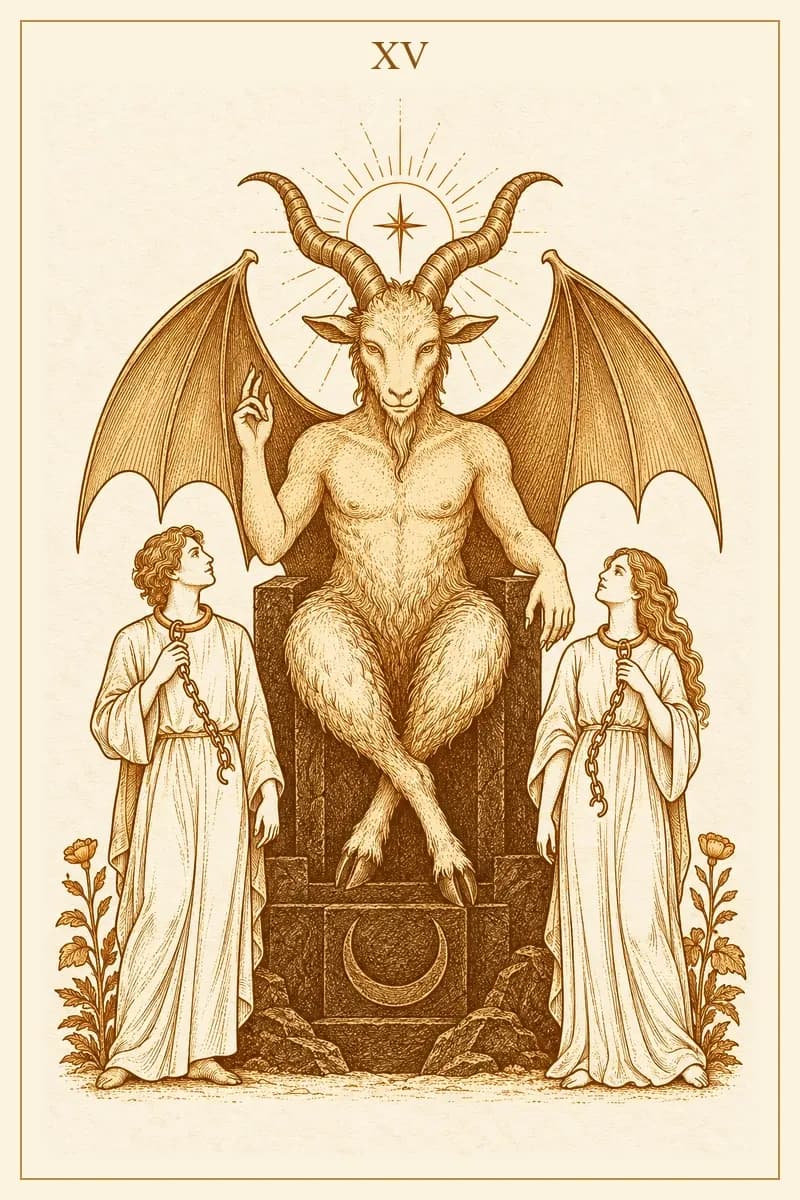
Willing blindness
Meaning of The Devil and Two of Swords Combination: Frozen Chains
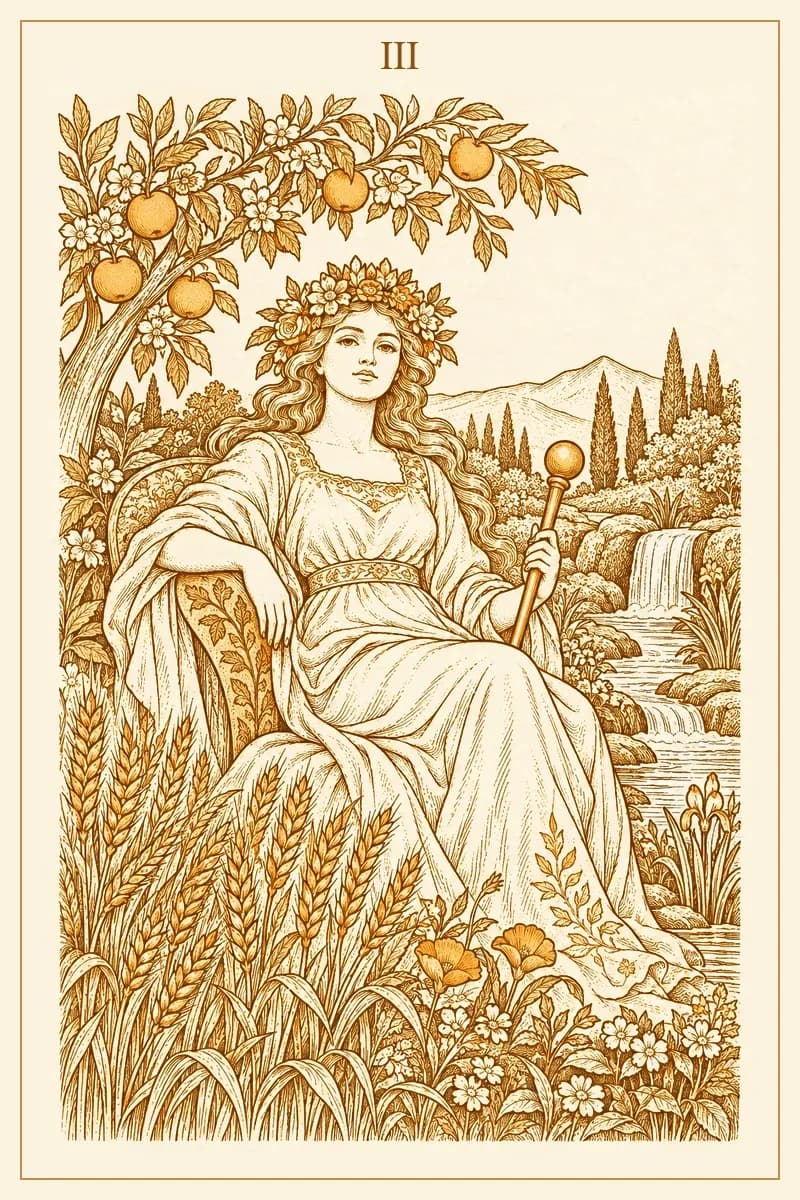
abundance under judgment
Meaning of The Empress and Justice: Abundance Under Judgment
Forced decision
Meaning of The Emperor and Two of Swords Combination: Authority Meets Stalemate
✦ Bring it to the cards ✦
Bring Justice and Two of Swords into your own reading
Use this pairing as a starting point, then let a spread listen to the situation that is actually yours.
Begin a contextual reading