Loading your view
The page is gathering the latest information.
The page is gathering the latest information.
precise accountability encountering gentle unconditional restoration
The recipe that follows the disaster is never the same recipe that caused it — but it still requires exact measurements. Justice sits in the kitchen with the scales, weighing what went wrong with the precision of someone who knows that honest assessment is the prerequisite for anything that comes next. Every ingredient that was mismeasured is noted. Every shortcut that led to the collapse is recorded. The scales don't forgive and don't forget. They simply show the accurate weight.
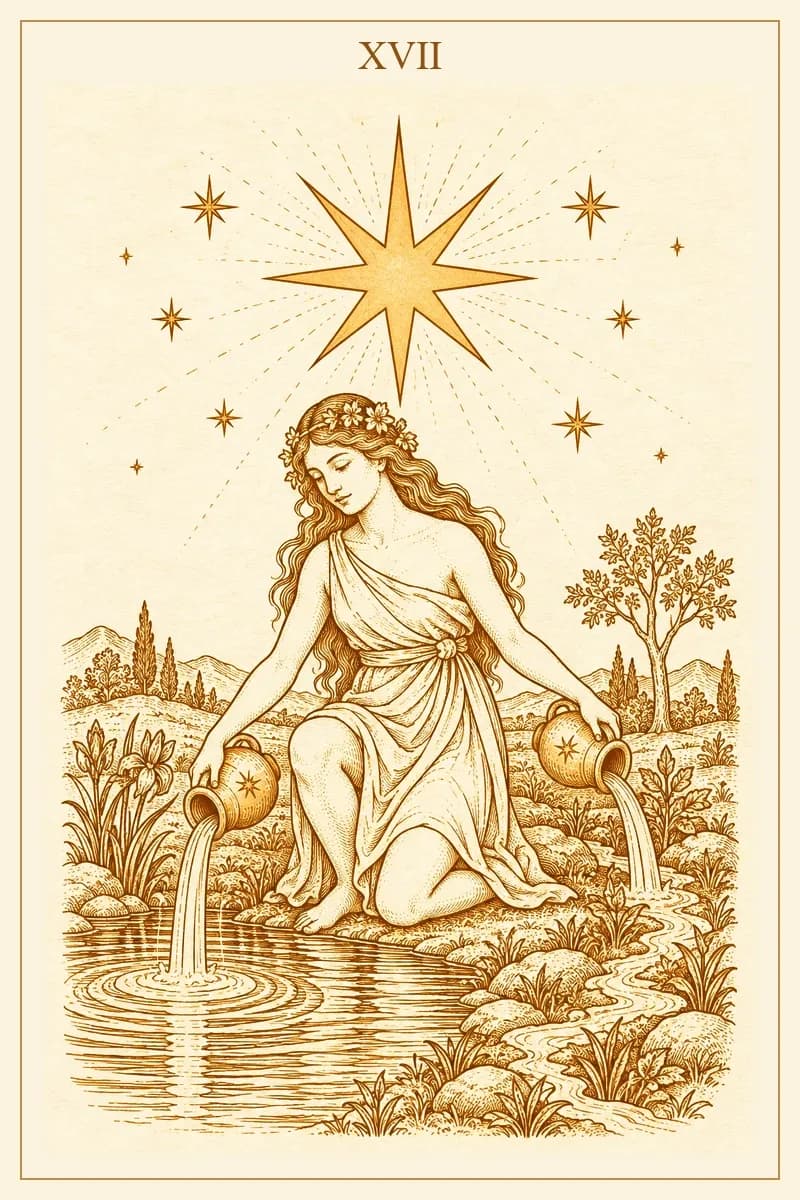
The Star kneels beside the stream outside the kitchen, pouring water with both hands — one into the stream, one onto the land — with the specific generosity of someone who has nothing left to protect and therefore nothing left to withhold. She doesn't measure. She pours freely because the pouring itself is the restoration.
Justice is conditional. The sword and scales together establish that consequences follow actions, that what is received corresponds to what was earned, that the universe operates through measurable cause and effect. Justice's comfort is precision: you know where you stand because the scales tell you.
The Star is unconditional. The woman pours water without measuring who deserves it. The eight-pointed star shines without qualification. The Star's comfort is different from Justice's — it doesn't come from knowing you earned it but from the quiet assurance that restoration flows regardless of the accounting.
Together, they ask whether healing requires settling the account first or whether some restorations happen outside the ledger entirely — and whether both can be true at the same time.
Justice in romantic readings is the honest reckoning — the conversation that addresses what each person has done, what each person owes, where the balance sits. The Star is the tenderness that exists after the reckoning: the quiet intimacy of two people who have looked at the truth and found something worth continuing.
The combination suggests that both are necessary and that their order matters. The Star's healing without Justice's honesty becomes avoidance. Justice's accounting without the Star's gentleness becomes a courtroom where love is on trial and nobody wins.
Justice at work is the performance review, the accountability framework, the honest assessment of what worked and what didn't. The Star is the renewed sense of purpose that follows — the moment after the difficult conversation when the path forward becomes clear and quiet motivation replaces defensive posturing.
This combination is particularly powerful for teams recovering from failure. Justice names what happened; the Star provides the environment where people can try again without the failure defining them permanently. Both functions are necessary. Neither alone is sufficient.
Justice's shadow here is accounting that prevents healing — the insistence on settling every debt before any restoration can begin. The scales that refuse to set down become instruments of indefinite punishment rather than clarity. When Justice demands that every wrong be fully addressed before the Star is permitted to pour, the restoration never arrives because the accounting never ends.
The Star's shadow is healing that bypasses accountability. The Star who pours water over unexamined wrongs produces the specific comfort of someone who feels better without understanding why they felt bad. Restoration that avoids Justice's scales is not healing — it is the pleasant surface over an unresolved foundation, and it will crack again along the same lines.
Keep or share this combination reference
Continue through published pairings that share Justice or The Star.

earned victory
disciplined hope

authority meets accountability

bondage versus healing

abundance under judgment
control meets healing
✦ Bring it to the cards ✦
Use this pairing as a starting point, then let a spread listen to the situation that is actually yours.
Begin a contextual reading