
Card Combination
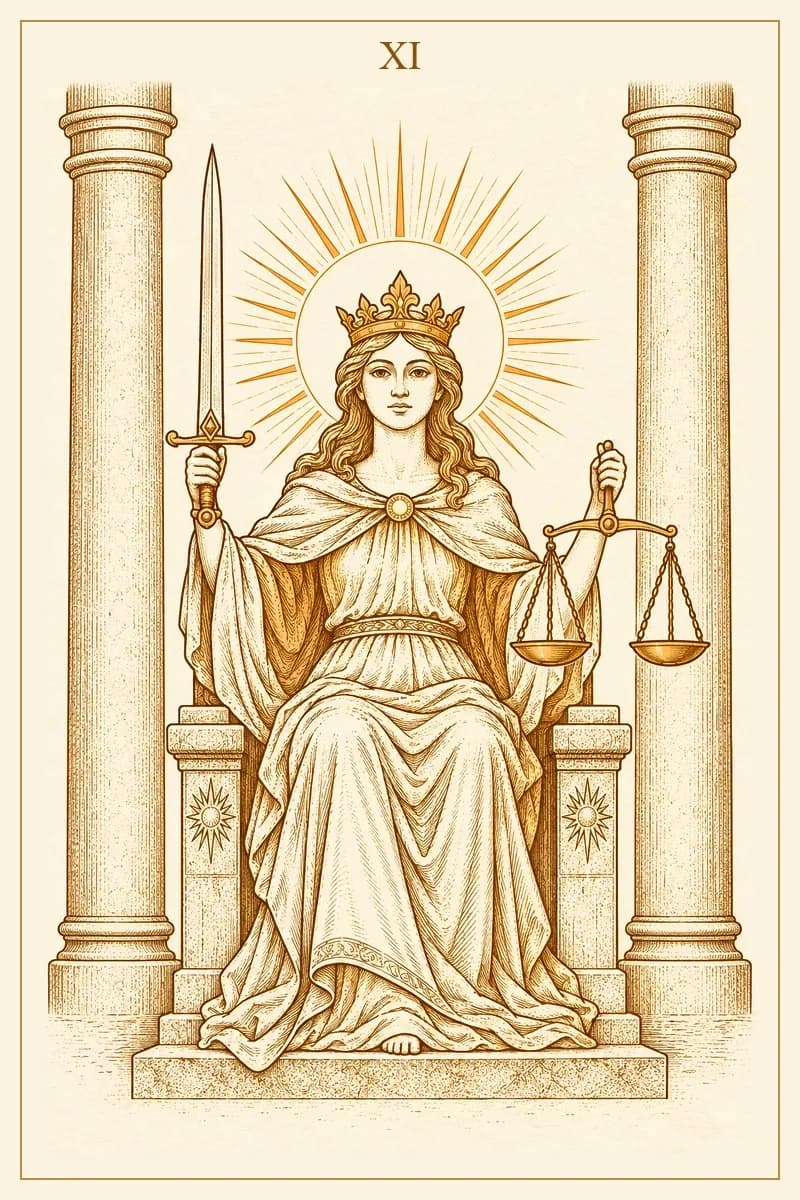
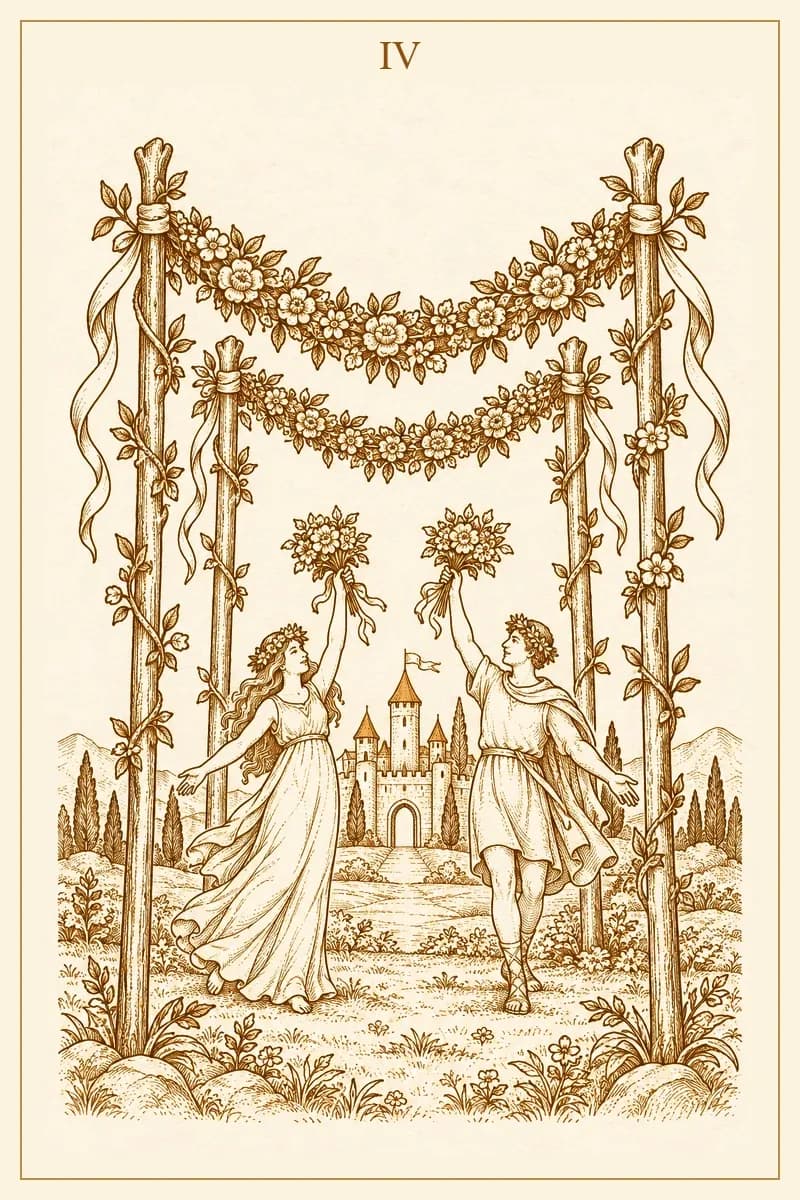
Meaning of Justice and Four of Wands Combination: The Terms of Celebration
earned celebration
One kitchen runs on intuition and improvisation — the chef adjusts by taste, invents mid-service, and the results are brilliant or disastrous with little in between. Another kitchen runs on mise en place: everything measured, prepped, and in its position before the first order arrives. The cook who steps into the second kitchen finds that the celebration is built into the structure. There is no anxiety at the peak of service because the foundation was correct from the start. Justice is that second kitchen. The Four of Wands is the moment service ends and the team raises a glass together.
The contrast in this pairing is not between work and reward — it is between the kind of reward that is hollow and the kind that holds. The Four of Wands is a genuine celebration, garlands and all, and it means more standing on Justice's foundation than it would standing on luck or manipulation. The banner raised here was earned by the rules of the kitchen being followed correctly. Everyone at the table knows it. That knowledge is what makes the wine taste like it does.
This combination appears when a milestone is either approaching or has just been reached — and the question underneath is not whether to celebrate, but whether the accounting is clean. Did the outcome arrive because of honest effort and fair dealing? Or is there a debt in the ledger that the celebration is trying to obscure?
The Core Tension
Justice is not a warm card. It does not console or comfort. It measures and it declares. Its sword is not raised in threat — it is raised in precision, cutting through what is true from what is claimed. The Four of Wands, by contrast, is warmth and community and the particular happiness of a shared arrival. The tension between them is between the cold clarity of an accurate account and the human desire to be festive.
In a professional kitchen, the tension shows up after a difficult service. The team wants to decompress, celebrate survival, and feel good together. The executive chef wants to do the debrief first: what worked, what broke, who made the call that saved the dish, and who made the call that nearly ruined it. Justice insists on that debrief. The Four of Wands insists on the celebration afterward. Both are necessary. The mistake is only in the order — or in skipping one entirely.
Love & Relationships
In a relationship reading, this combination is often associated with a formal commitment — engagement, moving in together, a renewed understanding between partners. Justice arriving alongside the Four of Wands asks whether the terms of the commitment are genuinely mutual. Is this a celebration of an equitable partnership, or is the festivity covering a contract that favors one person's needs over the other's?
There is nothing pessimistic about this question. A relationship that can answer it with honesty is a relationship that can sustain the celebration far beyond the ceremony. The garlands in the Four of Wands are not just decorative — they mark a threshold. Justice wants to know who agreed to what, and whether both people walked through it by their own choice, in full knowledge of what they were entering.
Career & Purpose
Professionally, this pairing appears at the conclusion of a significant project or negotiation. The outcome is good. Recognition may be coming. The team is ready to exhale. Justice's presence ensures that the celebration lands correctly — which means the credit goes to the people who did the work, not the people who showed up for the finish line.
In culinary terms, this is the kitchen that knows who butchered the meat, who reduced the sauce, and who held the whole thing together through the Thursday prep. The Four of Wands celebration is legitimate because the recipe was followed and the labor was seen. If the recognition is not matching the contribution, Justice will make that visible — not to ruin the party, but because a party that is built on misattribution eventually collapses.
Shadow Side
The shadow here is using celebration as a way to close the books prematurely. The Four of Wands is so visually satisfying — the garlands, the figures, the clear sky — that it can be used to signal that everything is resolved when the accounting is actually unfinished. A party thrown before the debt is paid does not erase the debt. It just means the creditor will arrive later, at a less convenient time.
Justice's shadow is the opposite: a kind of punitive exactness that refuses to let celebration happen until every variable is perfectly accounted for — which means the celebration never comes, because perfection never arrives.
Action Steps
- 1Before the celebration (or while it is happening), name clearly what specifically was earned — the effort, the decision, the sustained commitment. Make it precise, not vague.
- 2If someone's contribution to the milestone has gone unacknowledged, name it this week. Not as a complaint, but as a correction.
- 3Check whether the foundation of the current good feeling is solid. If one element of the structure was built dishonestly, this week is the right time to address it quietly.
Related Pairings
Continue through published pairings that share Justice or Four of Wands.

earned victory
Meaning of The Chariot and Justice: Victory Demands a Price
triumphant arrival
Meaning of The Chariot and Four of Wands Combination: Victory Comes Home

authority meets accountability
Meaning of The Emperor and Justice: Authority Meets Accountability
Gilded Captivity
Meaning of The Devil and Four of Wands Combination: Gilded Cage
abundance under judgment
Meaning of The Empress and Justice: Abundance Under Judgment
authority and celebration
Meaning of The Emperor and Four of Wands: Authority Celebrates Achievement
✦ Bring it to the cards ✦
Bring Justice and Four of Wands into your own reading
Use this pairing as a starting point, then let a spread listen to the situation that is actually yours.
Begin a contextual reading