
Card Combination
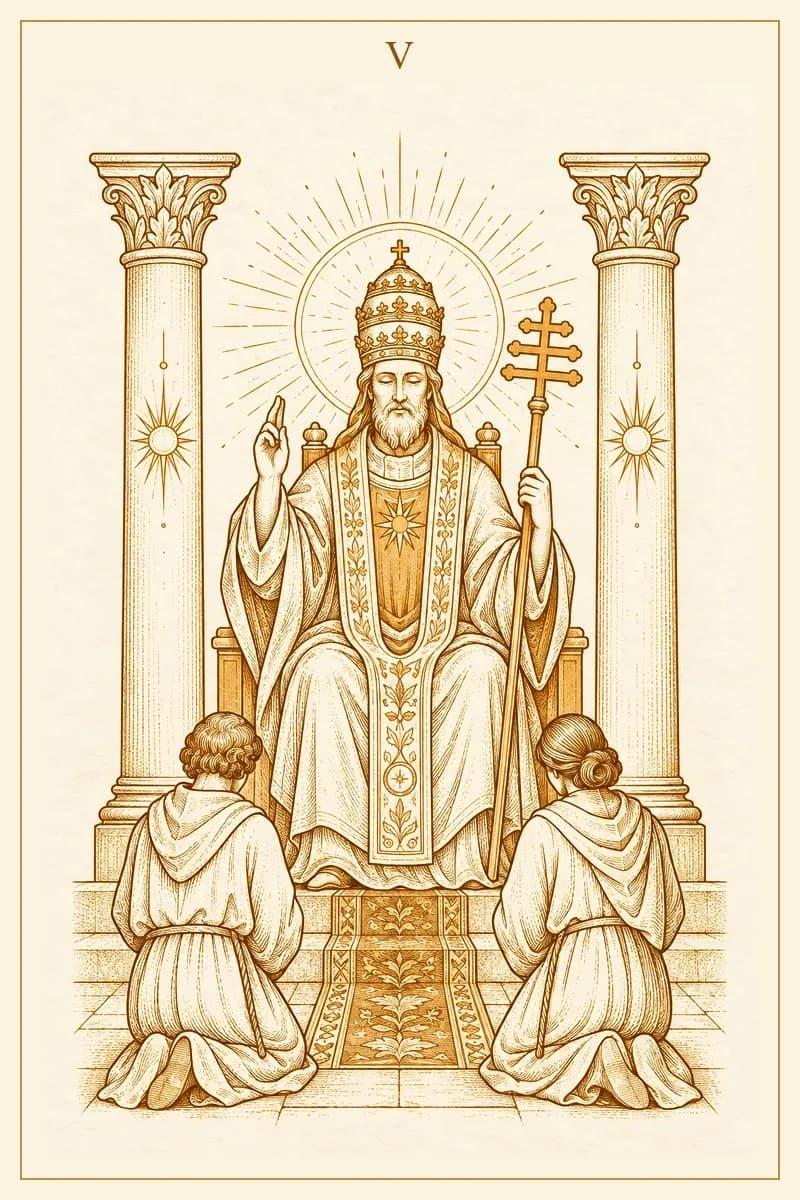
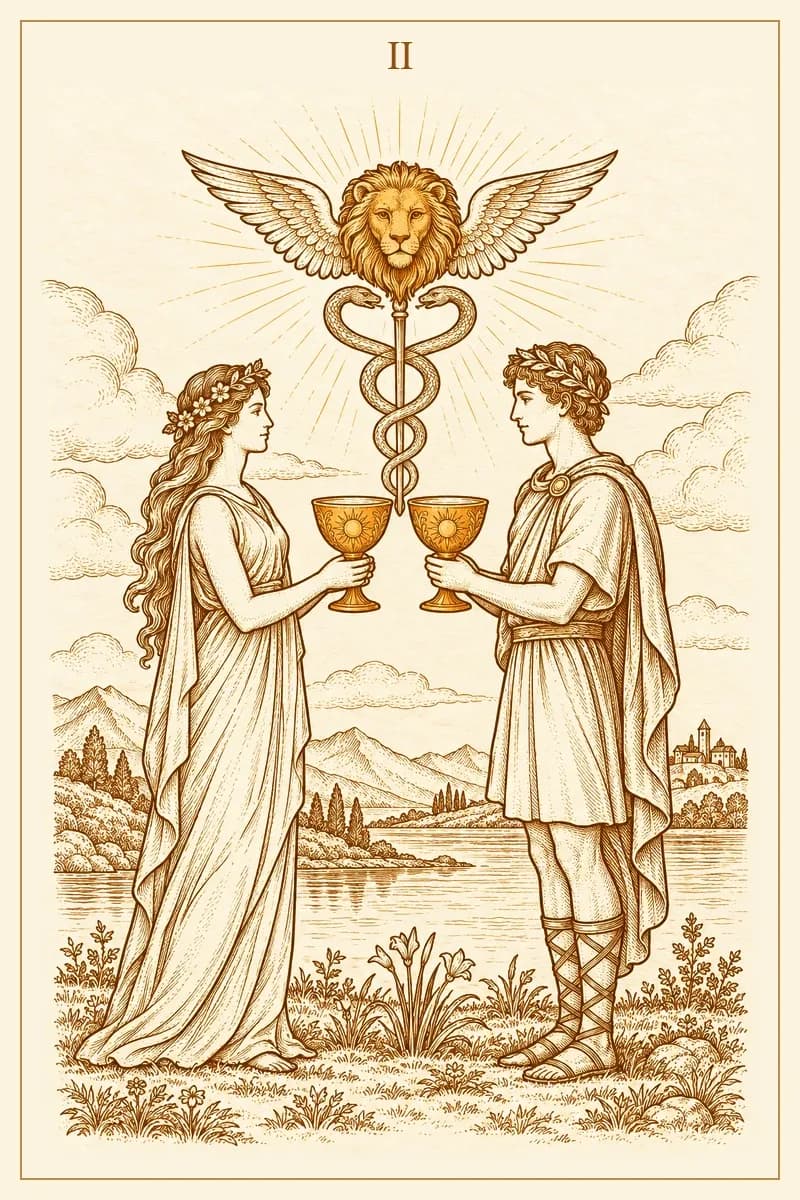
Meaning of The Hierophant and Two of Cups: Sacred Partnership
Blessed commitment
Picture two people who can love each other completely and still stand on opposite sides of an invisible wall — one shaped by ceremony, expectation, and everything a family or faith community once declared sacred. That wall is not always an obstacle. Sometimes it is the very structure that makes a house feel like a home. The Hierophant and the Two of Cups arrive together to pose a quiet, uncomfortable question: does the form your relationship takes serve the bond, or does the bond exist to serve the form?
This pairing sits at the intersection of institution and intimacy. The Hierophant carries the weight of established tradition — religious vows, cultural ritual, socially sanctioned roles. The Two of Cups carries something more immediate: two souls raising their cups in mutual recognition, pledging themselves to each other before any priest, any document, any witness arrives. One card speaks in the language of structure; the other speaks in the language of feeling. Together, they suggest that something meaningful is being built — but the blueprints and the builder's vision may not yet fully agree.
There is warmth here, and there is also a reckoning. The architecture of a committed relationship requires both a solid foundation — shared values, agreed-upon frameworks, respect for what each person holds as sacred — and the living, breathing connection that makes someone want to come home to that structure every day. When these two cards meet, the structure and the feeling are both present. What remains to be seen is whether they are reinforcing each other or quietly working at cross-purposes.
The Core Tension
The Hierophant is the master builder; the Two of Cups is the moment two people look at the same empty lot and agree they want to build something there together. The tension lies in sequence and priority. Does the bond deepen because it has been given proper form — ceremony, declaration, public commitment? Or does the ceremony ring hollow because it was chosen to satisfy expectation rather than to honor what genuinely exists between two people?
Tradition can be a load-bearing wall. Remove it carelessly and the whole structure collapses. But not every wall is load-bearing. Some are partitions added by previous owners for reasons that no longer apply. This combination asks you to know the difference — to understand which conventions support your relationship and which ones simply take up space that the living connection could use.
Love & Relationships
For an established couple, this pairing often marks a threshold moment: an engagement, a decision to formalize what has been informal, or a conversation about whether your relationship aligns with the values each of you carries from your upbringing. It can indicate a proposal, a commitment ceremony, or a deliberate choice to define the relationship in terms both of you can stand behind.
For someone single or newly dating, the Two of Cups alongside the Hierophant suggests that the next significant connection will have depth and a certain gravity to it — not a casual encounter but something that asks both people to bring their full set of values to the table. There may be a teacher-student dynamic, a meeting through a religious or cultural community, or a relationship that begins within a shared philosophical framework.
Complications arise when one partner is deeply traditional and the other is not. The cards do not say which position is correct. They say that the gap needs to be addressed directly, not pappered over with hope.
Career & Purpose
In professional contexts, this combination describes formal mentorship, a meaningful partnership within an institutional setting, or a working relationship that carries genuine mutual respect and shared purpose. Two colleagues who genuinely believe in what they are building together, operating within a larger organizational structure — that is the quiet hum of this pairing at work.
It can also signal that a professional relationship is ready to be elevated: a freelance arrangement formalized into a partnership, a collaboration made official, a mentor relationship acknowledged publicly. The Two of Cups here is the handshake; the Hierophant is the contract.
Shadow Side
The shadow of this pairing is the relationship that looks correct from the outside while feeling hollow from the inside. When the Hierophant dominates, tradition becomes a cage. The couple performs commitment for an audience — family, community, social expectation — without doing the quieter, harder work of actually choosing each other beneath all that performance.
Equally, the Two of Cups can romanticize connection to the point of ignoring genuine incompatibilities. Feeling deeply for someone does not automatically resolve differences in faith, family expectations, or life structure. The shadow asks: are you building something real, or are you decorating a façade?
Action Steps
- 1Have one specific conversation about a tradition or expectation in your relationship that you have never directly questioned — name it, and decide together whether it still belongs.
- 2If you are at a commitment threshold, write down privately what the commitment means to you in your own words, separate from what it is supposed to mean.
- 3Notice where you feel the weight of external approval in your closest relationship, and locate one place where you can act from internal alignment instead.
- 4The Hierophant and Two of Cups together are not a guarantee of lasting love, nor are they a warning against it. They are a blueprint session — a moment when the emotional truth of a bond and the structural form that bond takes are being held up next to each other for honest comparison. What you discover in that comparison, and what you choose to do with it, is the real reading.
Related Pairings
Continue through published pairings that share The Hierophant or Two of Cups.
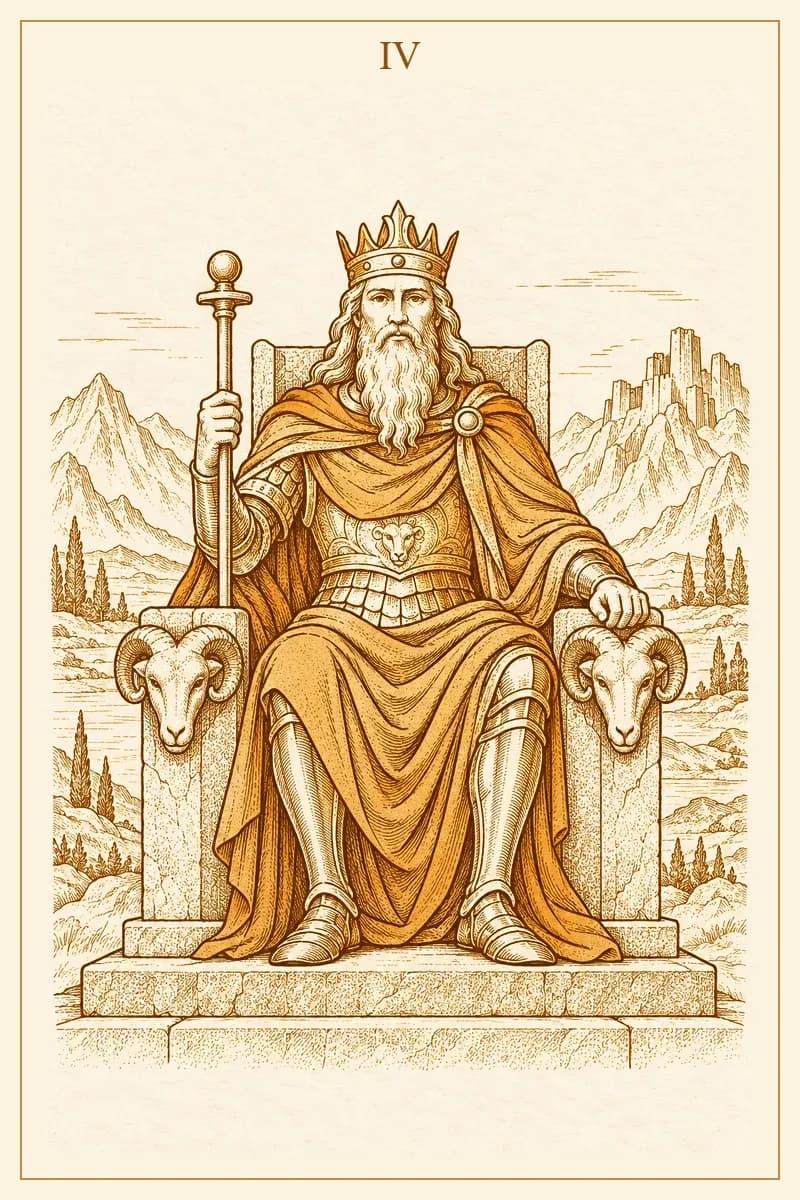
authority meets doctrine
Meaning of The Emperor and The Hierophant: Two Pillars of Order
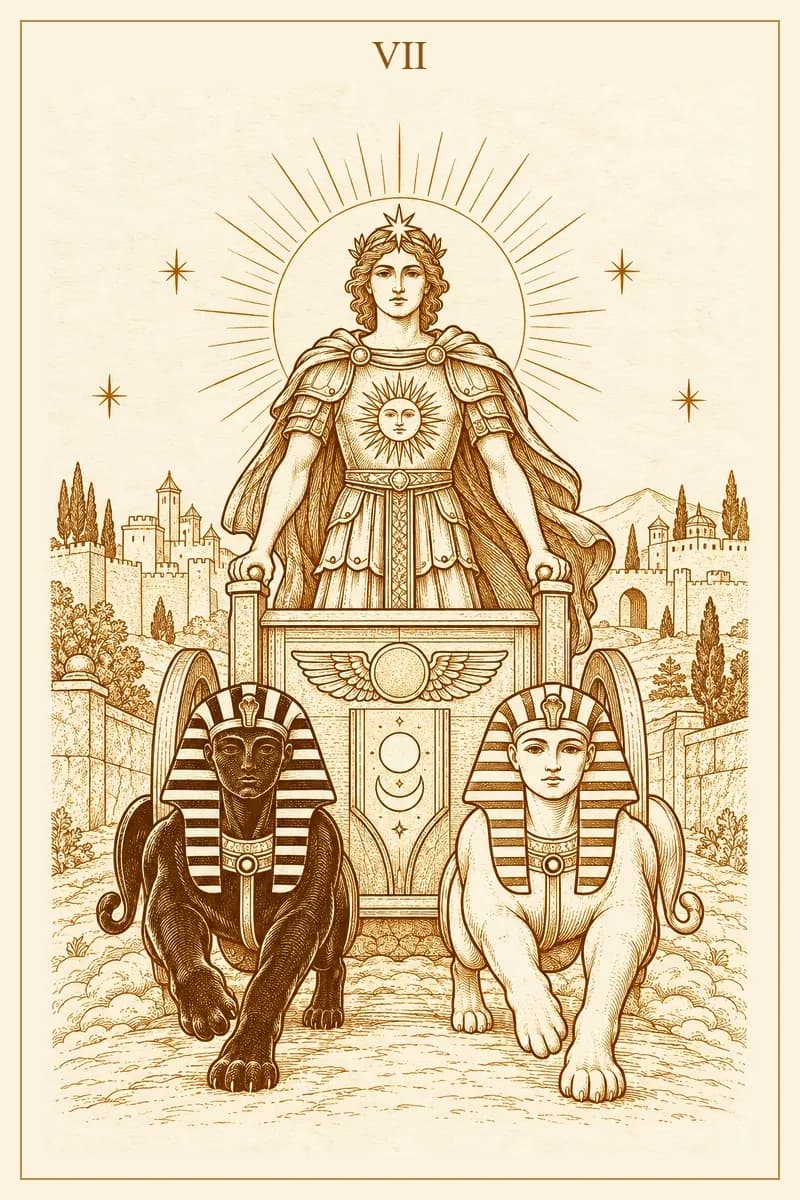
shared momentum
Meaning of The Chariot and Two of Cups: Moving Together
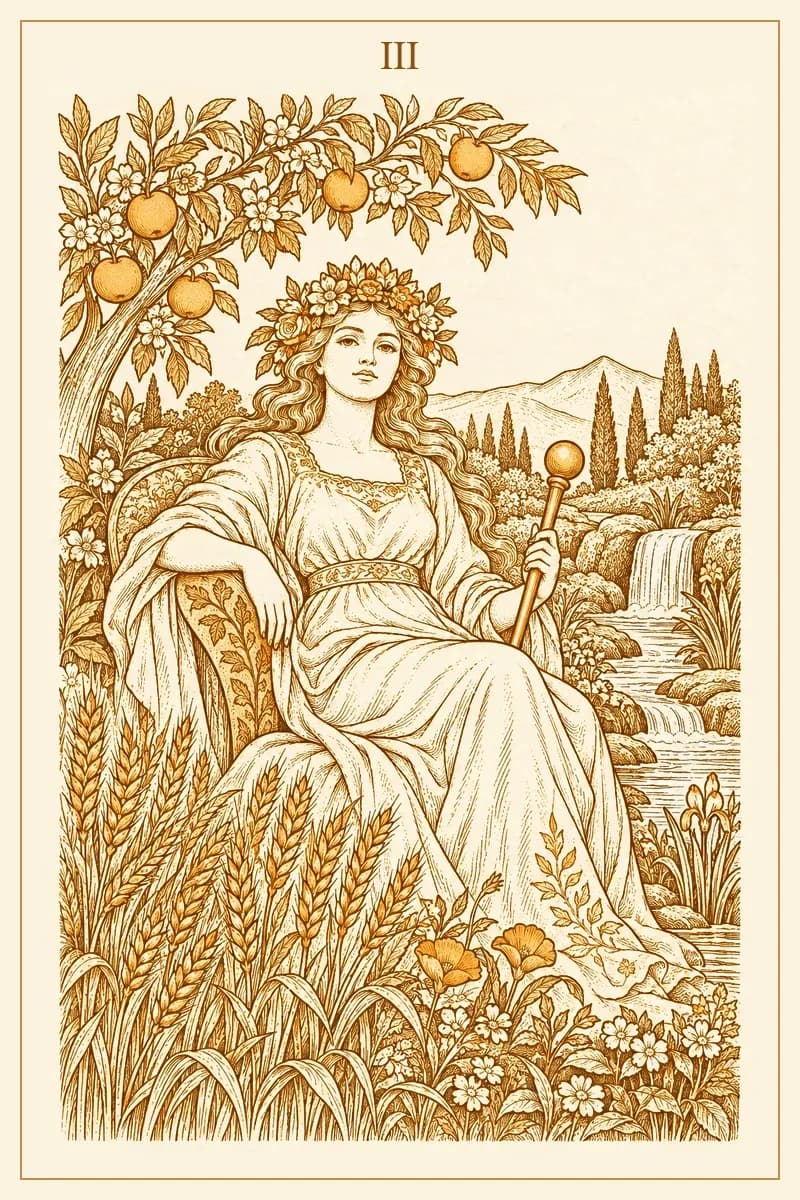
abundance versus doctrine
Meaning of The Empress and The Hierophant: Nature Meets Doctrine
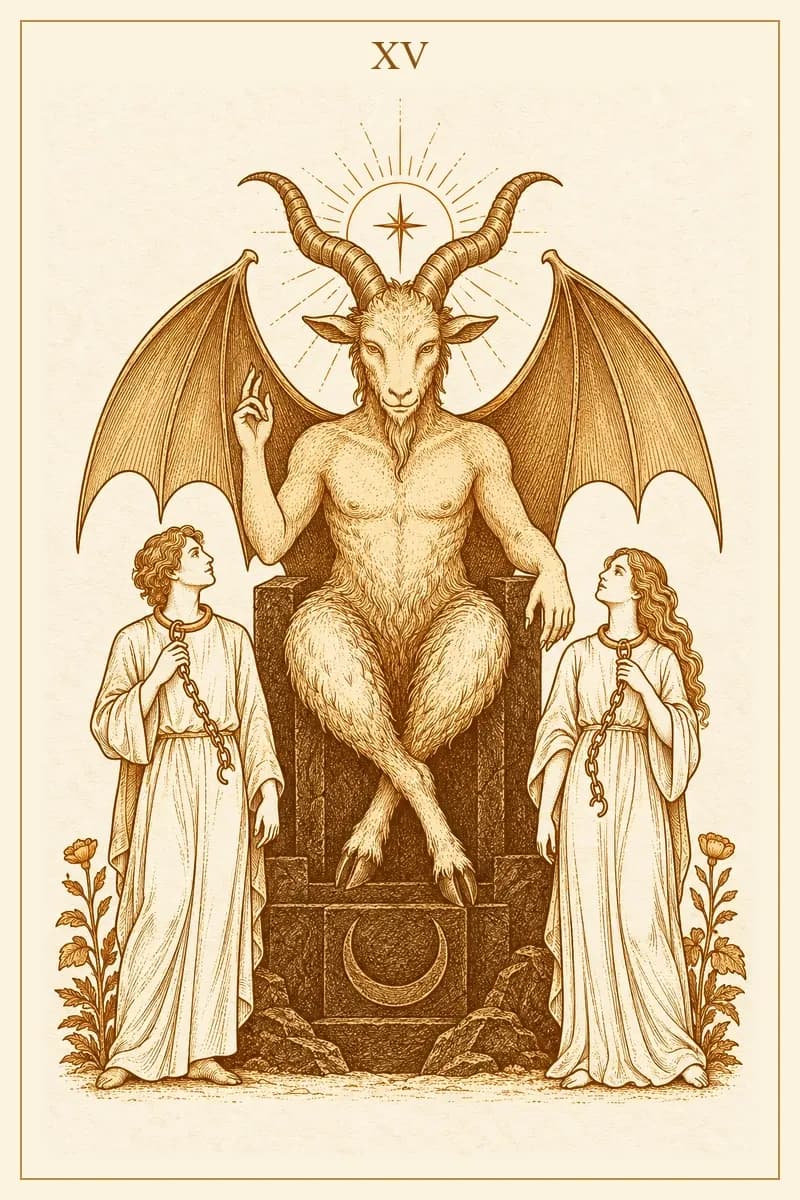
Entangled Bonds
Meaning of The Devil and Two of Cups Combination: Bound Together
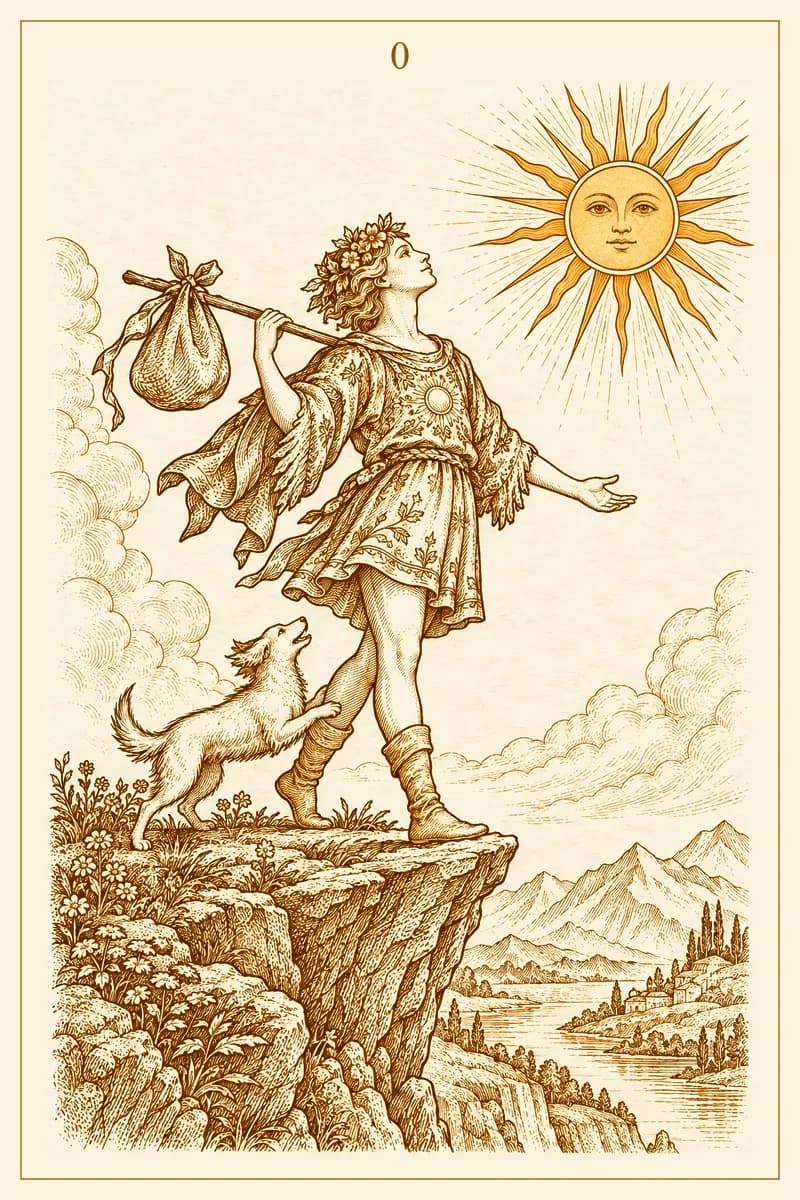
Sacred Rebellion
Meaning of The Fool and The Hierophant Combination: Tradition Meets Freedom
Authority softened by authentic mutual recognition
Meaning of The Emperor and Two of Cups: When Authority Meets Its Equal
✦ Bring it to the cards ✦
Bring The Hierophant and Two of Cups into your own reading
Use this pairing as a starting point, then let a spread listen to the situation that is actually yours.
Begin a contextual reading