
Card Combination
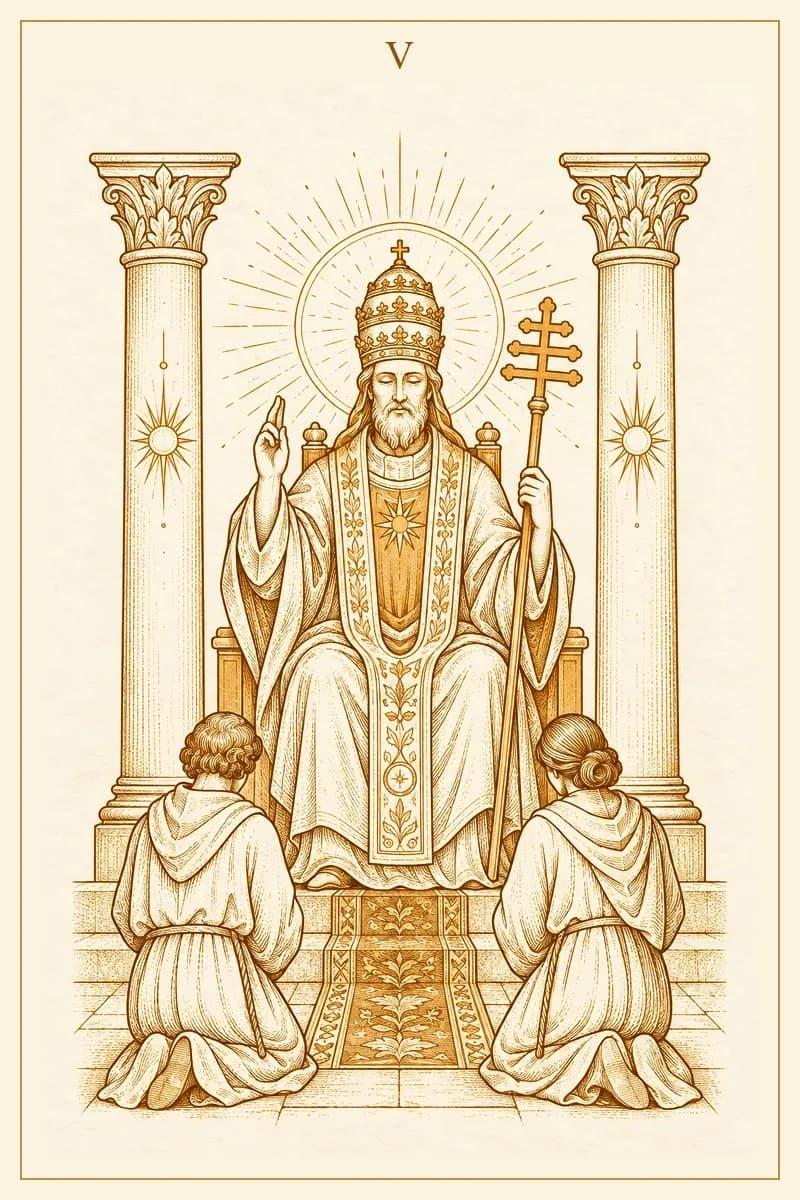
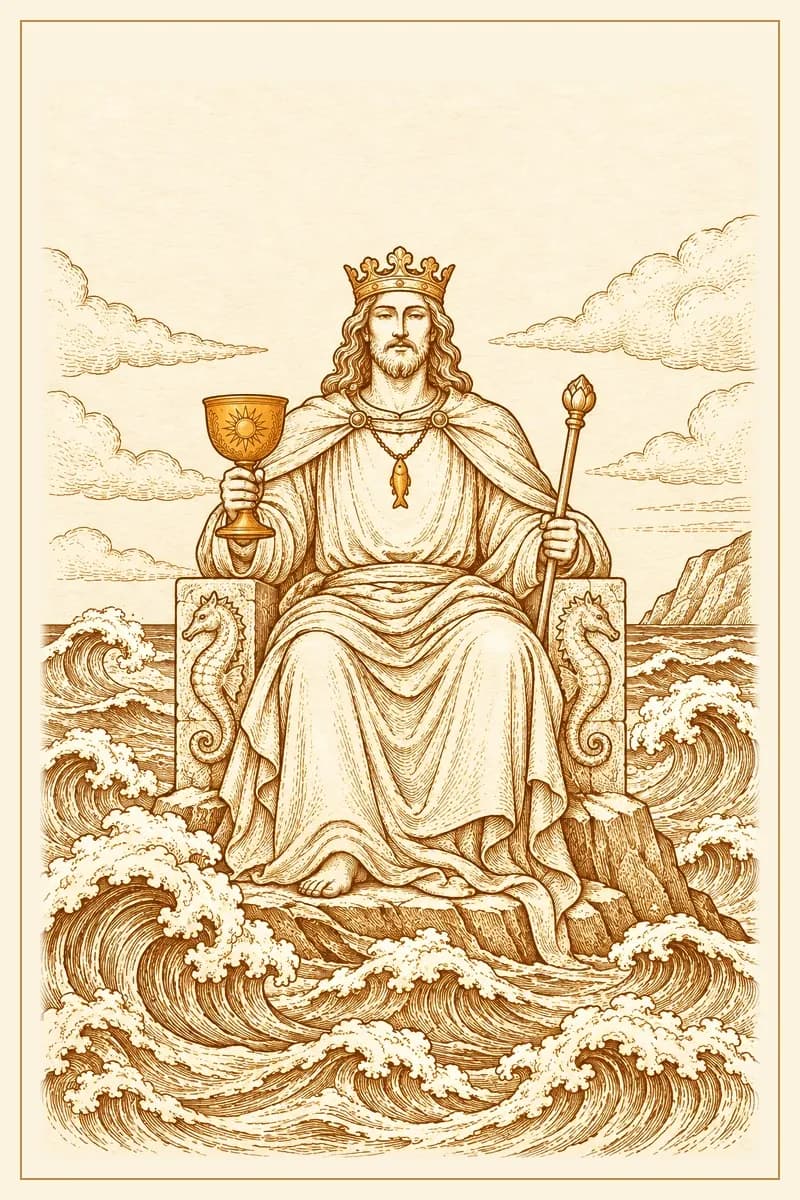
Meaning of The Hierophant and King of Cups Combination: Where Law Meets Compassion
Wisdom through compassion
Picture two rulers sitting across from each other, and neither will budge—yet both are right. One holds the scrolls of tradition, the weight of centuries compressed into law. The other holds a golden chalice, reading the room, absorbing the unspoken grief in the corners. What happens when the keeper of doctrine meets the master of emotional intelligence? Something either collapses or becomes more structurally sound than either could be alone.
This pairing carries a rare quality: it is not a fight between logic and feeling, but between two different kinds of knowing. The Hierophant knows through study, lineage, and accumulated doctrine. The King of Cups knows through observation, through sitting with discomfort long enough that it reveals its shape. Neither method is wrong. The friction between them is not a flaw in the architecture—it is the arch that holds the weight.
What this combination asks of you is difficult to articulate but easy to feel: can you honor the structure you were given while still bending toward the person in front of you? Can you uphold principle without hollowing out your own heart in the process?
The Core Tension
The Hierophant represents codified wisdom—the rule exists because someone, somewhere, learned hard lessons and encoded them for others. The King of Cups represents adaptive wisdom—understanding that every rule was written by a human, for humans, and humans are endlessly variable. The tension here is between precedent and presence.
Think of load-bearing walls in a building. Remove them and everything falls. But a building designed only for structural integrity, with no thought for how people actually move and breathe inside it, becomes a beautiful prison. The Hierophant lays the foundation. The King of Cups insists that the rooms must be livable. Together, they suggest that the most durable structures are the ones built with both.
Where this breaks down: when the Hierophant's rules become dogma so rigid that no human truth can squeeze through, the King of Cups drowns in unexpressed grief. When the King of Cups permits so many emotional exceptions that no principle survives, the Hierophant's system collapses into individual feelings with no shared framework.
Love & Relationships
In romantic relationships, this combination describes a partnership where one person holds the expectations—spoken or inherited—and the other holds the emotional weather of the relationship. If you identify more with the Hierophant, you may be offering stability and defined roles, but your partner may feel that your love comes with conditions attached to a manual they never received.
If you identify with the King of Cups, you are the one absorbing and managing the emotional undercurrents while quietly chafing against conventions that feel arbitrary. You understand your partner's feelings better than they do—which can become a subtle form of control if you are not careful.
The growth here is in building a relationship where emotional fluency is itself a tradition worth honoring. Where the rituals you keep are chosen, not inherited by default. Where structure serves the love, not the other way around.
Career & Purpose
Professionally, this pairing often appears in leadership contexts—a manager, therapist, spiritual director, or mentor who must uphold institutional standards while remaining genuinely responsive to the people they serve. The challenge is not choosing between the two but integrating them.
The Hierophant-King of Cups combination at work can produce the rare leader who gives people something to believe in while also making them feel genuinely seen. This is not a small thing. Most institutions offer one or the other. The person who can deliver both builds loyalty that outlasts any organizational chart.
Watch for the reverse: using emotional intelligence to enforce compliance. A leader who reads the room perfectly and uses that insight to manipulate rather than serve has inverted what the King of Cups stands for. The chalice is meant for receiving, not weaponizing.
Shadow Side
The shadow of this pairing is spiritual or institutional enabling. The Hierophant's authority can create a system where the King of Cups' empathy becomes a mechanism for absorbing abuse, rationalizing it as compassion. Staying in a harmful structure because you understand why it is broken—and because you love the people inside it—is not wisdom. It is a trap with a benevolent face.
There is also the risk of performing both roles as a costume: appearing compassionate while enforcing rigid rules, appearing principled while being emotionally manipulative. The authentic integration this pairing demands requires actual self-examination, not just sophisticated presentation.
Action Steps
- 1Identify one rule or expectation you are upholding out of habit rather than genuine belief, and ask whether it still serves the people it was meant to protect.
- 2Have a conversation where you listen to understand rather than to evaluate or respond—practice the King of Cups' mode even if it feels passive.
- 3Write down one principle you actually believe in, not one you inherited. Notice whether the two lists overlap.
- 4The Hierophant and King of Cups together are not asking you to choose between structure and compassion. They are asking you to build something worth living inside—a set of values that can hold weight and still leave room for the people underneath them to breathe. That is harder than choosing one side. It is also the only thing that actually lasts.
Related Pairings
Continue through published pairings that share The Hierophant or King of Cups.
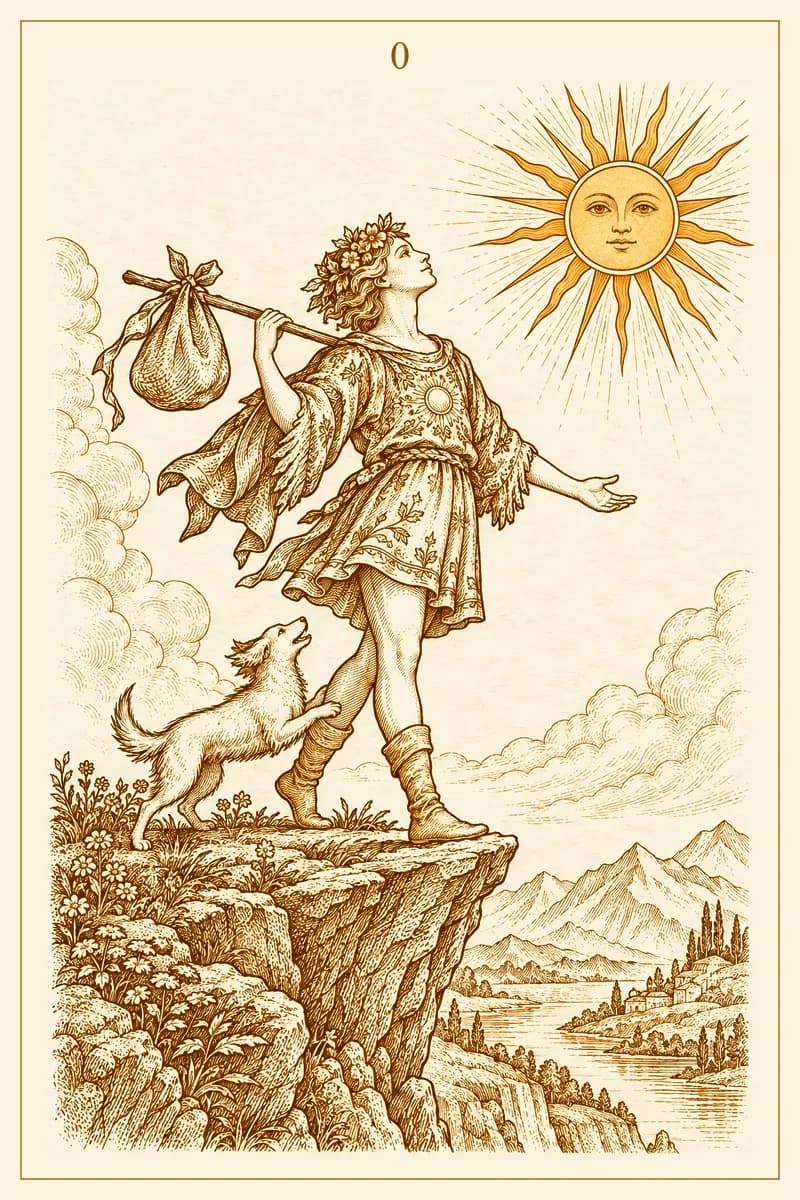
Sacred rebellion
Meaning of The Fool and The Hierophant Combination: Tradition Meets Freedom
Unarmed diplomacy
Meaning of The Fool and King of Cups Combination: Unarmed Diplomacy
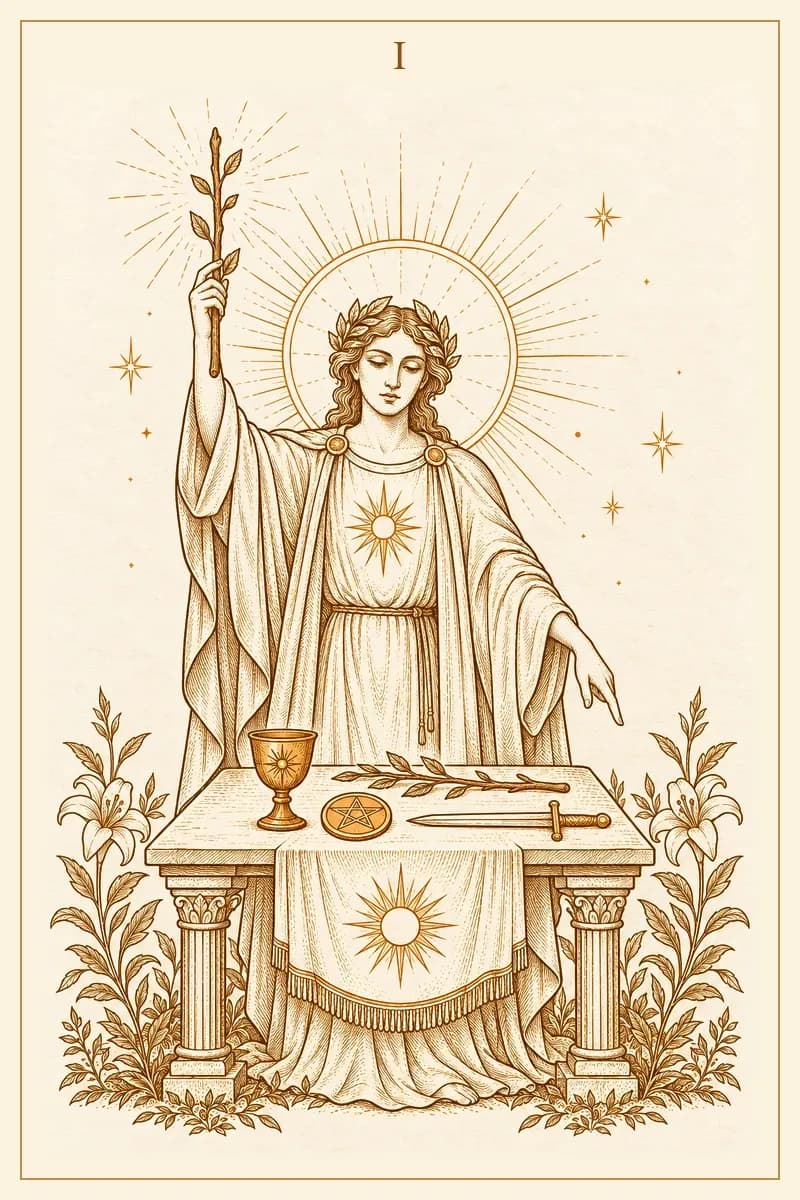
Structured mastery
Meaning of The Magician and The Hierophant Combination: The Cathedral You Build Yourself
Commanding emotion with skill
Meaning of The Magician and King of Cups Combination: Mastery in Two Languages
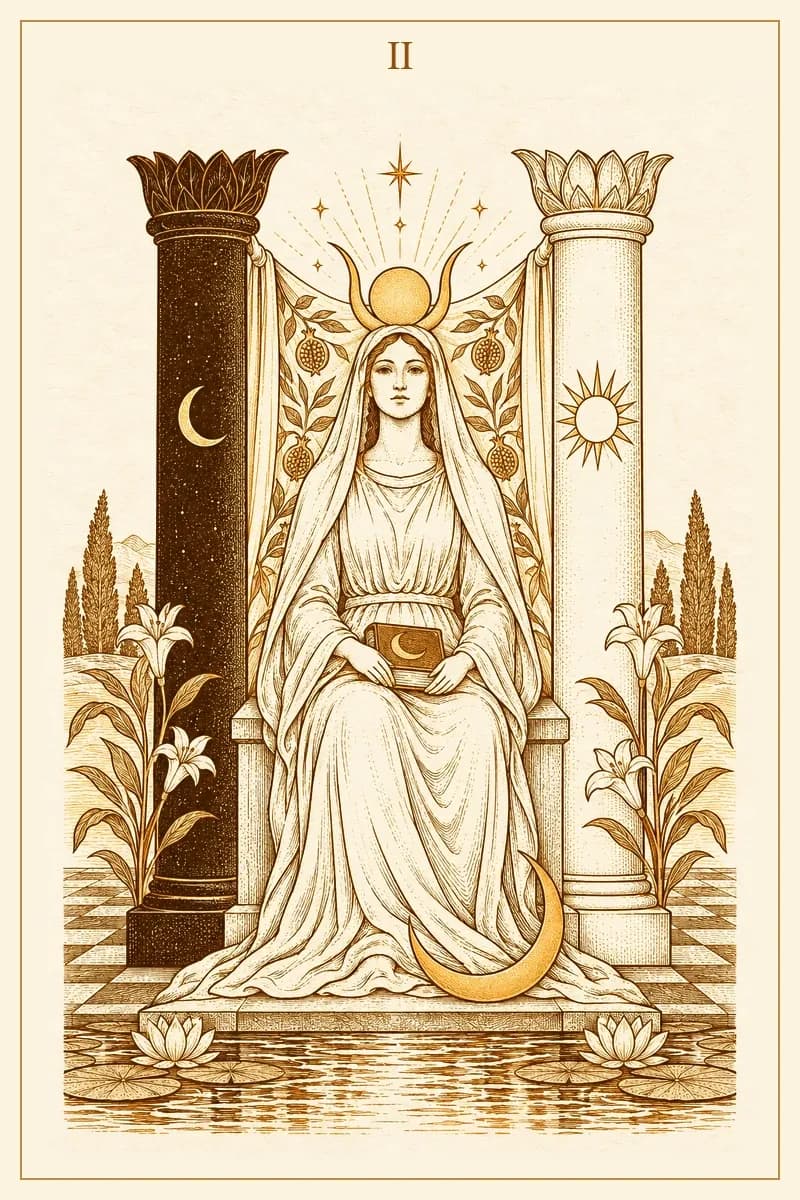
Inner and outer doctrine
Meaning of The High Priestess and The Hierophant Combination: Inner and Outer Doctrine
Intuitive composure
Meaning of The High Priestess and King of Cups Combination: Quiet Emotional Mastery
✦ Bring it to the cards ✦
Bring The Hierophant and King of Cups into your own reading
Use this pairing as a starting point, then let a spread listen to the situation that is actually yours.
Begin a contextual reading