
Card Combination
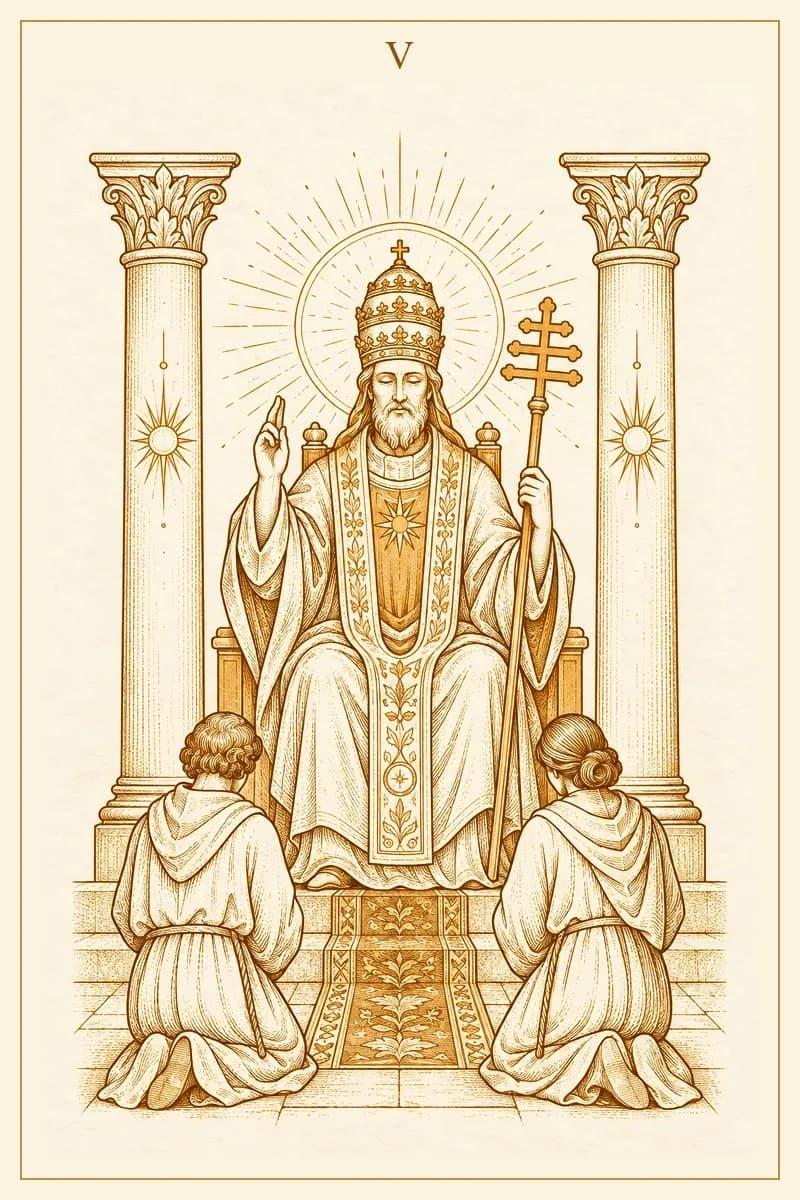
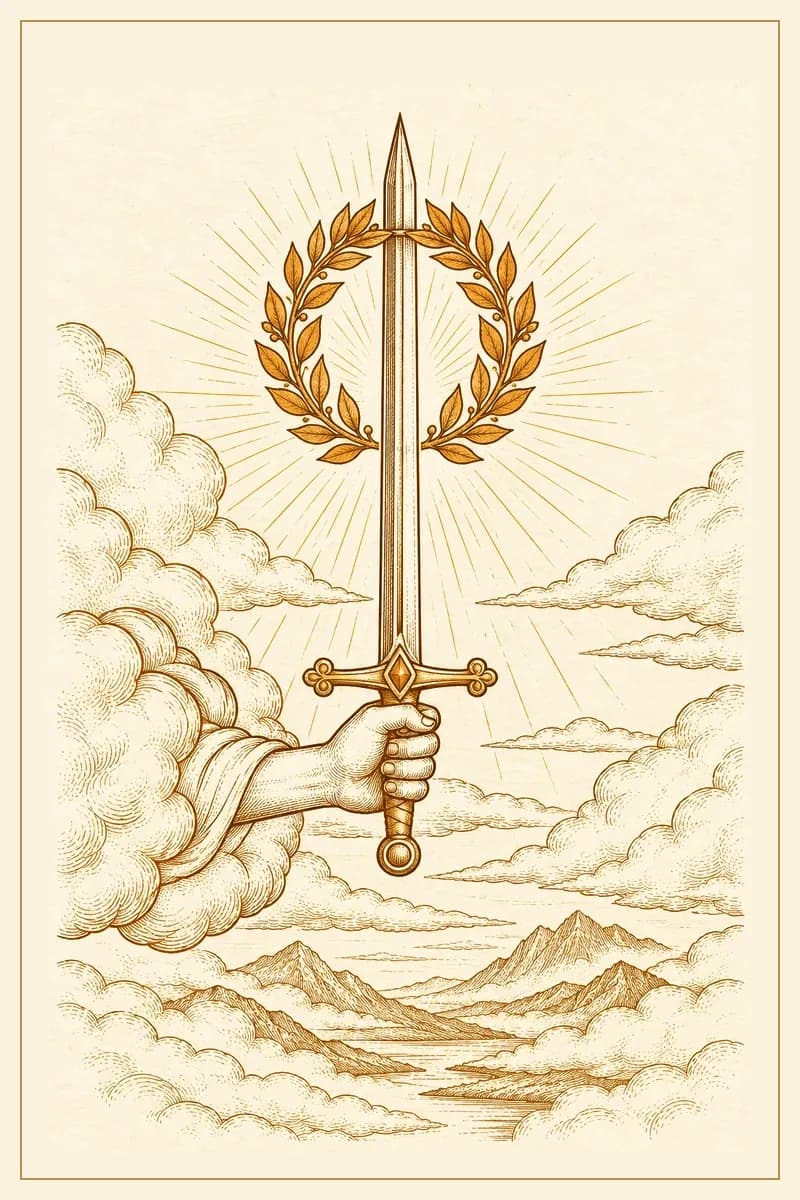
Meaning of The Hierophant and Ace of Swords Combination: When Truth Cuts Through Doctrine
Truth over tradition
The diagnosis is already written. The chart says one thing. The attending physician, looking at the patient in front of them, sees something the chart cannot contain. This is the moment The Hierophant and Ace of Swords arrive together—when the established protocol meets a truth so sharp and immediate that the protocol suddenly seems not wrong, exactly, but insufficient. What do you do with a truth that your system was not designed to hold?
The Ace of Swords does not negotiate. It is a scalpel, not a conversation. It cuts through tissue to show you what is actually there, regardless of what the pre-operative notes suggested. The Hierophant, standing at the head of the table with decades of clinical precedent behind him, has seen a thousand cases. His protocols saved lives. But this patient is not a protocol. And the Ace of Swords is already in the field.
This is not a pairing that settles into comfort. It creates a specific and productive kind of discomfort—the discomfort of clarity arriving before the framework can accommodate it.
The Core Tension
The Hierophant governs through accumulated wisdom: the idea that what worked across many cases, encoded into doctrine, protects individuals from reinventing the wheel at great personal cost. The Ace of Swords governs through immediate perception: the idea that truth is visible right now, in this moment, and that any system which cannot see it needs revision.
The medical parallel holds here because medicine lives this tension constantly. Evidence-based medicine is the Hierophant—protocols derived from population studies, clinical trials, accumulated data. The diagnostic intuition of a skilled clinician who notices something that doesn't fit the expected presentation is the Ace of Swords. Neither alone is sufficient. The protocol without clinical judgment kills edge cases. Clinical intuition without protocol creates chaos and inconsistent care.
What this combination refuses to let you avoid: the moment when the truth you are seeing contradicts the authority you have been trusting. You cannot defer that reckoning indefinitely.
Love & Relationships
In relationships, the Ace of Swords cuts through the stories you have been telling. The Hierophant, in love, often represents inherited ideas about what relationships should look like—roles absorbed from family, religion, culture, or a previous relationship that got crystallized into permanent expectation.
The Ace of Swords arrives when you finally see, with cold clarity, that the relationship you are in does not match the relationship you claimed you wanted. Or when you see that what you claimed you wanted was not actually yours—it was borrowed from someone else's framework.
This can be a painful pairing in love because the Ace of Swords does not soften its findings. It simply shows you what is there. The question this combination poses is whether you are willing to let accurate perception lead—even when it disrupts structures you have invested in, or contradicts beliefs you have organized your emotional life around.
Career & Purpose
Professionally, this combination often appears when someone has the clarity to see a better way of doing something inside an institution that is heavily invested in the current way. The insight is genuine. The system is real. The friction is inevitable.
The Ace of Swords gives you the analysis. The Hierophant gives you the context: every institution has immune responses to threats to its core assumptions. You can be right and still fail to change anything if you do not understand that the system will treat your clarity as an attack rather than a gift.
The skill this pairing asks you to develop is not how to be more right, but how to introduce a true thing into a system that wasn't built to receive it. That requires strategic patience—a quality the Ace of Swords finds uncomfortable but must learn.
Shadow Side
The shadow of this pairing is the certainty that your clarity exempts you from accountability. The Ace of Swords is intoxicating: once you can see clearly, it is tempting to believe that seeing is enough—that the truth you hold makes the structures around you irrelevant, the concerns of others overridden.
The Hierophant's shadow pulls in the opposite direction: using institutional authority to suppress inconvenient truths. A system that has learned to perform wisdom while silencing the perceptions that would require it to change is not wisdom—it is self-preservation dressed in robes.
Both shadows converge when someone uses the language of clarity and principle to avoid genuine examination of their own position.
Action Steps
- 1Identify one belief about your current situation that you have been treating as established truth, then examine where it actually came from—lived experience or inherited assumption.
- 2Practice stating a difficult truth without using it as a weapon: precision without punishing is the hardest form of honesty.
- 3Before challenging an institution or authority, map what it would actually take for them to hear you—not whether they should, but what it would actually require.
- 4The Hierophant and Ace of Swords together do not ask you to dismantle everything that came before, nor to subordinate your perception to tradition. They ask you to hold both with discipline: the respect for what has been tested against time, and the courage to name what the tests missed. That combination—rigor and clarity, structure and truth—is rarer than either alone, and considerably more useful.
Related Pairings
Continue through published pairings that share The Hierophant or Ace of Swords.
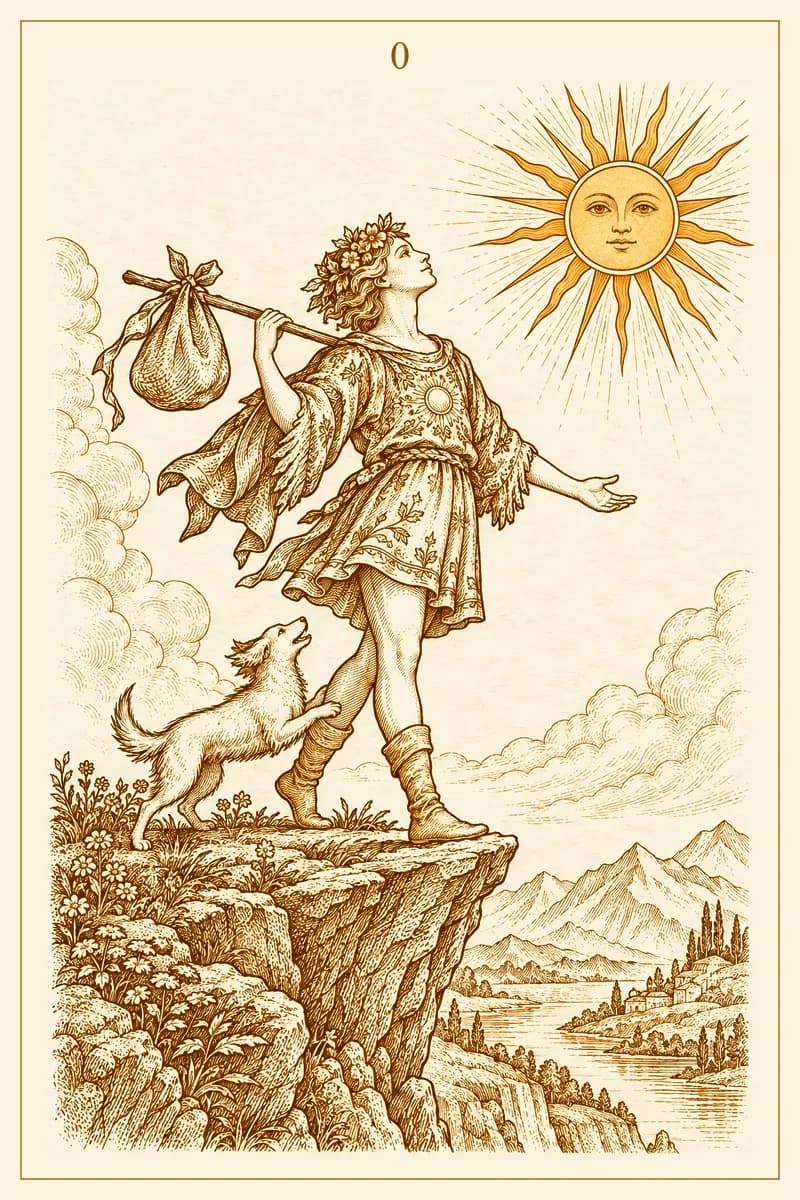
Sacred rebellion
Meaning of The Fool and The Hierophant Combination: Tradition Meets Freedom
Pure openness meeting absolute clarity
Meaning of The Fool and Ace of Swords Combination: When the Fog Finally Lifts
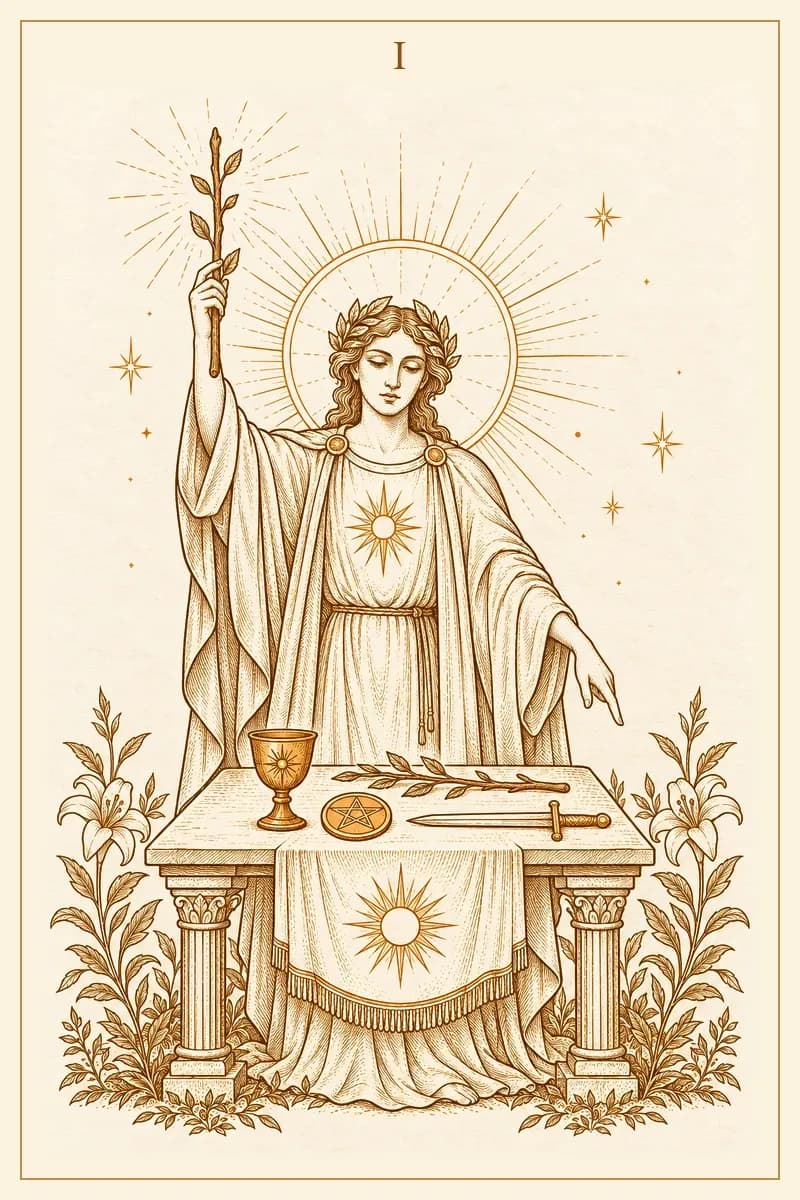
Structured mastery
Meaning of The Magician and The Hierophant Combination: The Cathedral You Build Yourself
Willpower sharpened to a cutting edge
Meaning of The Magician and Ace of Swords Combination: When Will Becomes a Blade
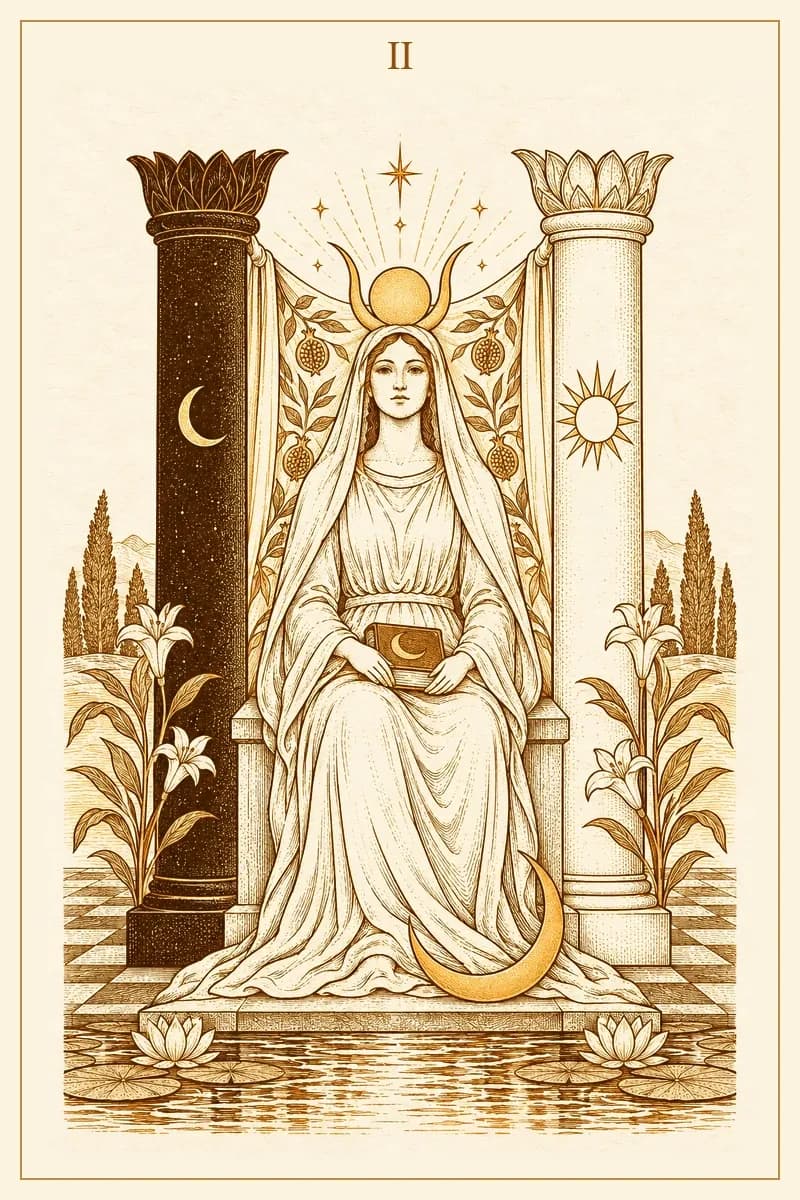
Inner and outer doctrine
Meaning of The High Priestess and The Hierophant Combination: Inner and Outer Doctrine
Clarity from stillness
Meaning of The High Priestess and Ace of Swords Combination: Hidden Truth, Sharp Edge
✦ Bring it to the cards ✦
Bring The Hierophant and Ace of Swords into your own reading
Use this pairing as a starting point, then let a spread listen to the situation that is actually yours.
Begin a contextual reading