Loading your view
The page is gathering the latest information.
The page is gathering the latest information.
solitude reveals bondage
There is a particular kind of poker player who steps away from the table, convinced the problem was the other players — the noise, the smoke, the bad beats. Alone in a quiet room, cards face-down, they finally feel in control. Then they realize: they are still counting the hands they lost. The game never left. It followed them into the silence.
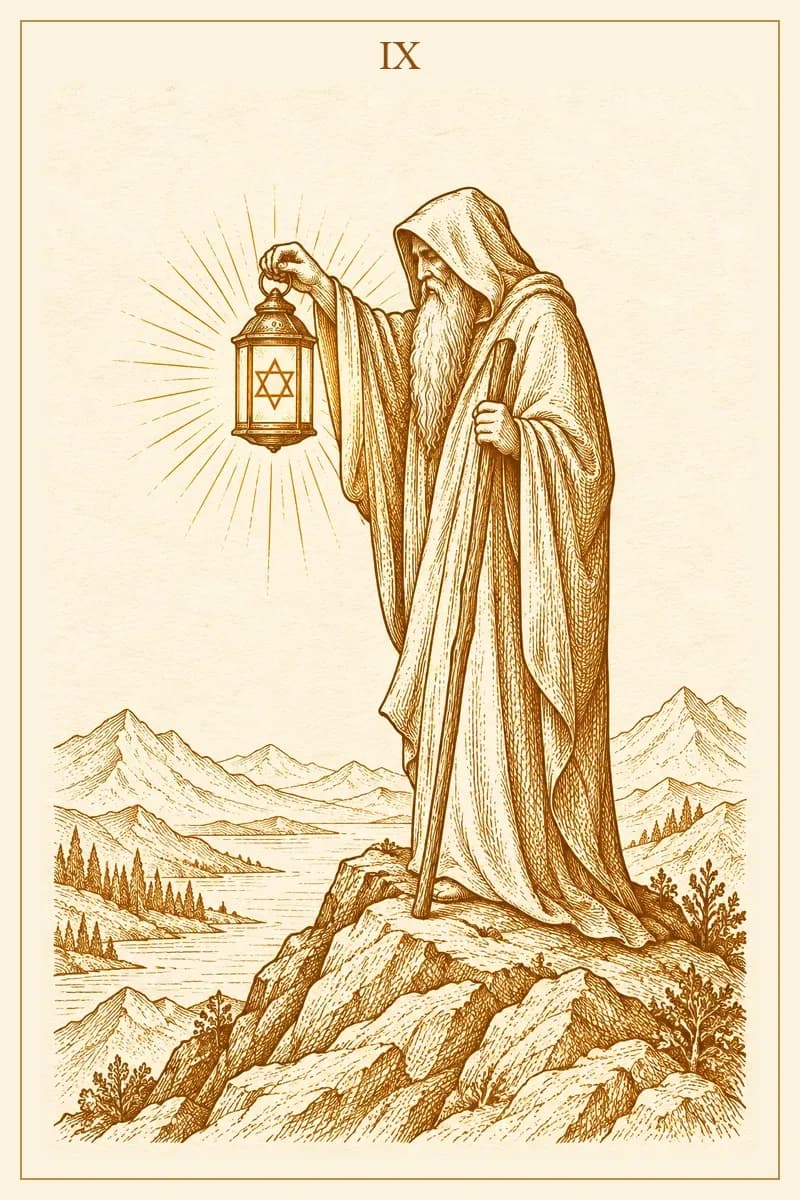
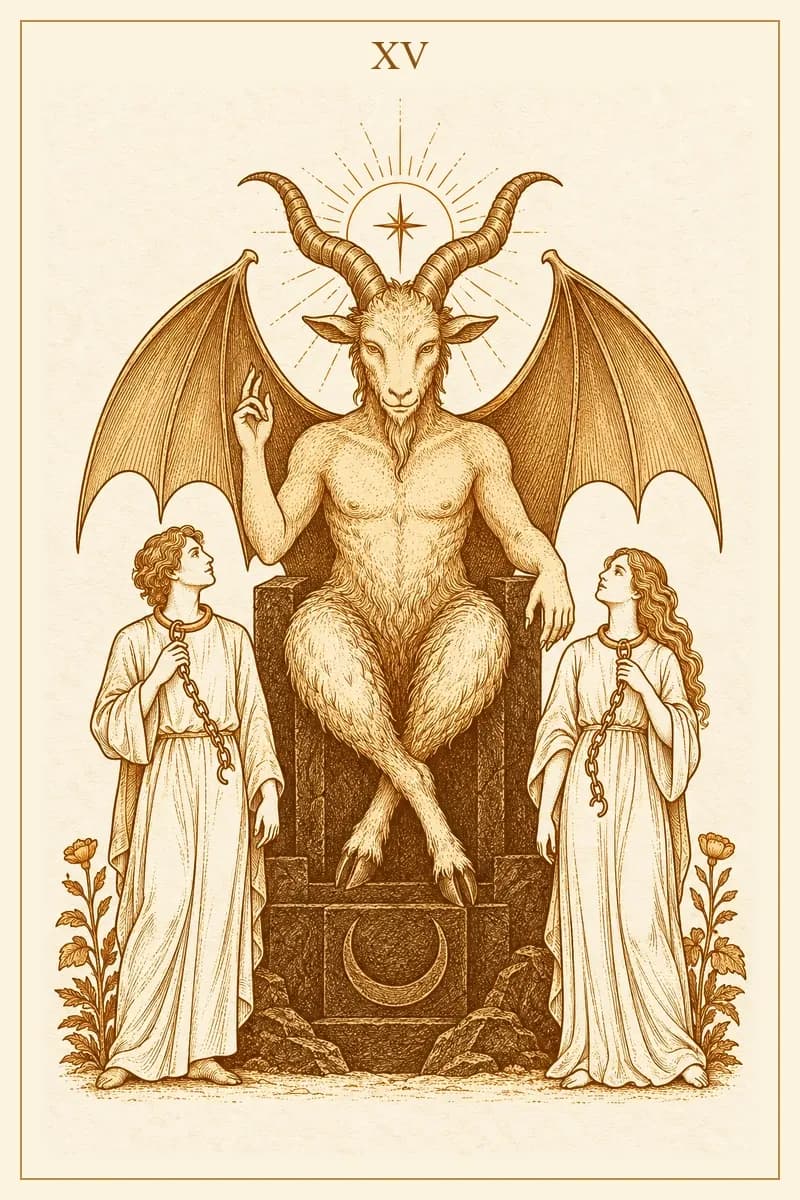
That is the sharp edge of The Hermit and The Devil arriving together. The Hermit retreats, lantern raised, seeking the truth buried beneath the world's distraction. The Devil squats in the corner of that same quiet room, grinning, holding a chain the Hermit thought they had already left at the door. Solitude was supposed to be the answer. It turned out to be the arena.
These two cards force a question most people would rather not ask: are you withdrawing to find yourself, or withdrawing *because* of something you cannot face in company? The difference between a monk's cell and a cell is a single, crucial variable — the door.
The Hermit carries a lantern to illuminate hidden truths. The Devil thrives in darkness and in the shame that darkness protects. When they share a reading, the tension is not between two external forces but between two parts of the same inner life: the part that genuinely seeks clarity and the part that has arranged its isolation to protect a habit, a wound, or a lie it is not yet ready to name.
This combination rarely signals external danger. The threat is interior. The solitude the Hermit prescribes is exactly the right medicine — but only if the person can sit with what the lantern shows. The Devil's chains, as the card's imagery reminds us, are loosely worn. They can be removed. The catch is that removal requires acknowledgment, and acknowledgment requires the very honesty the Hermit's solitude was meant to cultivate.
The core tension, then, is between *retreat as healing* and *retreat as avoidance*. Both can look identical from the outside. Only the quality of what happens inside the silence tells them apart.
In romantic relationships, this pairing often appears when someone has pulled back from a partner — or from dating altogether — citing a need for space and self-knowledge. The Hermit's instinct is genuine: some time alone is necessary. But The Devil asks whether the withdrawal has quietly become a way to protect an attachment pattern, a fear of vulnerability, or a dynamic that felt like connection but functioned like dependency.
If you are currently single and this combination appears, consider whether your solitude is productive or whether it has calcified into a comfort zone masquerading as wisdom. If you are in a relationship, examine what you are not saying in the quiet moments.
Professionally, The Hermit and The Devil together often mark a person who is intellectually gifted and genuinely self-directed but whose independence has drifted into isolation. The solo worker who no longer shares ideas because sharing once felt risky. The expert who withdrew from collaboration after one bad experience and has since built an identity around working alone.
The lantern is still burning — the intelligence and inner drive are intact — but the chain is visible in the refusal to re-enter the room. This combination calls for a deliberate, bounded re-engagement: not abandoning solitude, but testing whether the isolation is still serving the work or simply serving the avoidance.
The shadow side of this pairing is the most uncomfortable to name: spiritual bypass. The Hermit's journey can become a long, beautifully narrated reason to never deal with the actual thing. Meditation retreats, journaling practices, periods of imposed silence — all genuinely valuable, all capable of being co-opted by the part of the psyche that the Devil represents. If the inner work keeps circling the same territory without resolution, the lantern may be pointed everywhere except the one direction that matters.
The other shadow is addiction to aloneness itself: solitude becoming the chain rather than the key.
Keep or share this combination reference
Continue through published pairings that share The Hermit or The Devil.
driven introspection
ambition vs obsession
outer vs inner authority
hidden compulsion
abundance meets withdrawal
bondage versus healing
✦ Bring it to the cards ✦
Use this pairing as a starting point, then let a spread listen to the situation that is actually yours.
Begin a contextual reading