
Card Combination
Meaning of The Hanged Man and Two of Swords Combination: Suspended Between Two Blades
Chosen paralysis
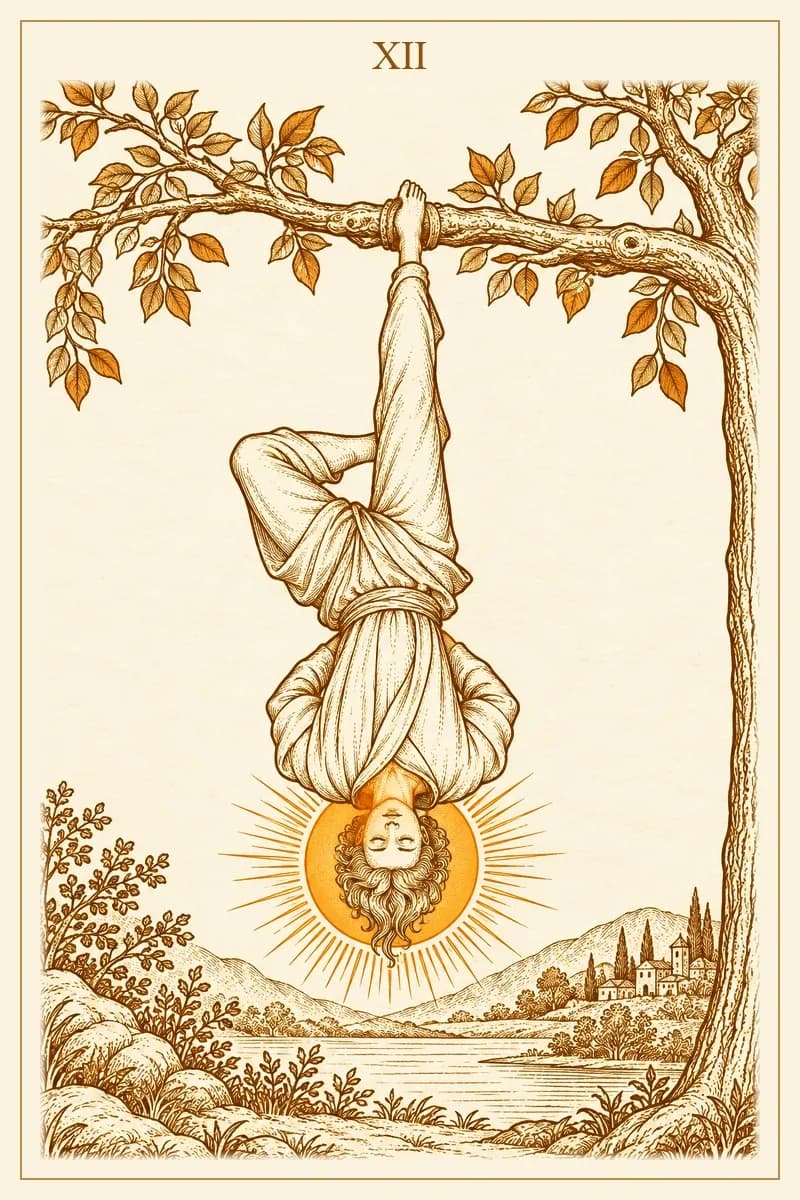
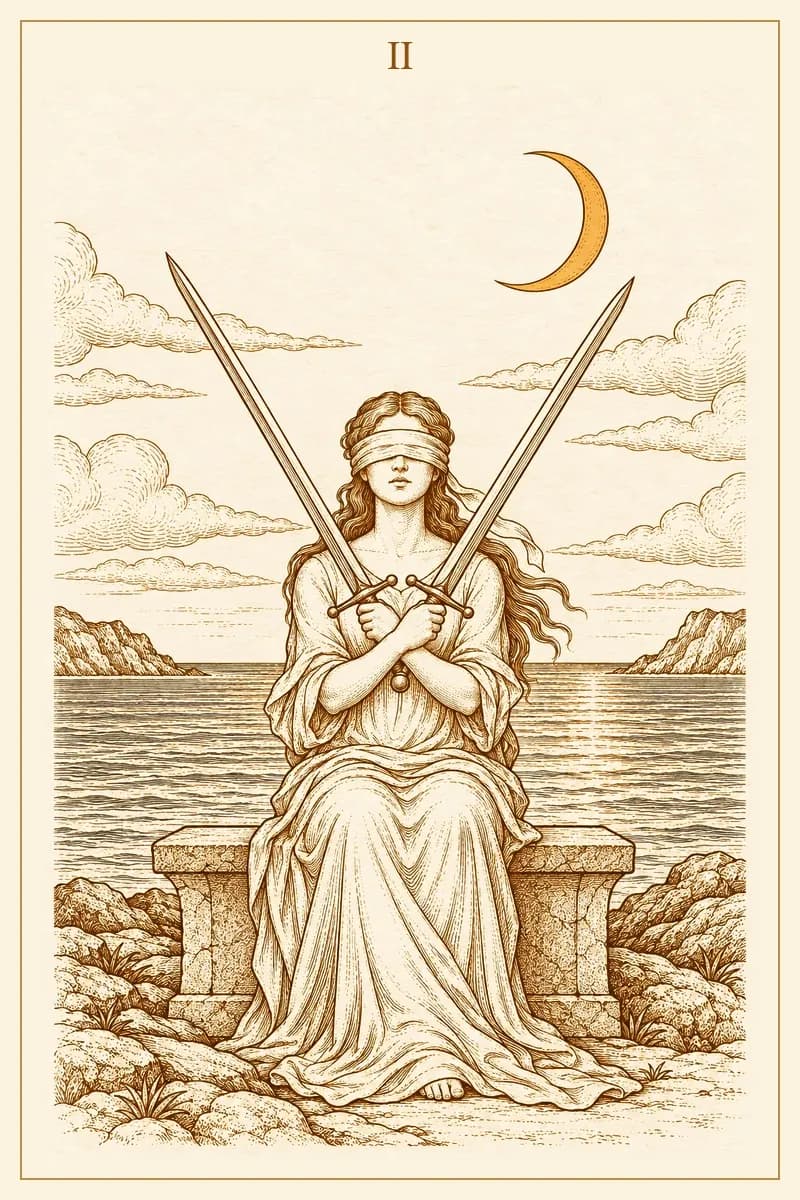
There is a peculiar kind of power in refusing to act. Not the power of the person who cannot move — but the power of the one who decides not to, and then wonders whether the decision itself has become a cage. The Hanged Man dangles from his tree, utterly still, seeing everything upside down. The Two of Swords sits blindfolded at the water's edge, arms crossed, blades raised — not defending, exactly, but refusing to let anything in or out.
Together, they describe a state most people know intimately but rarely name: the suspension that feels like wisdom but may be avoidance wearing a philosophical coat. You have put yourself on pause. You told yourself it was strategy. But the cards are asking whether the pause has outlived its purpose.
In poker, there is a difference between folding because the hand is weak and folding because you are afraid to see the flop. Both look identical from across the table. Only you know which one is happening.
The Core Tension
The Hanged Man surrenders voluntarily — he is not trapped, he chose the rope. His stillness produces insight, a reorientation that cannot happen while you are busy moving. The Two of Swords, by contrast, is not achieving peace through stillness. It is achieving stasis through refusal. The blindfold blocks information. The crossed swords block access. This is not the serene suspension of the Hanged Man; it is a defensive lock.
When these two energies meet, the result is a person who has been still for so long that the original purpose of the pause has been forgotten. You stopped to gain clarity. The clarity has not arrived — or it has arrived and you have declined to look at it. The Hanged Man says: some answers only come through waiting. The Two of Swords says: I am not sure I want the answer. The tension lives exactly there.
Love & Relationships
One person is waiting for the other to make a move. Or both are waiting. The relationship is in a holding pattern that everyone involved calls "complicated" because "stuck" feels like an accusation.
If you are single, examine what information you have been keeping out. You may be wearing a blindfold of your own construction — choosing not to read the signals, not because they are ambiguous, but because reading them would require a response. If you are in a relationship, the standoff between you and your partner is no longer neutral ground. Water behind the Two of Swords is turbulent. The longer you both sit with swords raised, the more the tide comes in.
The Hanged Man offers something useful here: the willingness to see the situation from the other person's perspective, even if it is uncomfortable. That is the productive version of this pair in love. Stop performing the standoff and try the view from upside down.
Career & Purpose
A decision has been stalled. You may have framed it as "gathering more information" or "waiting for the right moment" — language that sounds measured but functions as a hand kept permanently face-down on the table. Colleagues or clients are reading the delay as hesitation, regardless of what you call it internally.
The Hanged Man's pause, in a work context, serves a function when it produces a genuinely new angle on the problem. If you have been in the same position for weeks and the angle has not shifted, the suspension has stopped working. The Two of Swords suggests that the information you need is already available — you just have not permitted yourself to look at it because one of the options carries a cost you are not ready to pay.
Shadow Side
The shadow here is the comfort of suspended time. When you are neither deciding nor acting, you cannot be wrong. The blindfold is not just fear; it is also relief. The Hanged Man's tree can become a residence rather than a waystation. The person who lives here permanently is not gaining wisdom — they are avoiding accountability under the guise of patience.
There is also a subtler shadow: using the appearance of contemplation to signal depth without doing the actual work of deciding. This pair, at its most difficult, describes a kind of spiritual procrastination dressed in the language of discernment.
Action Steps
- 1Remove one piece of wilful blindness: identify a single fact or signal you have been declining to acknowledge, and look at it directly — not to decide immediately, but to stop pretending you do not know it.
- 2Set a specific end date for the pause. Write it down. The Hanged Man's surrender is temporary by design; give yours a boundary.
- 3Notice which option you keep not choosing. In poker, the hand you are afraid to play is usually the one worth examining most carefully.
Related Pairings
Continue through published pairings that share The Hanged Man or Two of Swords.
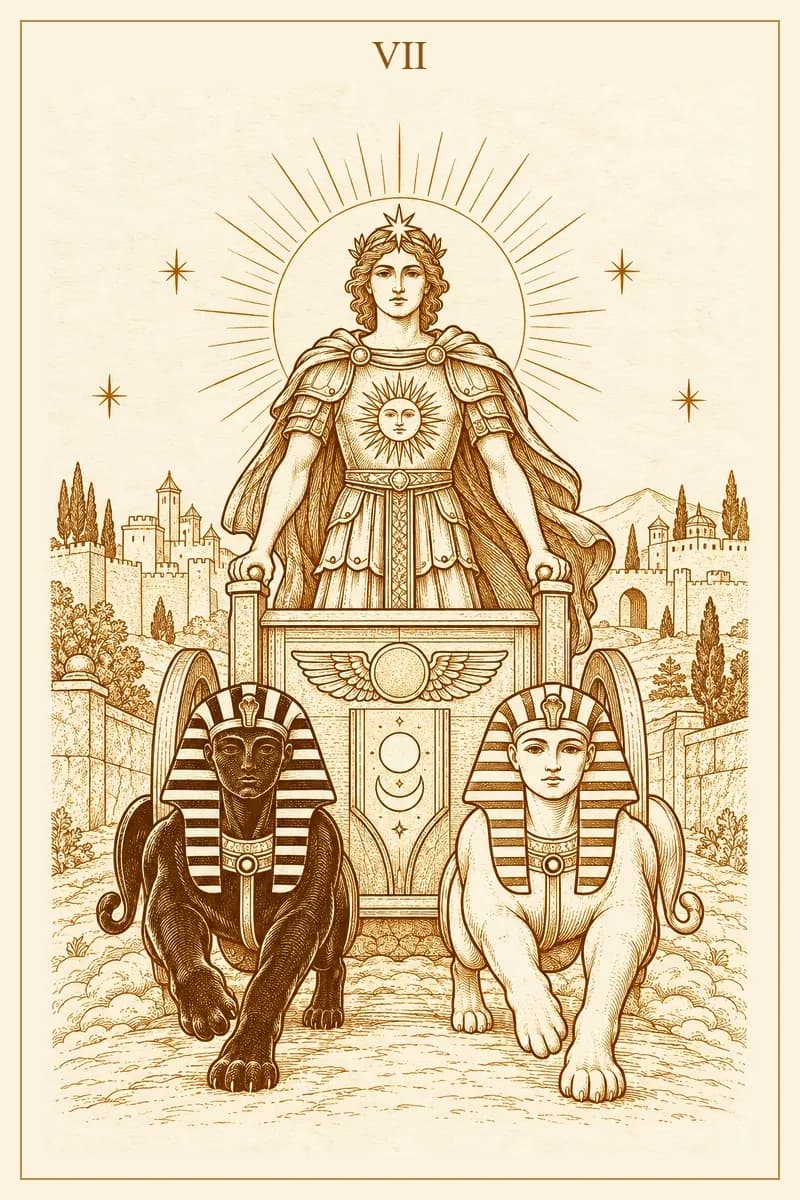
momentum versus surrender
Meaning of The Chariot and The Hanged Man: Momentum Meets Stillness
Blocked momentum
Meaning of The Chariot and Two of Swords Combination: Stalled Drive

control vs release
Meaning of The Emperor and The Hanged Man: When Control Meets Surrender
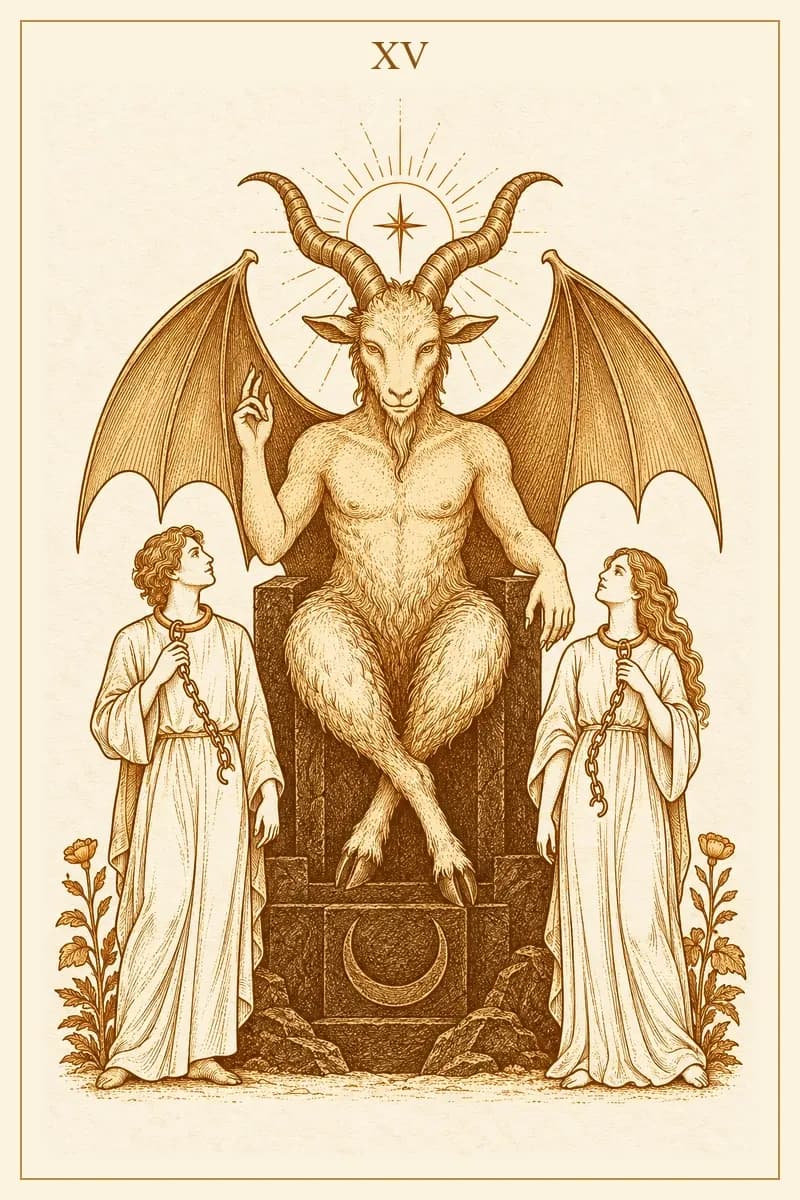
Willing blindness
Meaning of The Devil and Two of Swords Combination: Frozen Chains
fertile suspension
Meaning of The Empress and The Hanged Man: Fertile Pause
Forced decision
Meaning of The Emperor and Two of Swords Combination: Authority Meets Stalemate
✦ Bring it to the cards ✦
Bring The Hanged Man and Two of Swords into your own reading
Use this pairing as a starting point, then let a spread listen to the situation that is actually yours.
Begin a contextual reading