
Card Combination
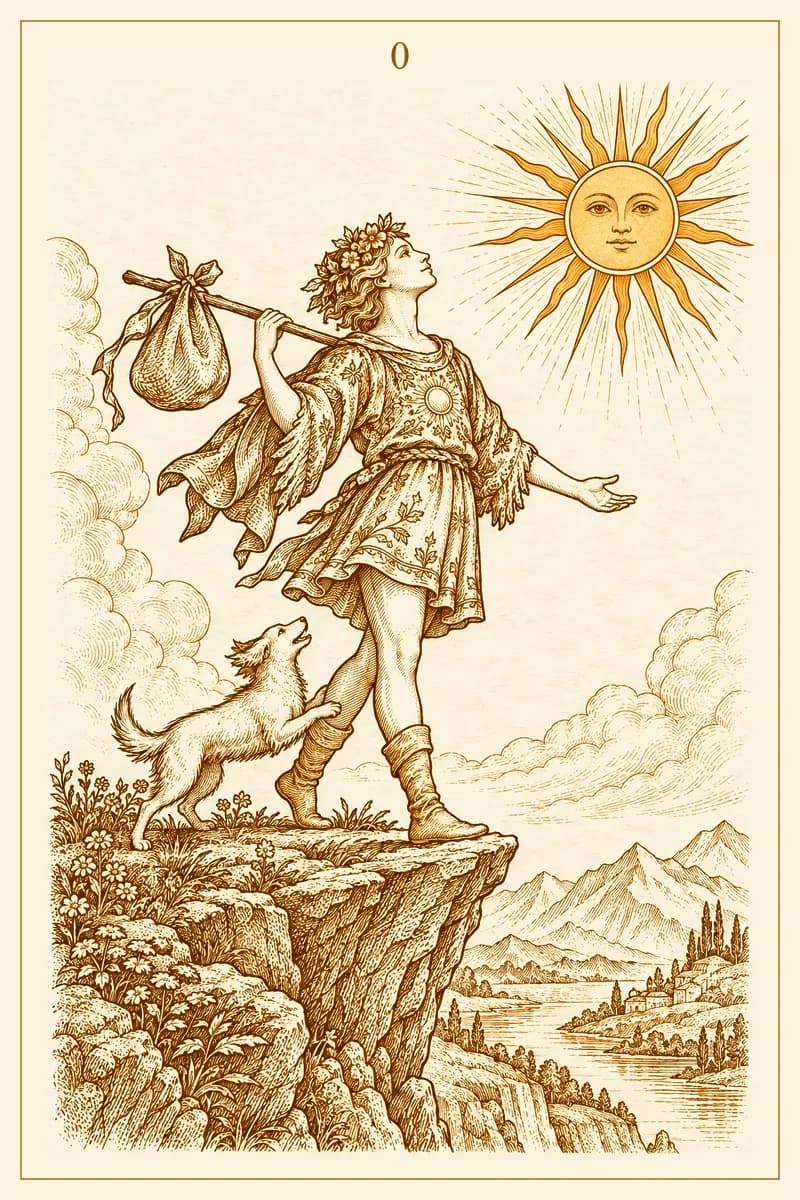
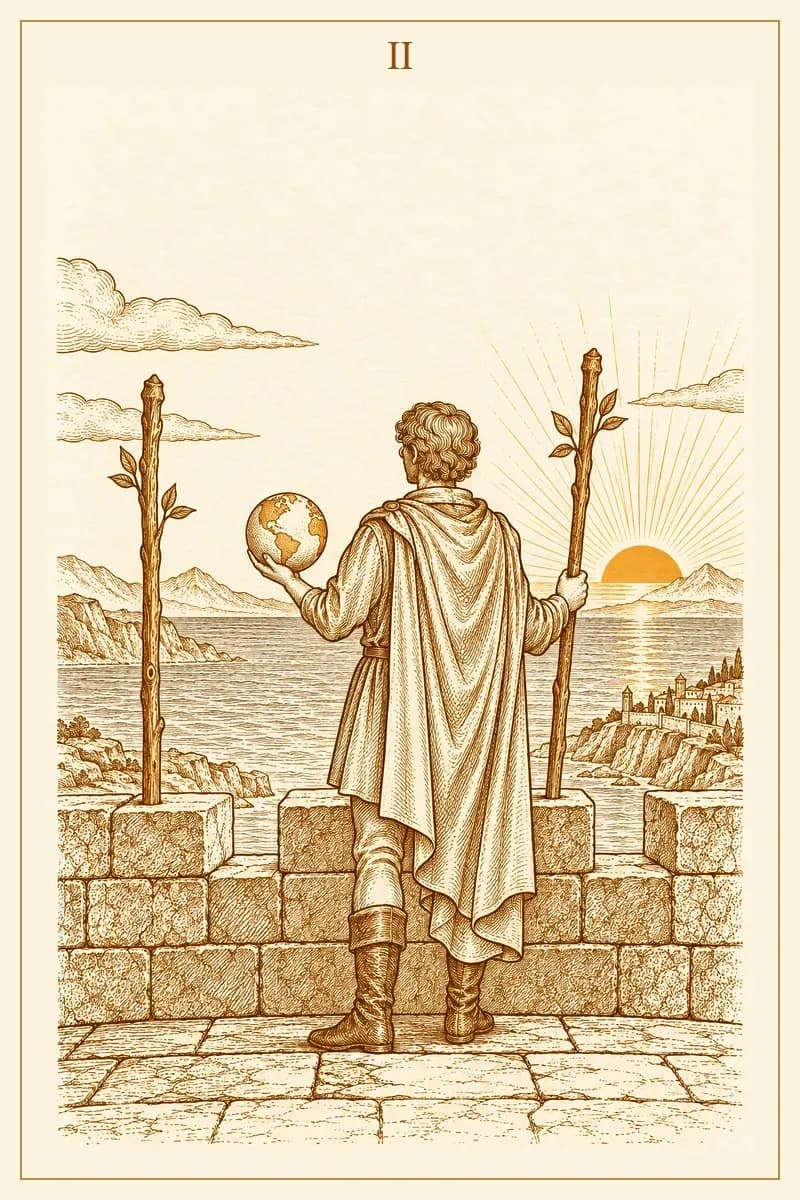
Meaning of The Fool and Two of Wands Combination: Uncharted Ambition
Vision before proof
He has the globe in his hands, warm as a loaf just pulled from the oven. He has been holding it for what feels like hours — rotating it slowly, measuring distances with his thumb, calculating which route would cost less and which would feed more. The kitchen behind him is organized. Ingredients labeled. Timers set. And then someone walks in through the back door, flour on their shoes and no recipe in sight, and drops a handful of spices onto the counter that weren't in the plan.
The Fool doesn't cook from recipes. The Two of Wands doesn't cook without one. This is the fundamental friction when these two cards appear together: one figure who has already tasted something extraordinary and wants to chase it across the world, and another figure who has never tasted anything because they haven't started heating the pan. The globe-holder has vision. The wanderer has momentum. Neither quality, alone, makes a meal.
What makes this pairing unusual is that both cards face forward. Most tarot tensions pit past against future, or action against reflection. Here, both figures are oriented toward what hasn't happened yet. The disagreement isn't about direction — it's about preparation. How much do you need to know before you go? How much knowing becomes another word for staying?
The Core Tension
A recipe is a hypothesis. It says: if you combine these elements in this order at this temperature, something edible will emerge. The Two of Wands writes excellent hypotheses. The measurements are precise, the timing is mapped, the sourcing is considered. But a hypothesis that never enters the kitchen is just a paragraph on paper. And The Fool, meanwhile, is already at the stove, tossing ingredients by instinct, burning some, salvaging others, producing results that are unpredictable but undeniably real.
The tension is not between planning and chaos. It is between two versions of courage. The Two of Wands has the courage to envision — to stand on the battlement and declare that the world beyond the wall is worth reaching. The Fool has the courage to leave without knowing what's beyond the wall at all. When they meet in a reading, the question becomes: can vision tolerate spontaneity? Can impulse tolerate structure? The answer is not compromise. The answer is sequence — knowing which one to listen to first and when to hand the wooden spoon to the other.
Love & Relationships
This pair shows up when one person has a plan for the relationship and the other is simply in it. One partner has been thinking three years ahead — where to live, how to merge finances, what shape the life should take. The other partner woke up happy and hasn't thought past dinner. Neither is wrong, but the gap between them creates a particular kind of loneliness: the planner feels unsupported, the present-dweller feels pressured.
The remedy is not getting the spontaneous one to sit down with spreadsheets. It is recognizing that the planner's maps are a form of devotion — they imagine a future because they want this person in it. And the unplanned one's ease is also devotion — they are so comfortable in the relationship that the future doesn't feel like a threat requiring management. Speak to each other's language. The planner can cook a meal without announcing it's part of a weekly rotation. The improviser can name one thing they want next month without being asked.
Career & Purpose
Someone on your team sees the global picture. They've studied the market, identified the gaps, drafted the proposal. Someone else keeps starting side projects, pitching ideas in hallways, prototyping things that weren't on the roadmap. The conventional response is to rein in the second person and resource the first. But this pair reveals that the side projects contain data the proposal missed. The hallway pitches are customer signals the market study didn't capture.
The productive move is giving the visionary permission to adjust the map based on what the explorer brings back. Not abandoning the strategy. Seasoning it. A dish that follows the recipe exactly often tastes correct but forgettable. The ones people remember had a moment where the cook added something unplanned and the whole flavor shifted.
Shadow Side
The shadow is eternal preparation. The globe keeps spinning but no ship ever sails. The Fool keeps walking but never toward anything specific, so the motion produces no accumulation. Together, they can create the illusion of progress — plans that multiply, journeys that circle, kitchens full of ingredients and nothing on the plate.
Another shadow: contempt. The planner dismisses the wanderer as reckless. The wanderer dismisses the planner as paralyzed. Each becomes a caricature in the other's story, and the meal never gets made because nobody will share the stove.
Action Steps
- 1Pick one plan you have been refining for too long — set a date to begin it, even if the recipe still has gaps
- 2Notice where your spontaneity is actually avoidance of the harder work of choosing a direction, and name the direction out loud
- 3Cook something you've never cooked before, using half a recipe and half your instincts, and notice which moments required which approach
Related Pairings
Continue through published pairings that share The Fool or Two of Wands.

Reckless momentum
Meaning of The Fool and The Chariot Combination: Reckless Momentum
Driven ambition
Meaning of The Chariot and Two of Wands Combination: Willpower Meets Vision

Innocence meets appetite
Meaning of The Fool and The Devil Combination: Innocence Meets Appetite
Chained ambition
Meaning of The Devil and Two of Wands Combination: Ambition in Chains

Structured freedom
Meaning of The Fool and The Emperor Combination: Structured Freedom
Authority versus expansion
Meaning of The Emperor and Two of Wands Combination: Empire at the Edge
✦ Bring it to the cards ✦
Bring The Fool and Two of Wands into your own reading
Use this pairing as a starting point, then let a spread listen to the situation that is actually yours.
Begin a contextual reading