
Card Combination
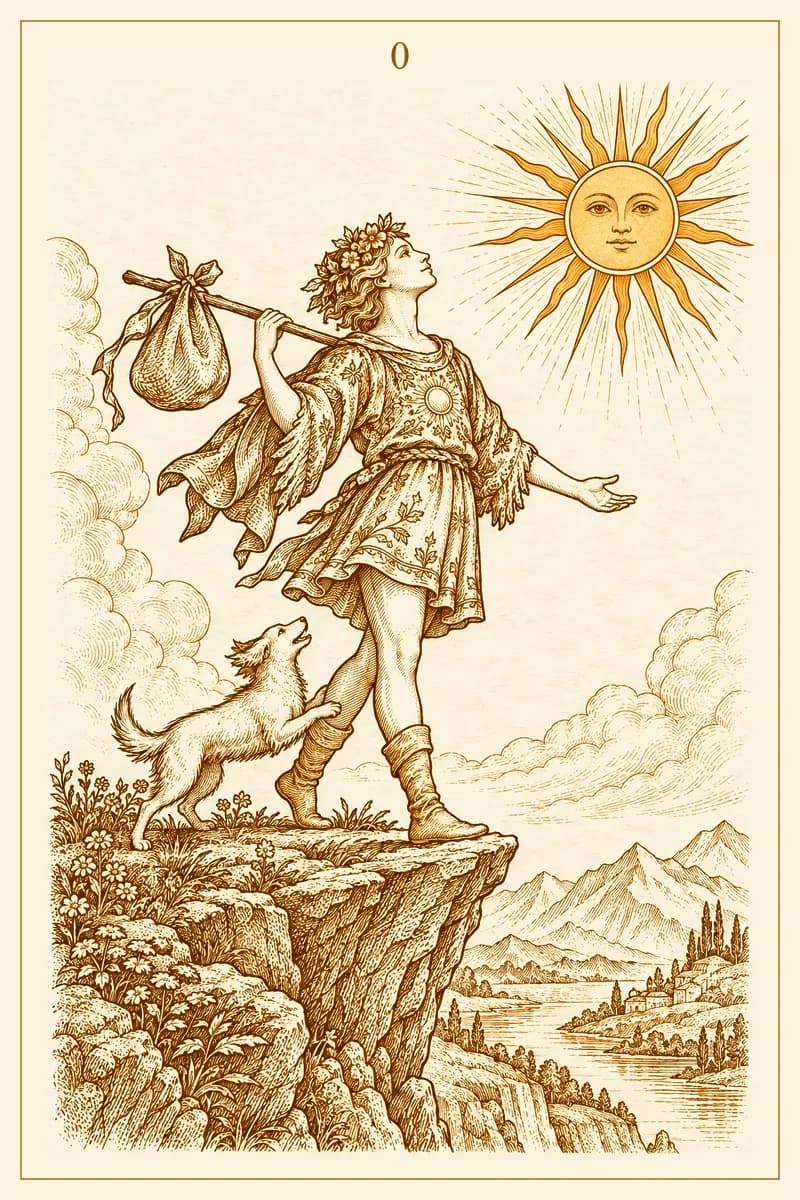
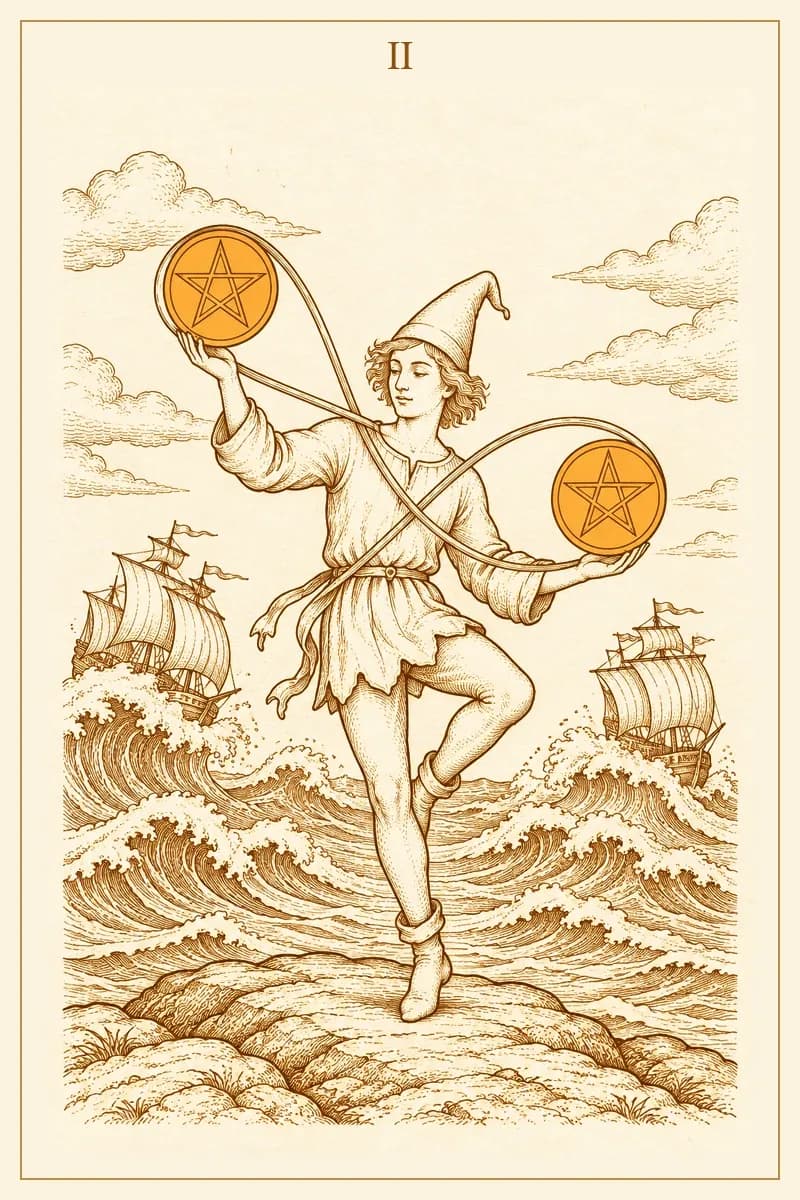
Meaning of The Fool and Two of Pentacles: Playing the Hand Blind
blind wager meets perpetual juggle
In poker there is a move called the open shove — pushing your entire stack into the center before looking at your cards. It is not strategy. It is a declaration: I have decided that whatever I am holding is enough. Across the table sits the player who has been counting every chip, tracking every bet, shifting small stacks between fingers with the precision of a dealer running a three-card shuffle. One player has abandoned calculation entirely. The other cannot stop calculating. The game does not pause to reconcile their approaches. It simply deals the next card.
The Fool is the open shove. He pushes everything forward without inventorying what he carries, trusting that the momentum of the gesture will cover whatever the hand lacks. The Two of Pentacles is the counter — the player whose eyes never leave the chip stacks, who adjusts position with each new piece of information, who keeps two coins rotating in an infinity loop not because it is impressive but because dropping either one would end the round. When these two cards arrive together, the reading holds a tension between absolute abandon and meticulous balance, and the question is not which approach wins but whether they can share the same table without overturning it.
The Core Tension
The Fool does not know what resources he has. This is not negligence — it is a particular kind of freedom that comes from never having opened the ledger. The Two of Pentacles knows exactly what resources are available and spends every waking moment redistributing them so nothing tips. One card operates without a budget. The other card is the budget, animated and anxious and perpetually in motion.
The productive friction here is genuinely useful. The Fool brings willingness to enter situations that spreadsheet logic would veto. The Two of Pentacles brings the capacity to keep those situations financially, emotionally, and logistically afloat once they have been entered. Without the Fool, the juggler never starts anything worth juggling. Without the juggler, the Fool's leap lands in an empty account.
What makes this pairing tricky is timing. The Fool acts before conditions are ready. The Two of Pentacles adjusts conditions in real time. If the adjustment happens fast enough, the reckless bet turns into a brilliant play. If it does not, the chips scatter and the table goes quiet.
Love & Relationships
A relationship is being entered with one person bringing wild, uncalculated devotion and the other holding the emotional budget with both hands. One partner says yes to everything — the spontaneous trip, the grand gesture, the conversation that goes four hours past bedtime. The other partner is quietly calculating whether the rent of emotional energy can cover this month's withdrawals.
This is not incompatibility. It is a poker game where both players need the other's skill set. The open heart needs someone who can manage the practical weight of a partnership without resentment. The careful balancer needs someone who occasionally pushes all the chips in and reminds them that love is not a ledger.
If both cards describe you, the message is pointed: stop oscillating between total abandon and frantic recalculation. Pick a stake you can sustain and play it with your eyes open instead of alternating between blind bets and panicked folds.
Career & Purpose
Someone has launched a project, signed a contract, or accepted a role without fully auditing the resources required to sustain it. The Two of Pentacles shows up as the scramble that follows — the reallocation of time, money, and attention that keeps the venture from collapsing in its first quarter. The initial leap was necessary. The juggling act that follows is non-negotiable.
Treat the situation like a poker tournament, not a single hand. The open shove got you to this table. Now you need stack management. Identify the two or three obligations that are actively rotating in your hands and acknowledge that adding a fourth will not make you more impressive — it will make you drop the two that matter. Fold the marginal commitments. Protect the core stack. The game rewards players who know which hands to play aggressively and which to release without sentiment.
Shadow Side
The Fool's shadow at this table is the gambler who mistakes recklessness for courage — shoving all-in on every hand not because the odds justify it but because the adrenaline of the gesture has become the entire point. Resources burn. Partnerships strain. The stack dwindles while the player insists the next hand will fix everything.
The Two of Pentacles' shadow is the opposite disorder: juggling as avoidance. Keeping every ball in the air becomes an excuse never to catch one and examine it. The constant motion creates an illusion of productivity while nothing actually gets completed, committed to, or resolved. The juggler performs balance as a substitute for choosing.
Action Steps
- 1Audit the specific resources you are currently juggling — time, money, energy — and identify which two are genuinely essential and which you are maintaining out of momentum rather than purpose
- 2Name one commitment you entered without counting the cost, then build a realistic maintenance plan for it instead of either abandoning the bet or pretending the cost does not exist
- 3Fold one obligation that is consuming chips without returning value, and do it cleanly — without guilt, without drama, like a poker player releasing a mediocre hand to preserve the stack for a better one
Related Pairings
Continue through published pairings that share The Fool or Two of Pentacles.
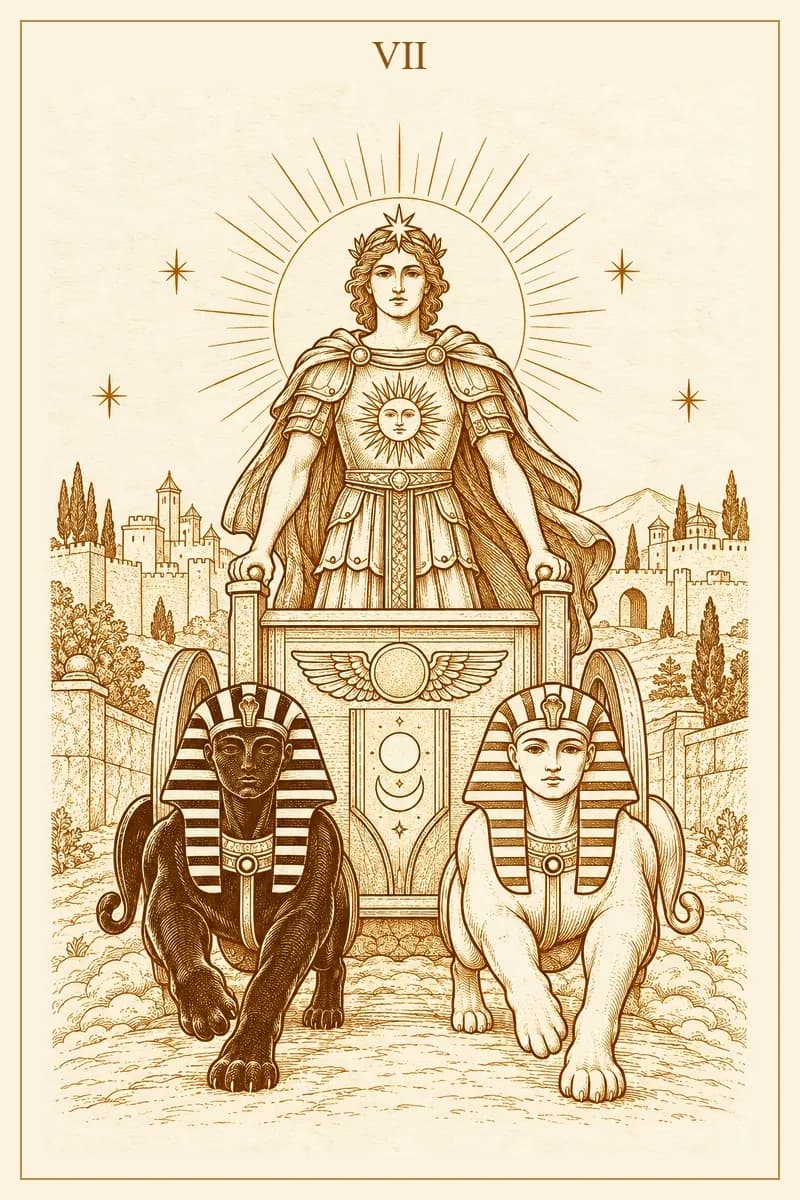
Reckless Momentum
Meaning of The Fool and The Chariot Combination: Reckless Momentum
momentum under pressure
Meaning of The Chariot and Two of Pentacles: Moving Forward While Staying Balanced
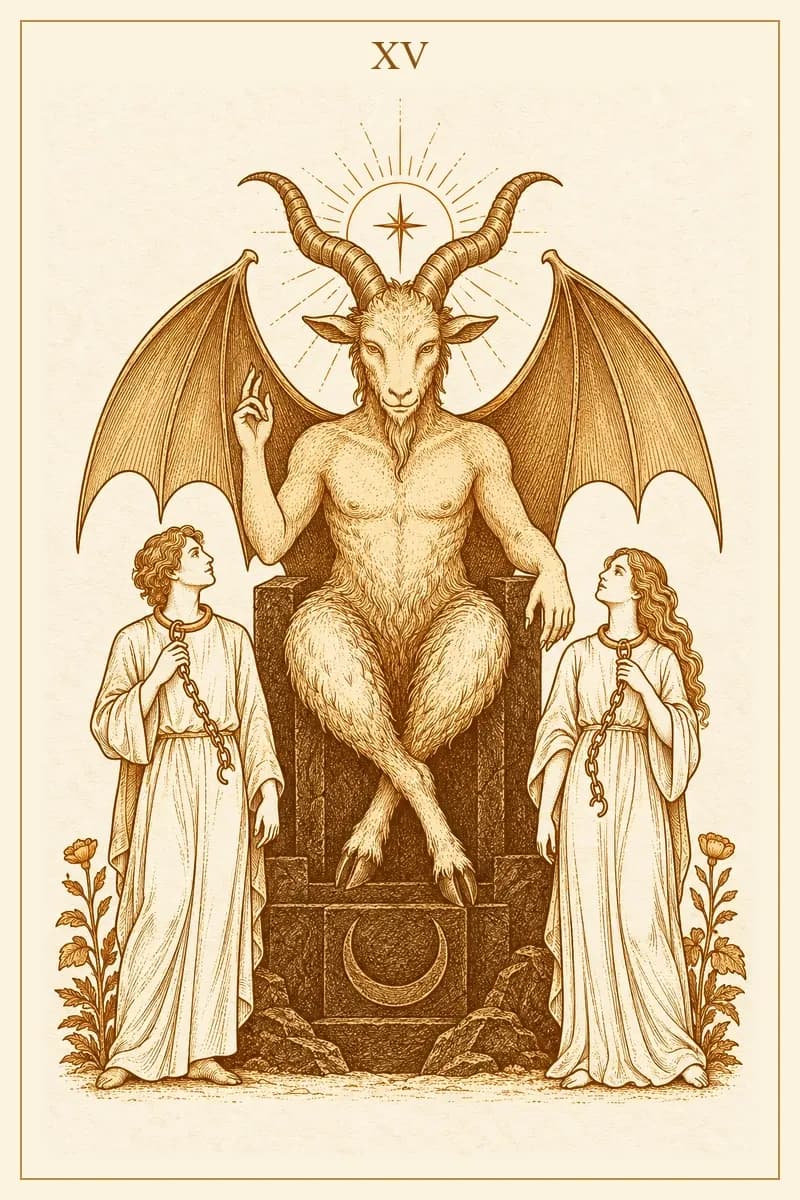
Innocence Meets Appetite
Meaning of The Fool and The Devil Combination: Innocence Meets Appetite
addictive balance
Meaning of The Devil and Two of Pentacles Combination: Addictive Balance
Structured Freedom
Meaning of The Fool and The Emperor Combination: Structured Freedom
Control under pressure
Meaning of The Emperor and Two of Pentacles: Order Meets the Juggle
✦ Bring it to the cards ✦
Bring The Fool and Two of Pentacles into your own reading
Use this pairing as a starting point, then let a spread listen to the situation that is actually yours.
Begin a contextual reading