
Card Combination

Meaning of The Emperor and Seven of Wands Combination: Authority Under Siege
Authority under siege
Before dawn, the commander of the hill fort walks the length of the wall. He has done this every morning for eleven years. He knows which stones were reset after the last hard winter, which section of the palisade is newest, which sentry tends to doze near the end of his watch. Below, in the gray light of the valley, he can see cookfires that were not there a week ago, and more of them than yesterday. A rider came up at midnight with a letter asking him, courteously, to reconsider his position. He has read it twice. He has not answered.
He is not afraid, exactly. He built this place, and he knows it is sound. What he feels is the particular fatigue of someone whose success has made him a target.
The Emperor and the Seven of Wands together describe this situation: established authority under sustained challenge, where the strength of the position is not in question, but the cost of holding it, and the reasons for holding it, very much are.
The Core Tension
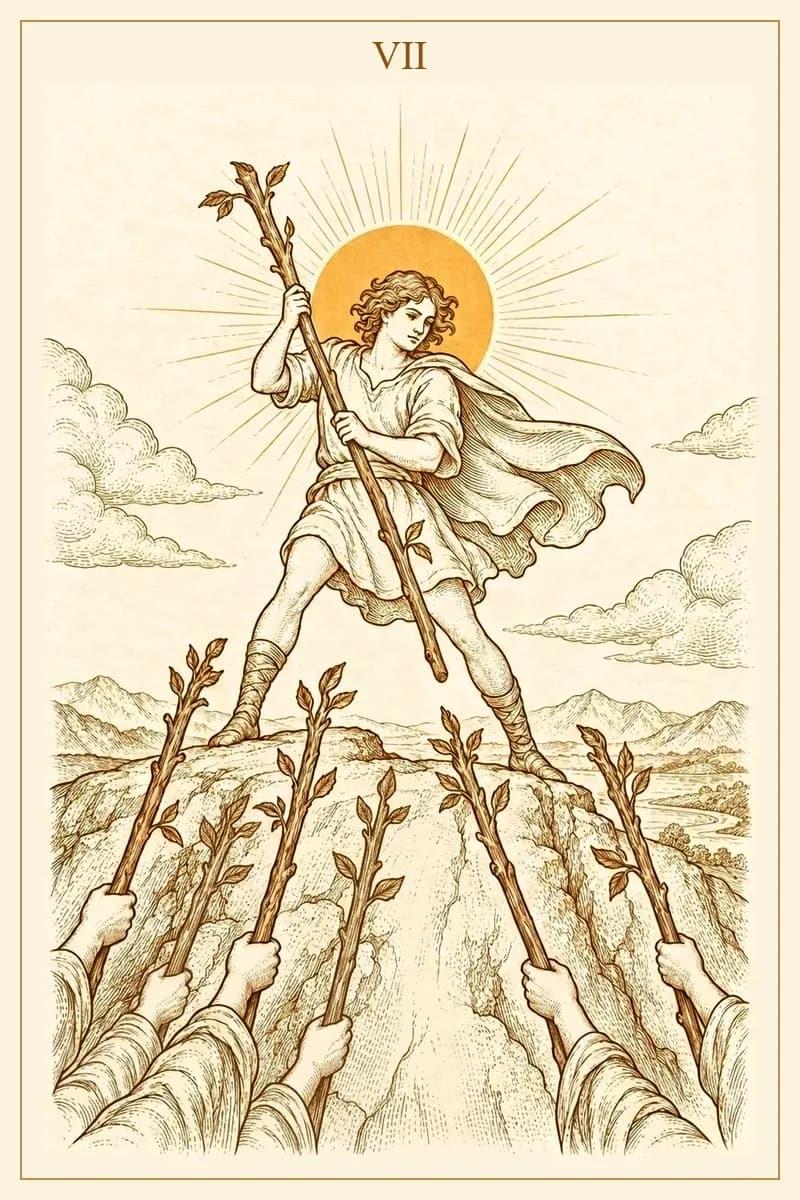
Picture a veteran defender — not young, not reckless, but experienced — standing at the top of a ridge, holding position against a field of challengers pressing from below. He does not look panicked. He looks tired, and alert, and absolutely unwilling to move.
This is the Emperor carrying the weight of the Seven of Wands.
The Emperor is established authority. He built his position through sustained effort, through the accumulation of discipline, through the long patience of someone who understood that real power is constructed slowly and maintained deliberately. He does not hold his throne by luck. He holds it by structure, by consistency, by the weight of what he has built over time.
The Seven of Wands is the card of defense. Not attack — defense. The figure on the card is outnumbered, up on higher ground, holding a wand against six others that rise toward him. He is not wrong to fight. He is in the right position. But the fight is ongoing, and he is alone in it.
Together, these two describe a very specific kind of pressure: the pressure that comes to anyone who has successfully built something worth having. The higher you build, the more challengers appear at the base. This is not a sign that the structure is weak. It is, paradoxically, a sign that it matters.
Love & Relationships
In a love reading, the Emperor and Seven of Wands describe a relationship — or a person within a relationship — that is under sustained external pressure to change, compromise, or justify itself.
This can look like external forces: family disapproval, social scrutiny, friends who question the partnership, circumstances that make maintaining the relationship actively difficult. The Emperor's presence confirms that the foundation of what has been built between two people is real and structurally sound. The Seven of Wands says it is being tested — continuously, from multiple directions.
There is also an internal version of this pressure: the inner voices that challenge whether the relationship is right, whether the commitments are sustainable, whether staying represents wisdom or inertia. The Seven of Wands does not distinguish between internal and external challengers. It simply shows someone holding position against pressure that keeps coming.
The critical question this pairing raises in love is the distinction between holding ground that is worth defending and holding position out of pride or stubbornness when retreat would be wiser. The Emperor's authority includes the authority to recognize when a position has become untenable. Standing firm is a virtue. Standing firm for its own sake is something else.
For single individuals, this combination often describes someone who has worked hard to establish a clear sense of what they want from a relationship — and who now finds that clarity challenged by the available options, by other people's expectations, or by their own doubts. Hold to what you actually know about yourself. That knowledge is the ridge.
Career & Purpose
Professionally, this combination describes a leader or established position that is being challenged from multiple directions simultaneously — and that is choosing to hold rather than accommodate.
The context matters enormously here. The Emperor's professional domain is institutional: he has built something that functions, that has a track record, that represents accumulated expertise and deliberate effort. When challengers appear — competitors, critics, internal dissent, market pressures, new entrants who believe they can do what he does better or faster — the instinct of the Emperor is to stand and defend.
In many cases, this is the right instinct. Established expertise is genuinely worth defending against challenges that are primarily opportunistic rather than substantive. Not every challenger deserves capitulation. Some positions are worth the cost of holding.
But the Seven of Wands carries a fatigue element that is worth heeding. The defender on the ridge can hold position indefinitely as long as his footing is solid and his energy is sufficient. When either begins to erode — when the ground shifts beneath him or when the sustained defense begins to cost more than the position is worth — the wise move is to reassess rather than simply push harder.
This pairing often appears for leaders who have been in extended conflict: a prolonged negotiation, an ongoing legal or competitive challenge, a sustained period of defending their methods, their decisions, or their vision against people who want them to change course. The Emperor says: you have the authority and the track record to hold. The Seven of Wands says: count your resources before you commit to another round.
Shadow Side
The shadow of this combination is one of the more poignant in the deck.
The Emperor, at his shadow edge, can become a ruler who has been defending his position for so long that he has forgotten why he built it in the first place. The defense becomes the point. Challengers are resisted not because the position is right but because it is his — and surrendering any ground would feel like an admission of weakness that his identity cannot absorb.
The Seven of Wands feeds this shadow directly: it provides the constant pressure of incoming challengers that justifies never putting the wand down, never resting, never examining whether the thing being defended still serves the purpose for which it was built.
The combined shadow is a fortress with no one living inside it — a position held at significant cost, protecting something that has stopped being worth the protection.
The shadow asks: what are you actually defending, and who benefits from you holding this line?
Action Steps
- 1Take a full accounting of where you are expending defensive energy right now — in relationships, at work, internally. For each one, ask whether the ground is worth holding or whether you are holding it because moving would feel like loss.
- 2Identify one challenger in your current landscape whose pressure, while uncomfortable, might be pointing at something real. Not all challengers are wrong. The Emperor's authority includes the authority to update.
- 3Rest. Deliberately and strategically. The defender on the ridge who does not rest will eventually fall not because the challengers overcame him but because his own fatigue did. Rest is not retreat.
- 4Established authority under sustained pressure is not automatically at risk of falling — but it is being tested in ways that require genuine attention, genuine resource management, and genuine honesty about what is worth defending. What you have built has value. Hold it. And do so with full awareness of the difference between a position that must be defended and one that is merely familiar.
Related Pairings
Continue through published pairings that share The Emperor or Seven of Wands.
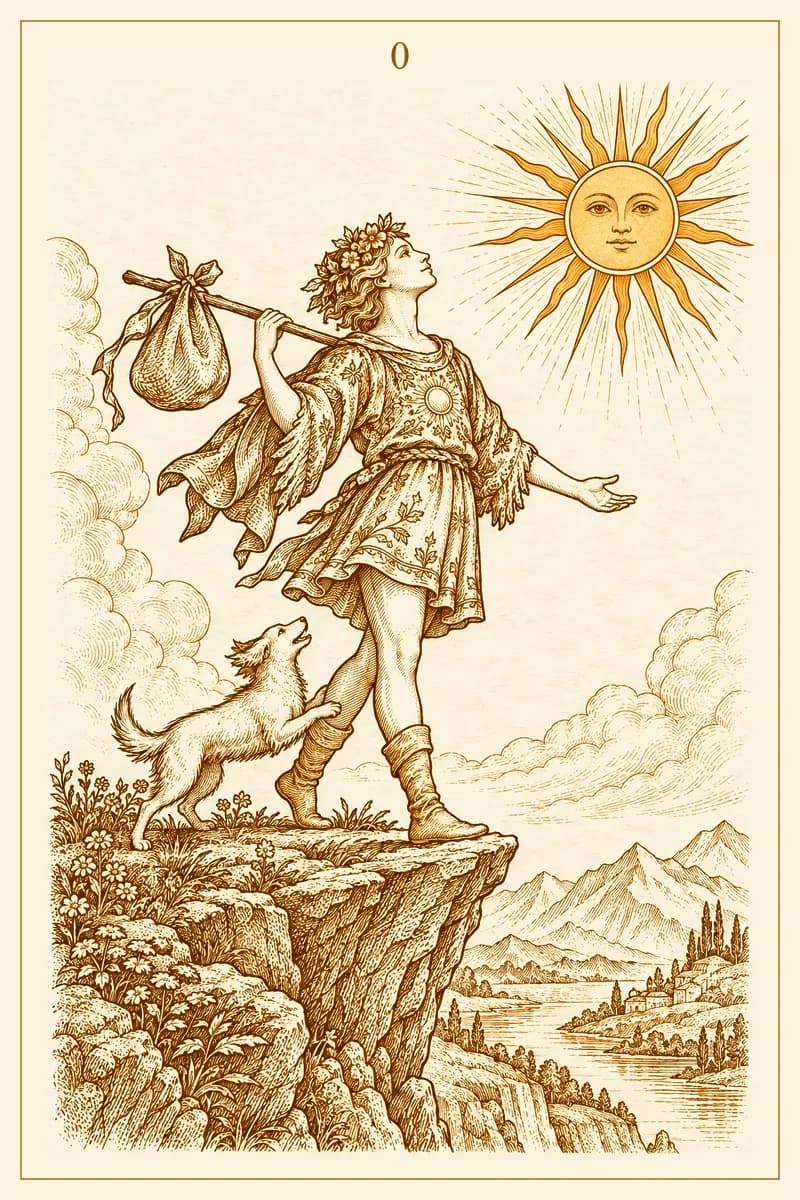
Structured freedom
Meaning of The Fool and The Emperor Combination: Structured Freedom
Unexpected defense
Meaning of The Fool and Seven of Wands Combination: Standing Ground You Didn't Plan to Defend
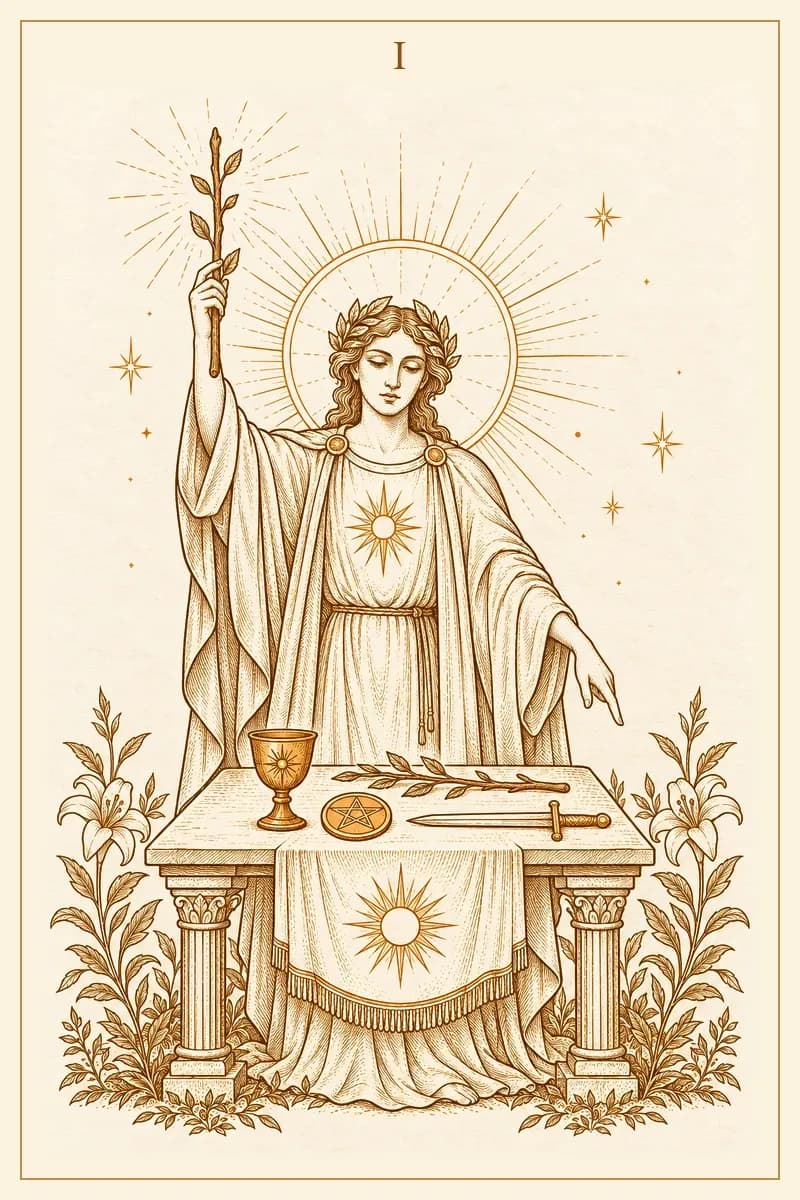
Disciplined mastery
Meaning of The Magician and The Emperor Combination: The Architect of Command
Skilled defense under pressure
Meaning of The Magician and Seven of Wands Combination: Defending What You've Built
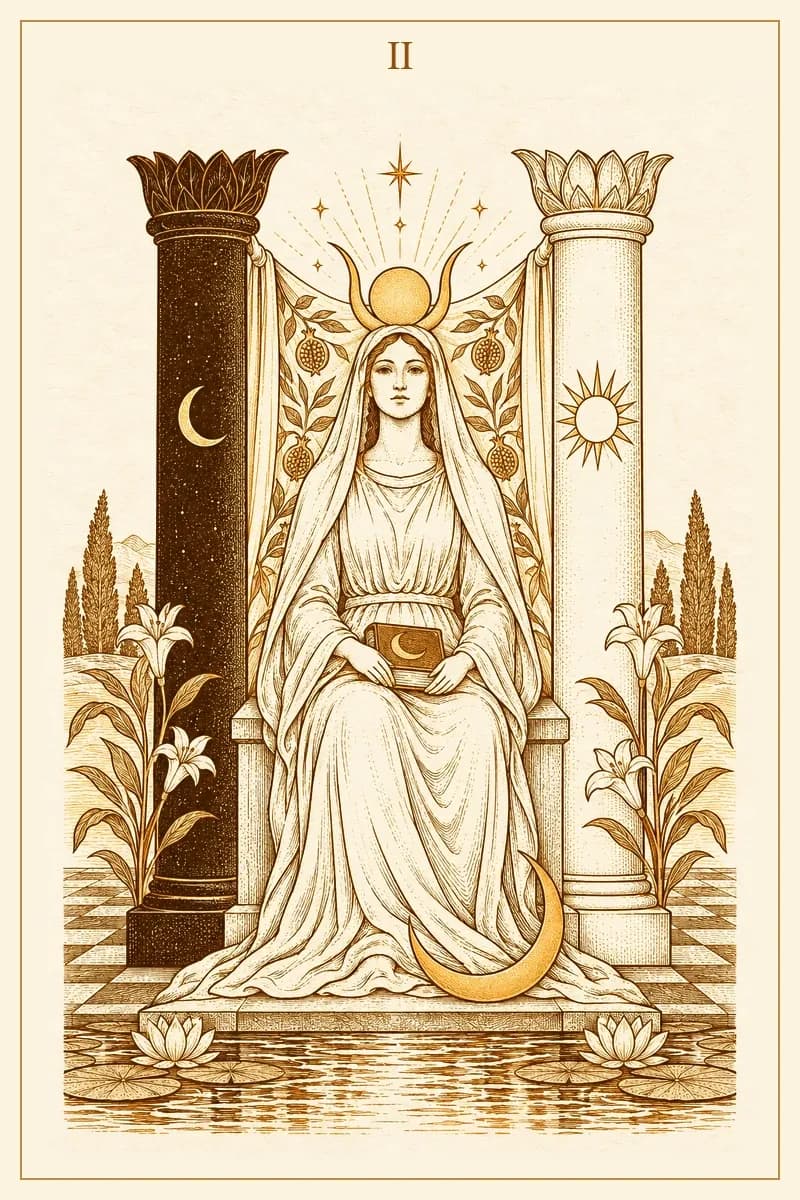
Hidden order
Meaning of The High Priestess and The Emperor Combination: Hidden Order
Certainty under pressure
Meaning of The High Priestess and Seven of Wands Combination: Hold Your Ground with Inner Knowing
✦ Bring it to the cards ✦
Bring The Emperor and Seven of Wands into your own reading
Use this pairing as a starting point, then let a spread listen to the situation that is actually yours.
Begin a contextual reading