
Card Combination
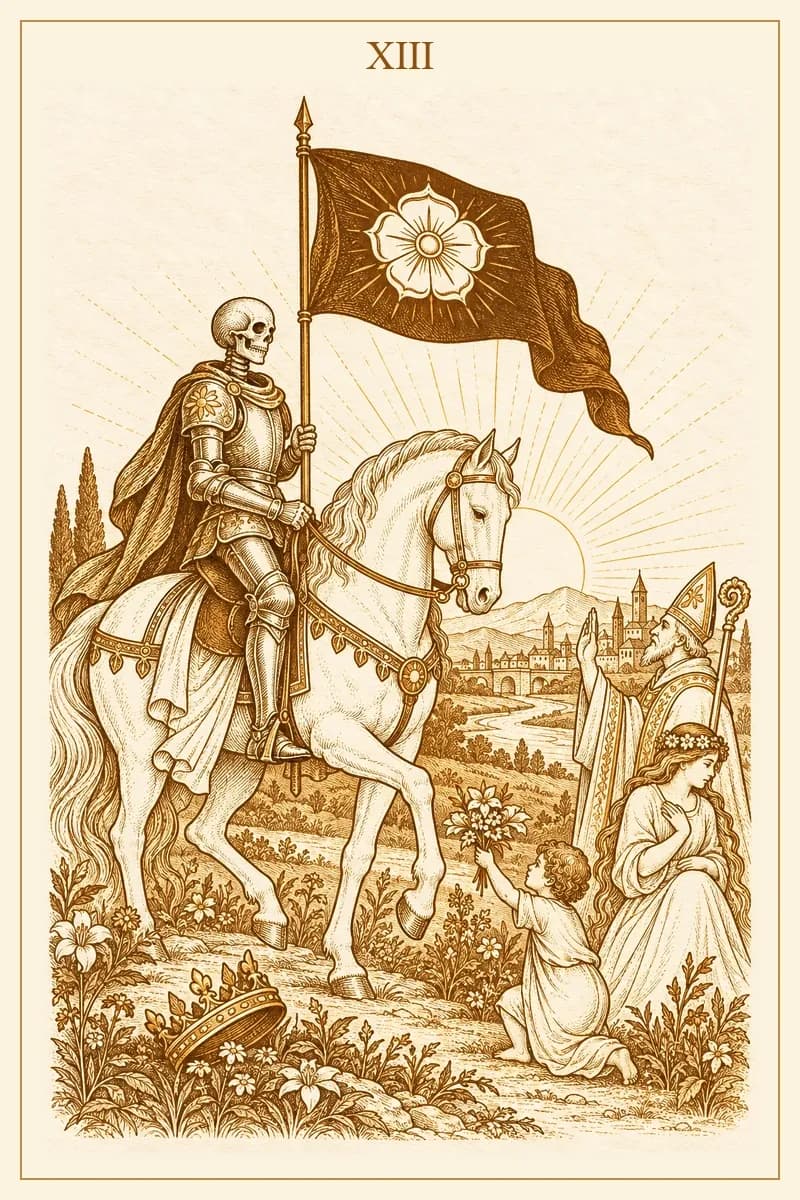
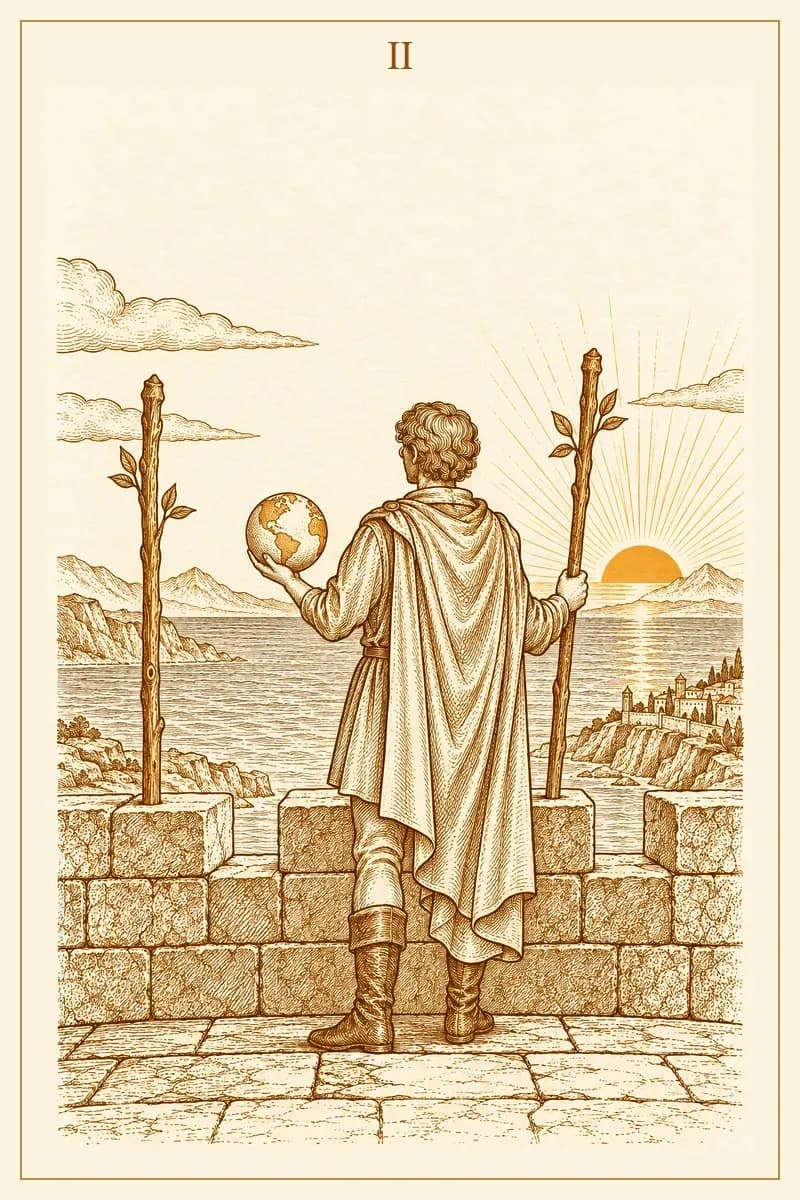
Meaning of Death and Two of Wands Combination: Strategic Endings
Strategic dissolution
There is a sound a symphony makes just before the conductor lifts the baton for the final movement — a breath, a collective silence where every musician knows the melody they rehearsed for months is about to dissolve into its last resonance. That hush carries both grief and anticipation, the weight of every note already played pressing against the possibilities of what comes next.
Death paired with the Two of Wands produces exactly that silence. One card strips the arrangement down to bare strings and silence. The other holds two batons, scanning the horizon for the next venue, the next audience, the next key signature worth exploring. Together they create a pivot point where the old composition has ended and the ink on the next score is still wet.
This is not passive waiting. This is a musician standing between two worlds — the echoes of a finished performance and the raw, unwritten potential of the next one — choosing which direction to face.
The Core Tension
Death demands surrender. The Two of Wands demands strategy. One says "let the final chord fade completely," while the other insists on scouting ahead, mapping acoustics in halls you have never played. The tension lives in the gap between release and reach.
You cannot plan your next concert while still clinging to the setlist of the last one. Death forces your hands off the old instrument. The Two of Wands then places a globe in those empty palms and says: pick a direction. The friction here is real — strategic minds resist total dissolution because control feels safer than silence. Yet the silence is where new sound is born.
This pairing asks you to hold both truths: something is genuinely over, and something else is genuinely forming. Neither card allows you to stay frozen. Death dissolves the stage beneath you. The Two of Wands points toward a distant city where a new stage is being built.
Love & Relationships
In relationships, this combination signals that a dynamic has run its course. Perhaps the duet you once performed together has shifted keys too many times, and one or both partners sense the final bar approaching. Death here is not cruelty — it is honesty. The melody no longer fits.
The Two of Wands introduces a critical question: what kind of love do you actually want to compose next? For couples, this may mean dismantling comfortable routines that have turned stale and consciously designing a different rhythm together. For those unattached, it points toward examining what patterns you keep repeating and deliberately choosing a different type of partner, a different tempo entirely.
The danger is romanticizing the past arrangement while refusing to audition for something better.
Career & Purpose
Professionally, Death and the Two of Wands read like a resignation letter written beside an open laptop full of business plans. A role, a project, or an entire career track is ending — not failing, but completing its natural arc. The Two of Wands then steps in with spreadsheets and maps, calculating which opportunity carries the most resonance.
This is the employee who has outgrown the orchestra pit and is considering conducting. It is the freelancer whose niche market has dried up, now surveying two or three adjacent fields. The key insight: do not leap before the old structure has fully collapsed. Premature action leads to carrying dead weight into the next venture. Let the final note ring out. Then, with clear ears, evaluate which direction amplifies your strengths.
Career pivots under this pairing tend to be deliberate rather than desperate — calculated transitions made from a place of clarity, not panic.
Shadow Side
The shadow side of this combination is paralysis dressed as planning. Death strips everything away, and instead of grieving what is lost, you immediately bury yourself in strategy — spreadsheets, five-year plans, vision boards — anything to avoid sitting in the uncomfortable silence of the empty concert hall.
Another shadow: becoming addicted to endings. Some people begin to equate transformation with progress, tearing down every structure the moment it feels familiar, never allowing any composition to reach its full expression. The Two of Wands enables this by always offering another horizon, another possibility that looks shinier than the present.
Watch also for the temptation to control the timing of organic processes. Death operates on its own schedule. The Two of Wands wants timelines and milestones. Forcing a transformation to complete faster than it naturally would produces brittle, half-formed plans.
Action Steps
- 1Identify one commitment, habit, or project that has clearly finished its natural cycle and formally close it — delete the file, send the email, have the conversation
- 2Spend thirty minutes writing down three possible directions for the energy that closing will free up, ranking them by genuine excitement rather than perceived safety
- 3Practice sitting in silence for ten minutes daily without reaching for your phone or a plan — build tolerance for the space between the last note and the next
Related Pairings
Continue through published pairings that share Death or Two of Wands.
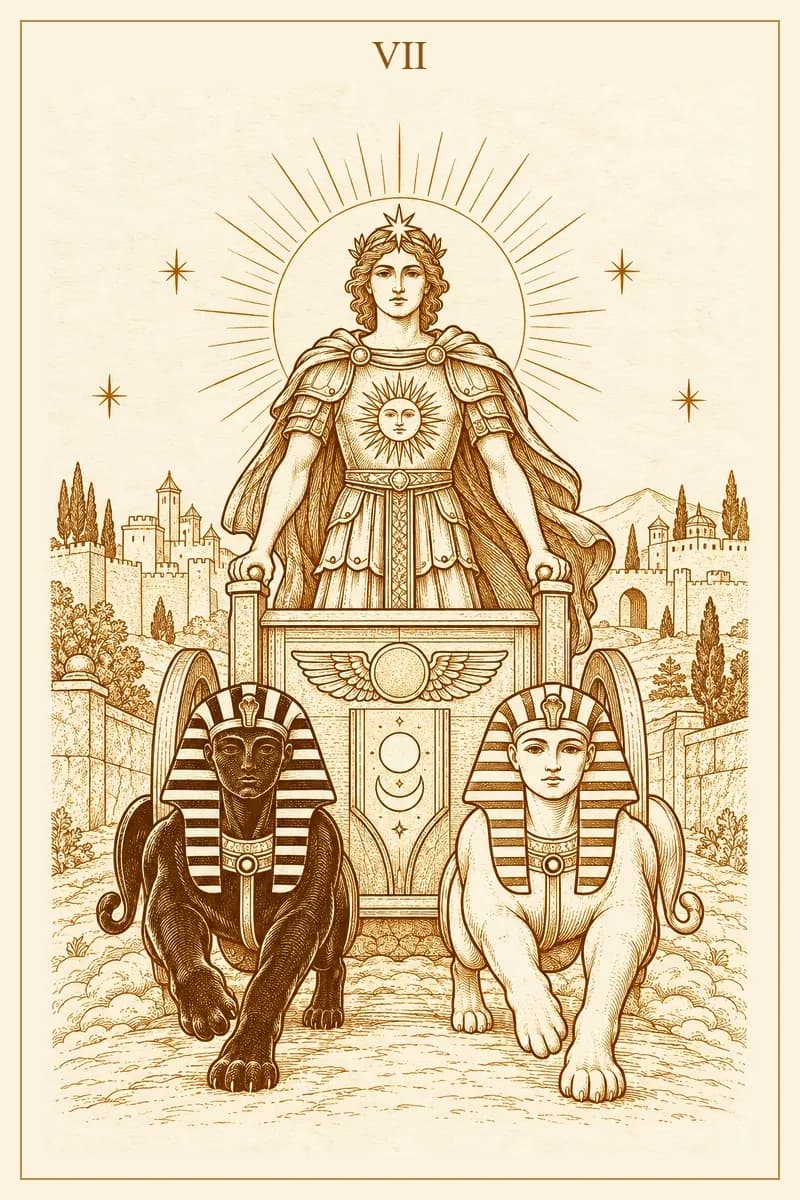
Driven transformation
Meaning of The Chariot and Death Combination: Momentum Meets Transformation
Driven ambition
Meaning of The Chariot and Two of Wands Combination: Willpower Meets Vision
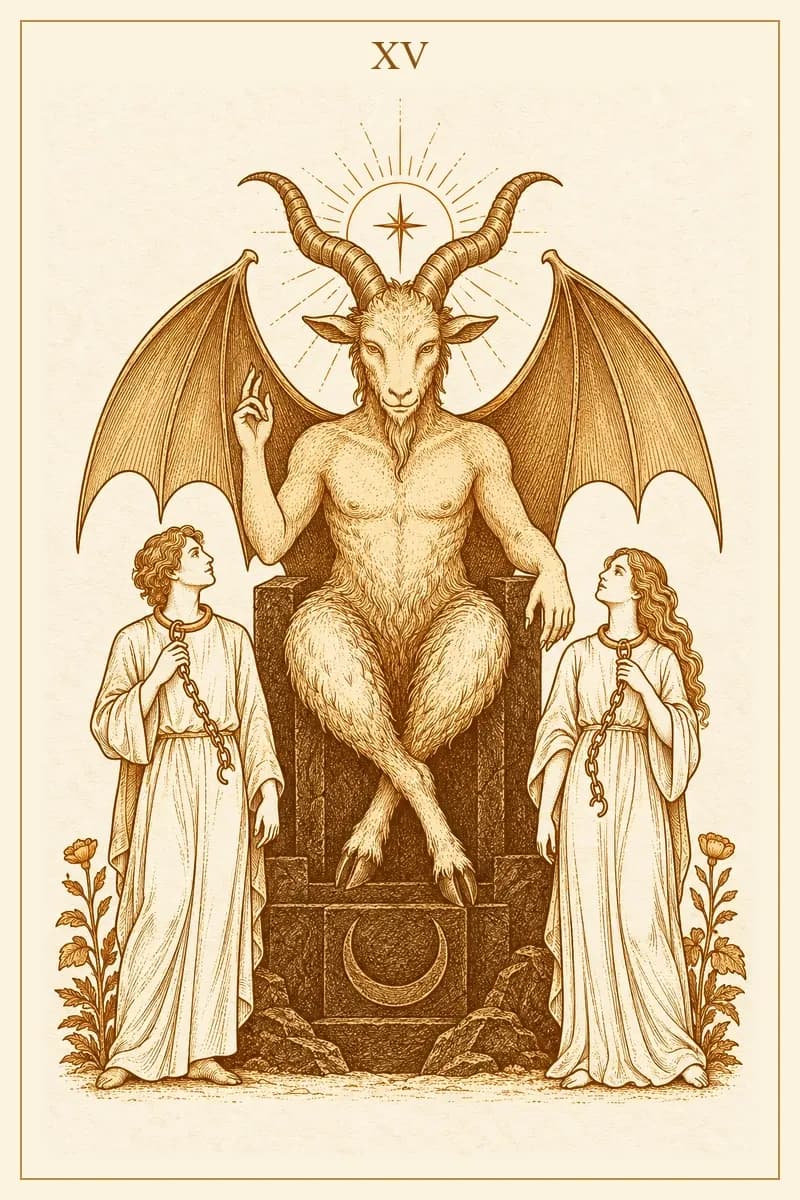
Forced liberation
Meaning of Death and The Devil Combination: Forced Liberation
Chained ambition
Meaning of The Devil and Two of Wands Combination: Ambition in Chains
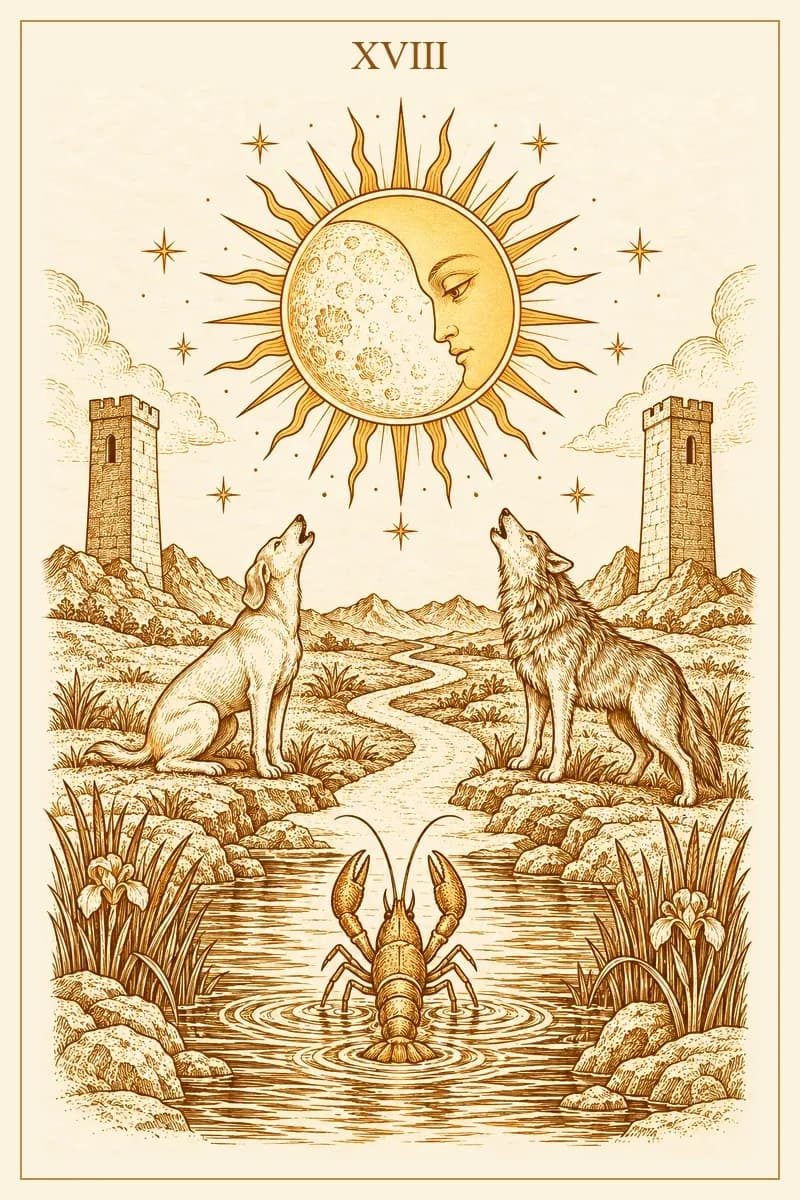
Hidden transformation
Meaning of Death and The Moon Combination: Hidden Transformation
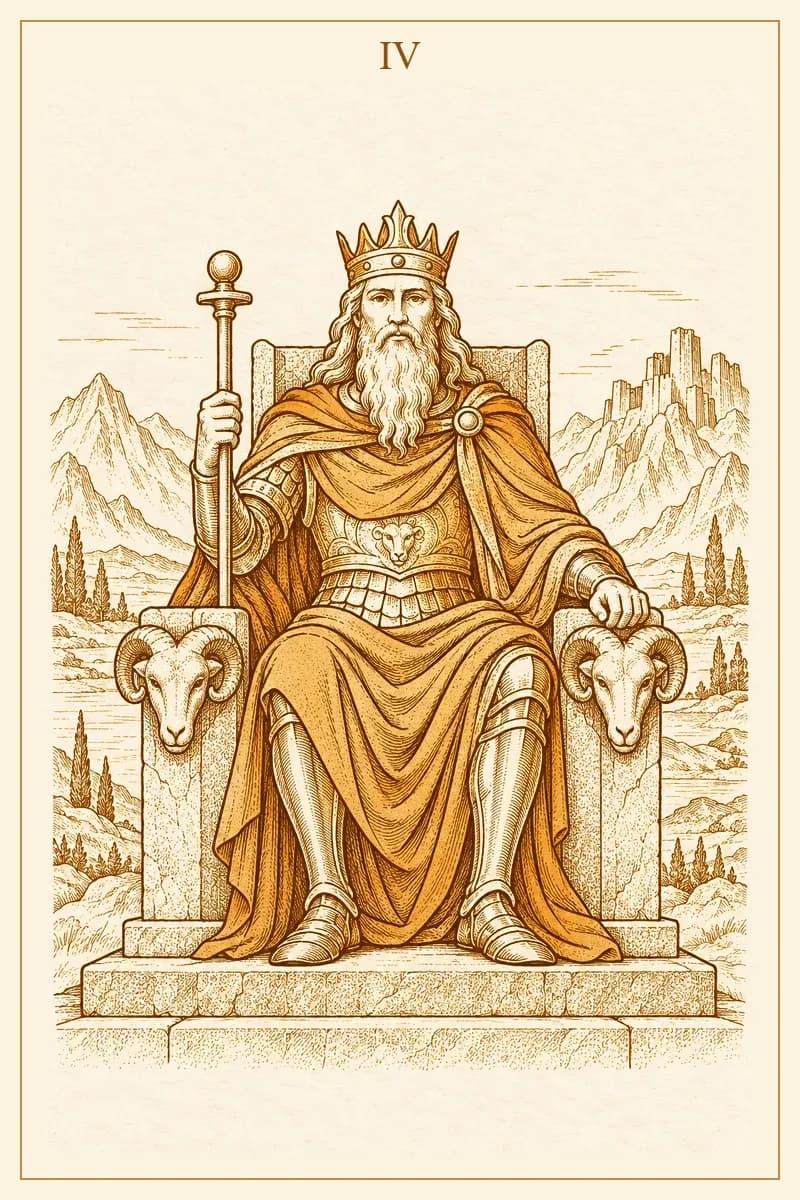
Authority versus expansion
Meaning of The Emperor and Two of Wands Combination: Empire at the Edge
✦ Bring it to the cards ✦
Bring Death and Two of Wands into your own reading
Use this pairing as a starting point, then let a spread listen to the situation that is actually yours.
Begin a contextual reading