
Card Combination
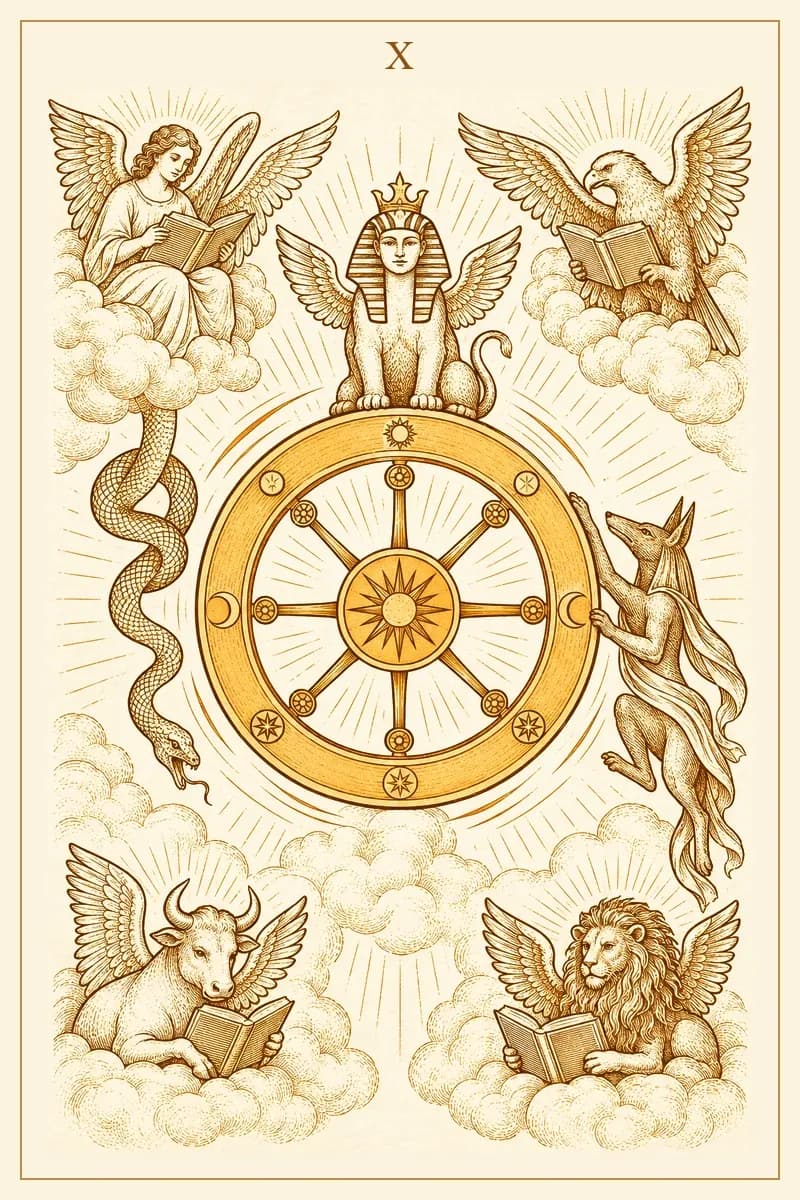
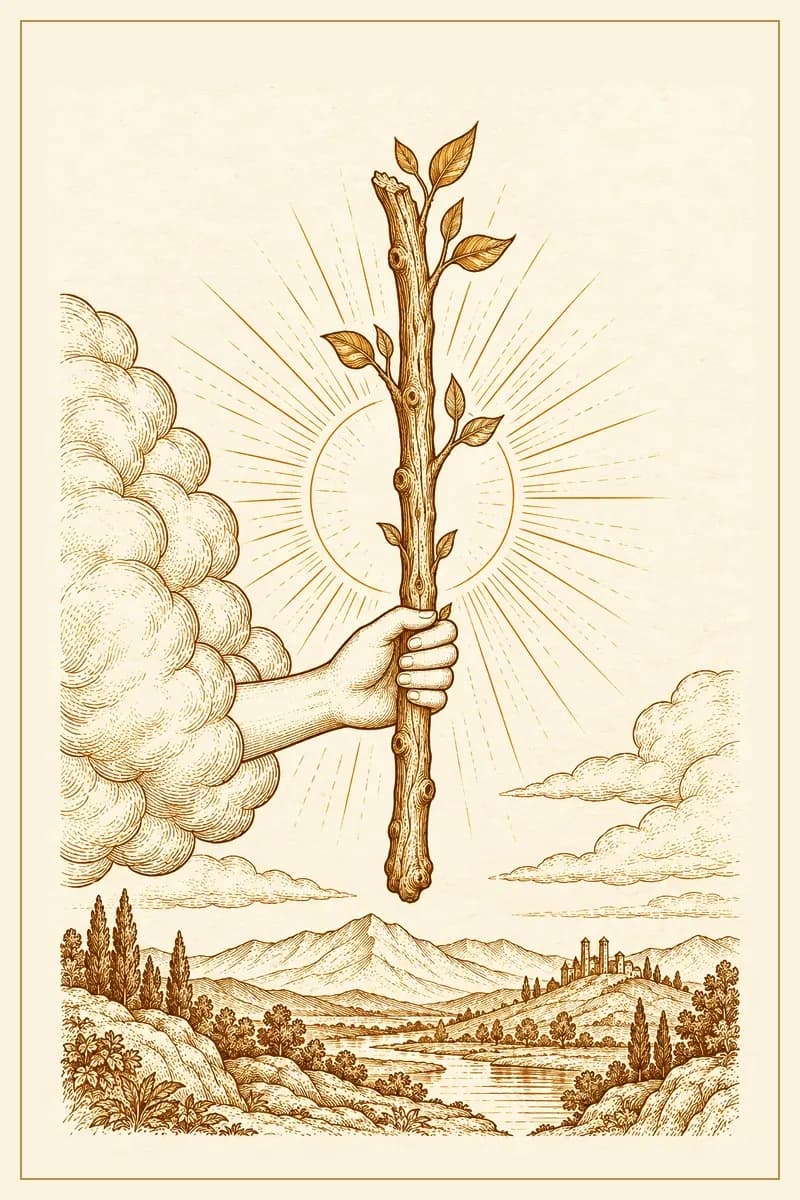
Meaning of Wheel of Fortune and Ace of Wands Combination: Seized Momentum
Seized Momentum
Every gambler knows the feeling: the cards are finally running your way, and the question is no longer whether to bet, but how much. The Wheel of Fortune and the Ace of Wands create exactly that pressure — a confluence of outside luck and inner fire that demands a decision before the moment passes. You can feel both cards pulling in the same direction, yet the tension between them is real and worth examining.
The Wheel is impersonal. It turns for no one's convenience, and when it tilts in your favor, it does so on its own schedule. The Ace of Wands, by contrast, is intimate — a raw charge of will and appetite that lives inside you and wants to burn. Together they create a situation where the external and internal windows of readiness happen to line up, which is rarer than it sounds and shorter than you'd like.
What makes this pairing complicated is that both cards carry urgency without giving instructions. The Wheel says the cycle is shifting; the Ace says ignite something. Neither specifies what. That ambiguity is the real work of this combination: not just recognizing an opening, but deciding clearly what you want to do with it.
The Core Tension
The Wheel of Fortune governs cycles, timing, and the larger currents of change that move through a life regardless of personal intention. It is fate not in the passive sense of resigned acceptance, but in the active sense of a river that will run whether you swim in it or not. The Ace of Wands is the opposite in temperament — it is pure agency, the unlit match held in a steady hand.
The tension is this: the Wheel asks you to read the moment correctly, while the Ace asks you to create it. One is receptive, one is generative. Reading a poker hand and raising on it requires both — recognizing what the table is giving you and having the nerve to play aggressively when the odds tip your way. Fail on either count and the moment dissolves: either you misread the external climate and burn your resources, or you correctly sense the opening but hesitate until the Wheel turns again.
This combination appears when life has dealt you a hand worth playing. The question it presses is whether you are paying enough attention to know that, and whether you are willing to act on that knowledge before the shuffle.
Love & Relationships
In relationships, this pairing often marks a window where something new can be initiated — or where a stalled dynamic can finally move. The Wheel suggests an external shift: circumstances have changed in a way that makes action possible. The Ace of Wands brings desire, attraction, and the willingness to show your hand.
For someone single, this combination frequently signals that the conditions for connection are unusually favorable right now, not because fate guarantees anything, but because you are more alive to the possibility than you typically allow yourself to be. That aliveness is the Ace talking. The courage to act on it — to speak first, to pursue openly, to stop calculating and start moving — is what this pair demands of you.
In an established relationship, the Ace of Wands beside the Wheel can indicate that the rut you have both accepted is not actually permanent. One card says the cycle is ready to shift; the other says desire is still present. The combination suggests that someone needs to be first to pick up the match.
Career & Purpose
Professionally, this is a high-opportunity pairing. The Wheel of Fortune signals that the market, the industry, or the internal politics of your organization are moving — and for once, moving in a useful direction. The Ace of Wands tells you that you have something to contribute to that movement: an idea, a project, a pitch, a willingness to take on something others won't.
The risk the cards identify is not failure — it is timing. Waiting for certainty before acting is the classic error when these two cards appear together. In poker terms, you do not wait for a perfect hand before betting into a favorable board. You play what you have when the position is good. The Ace is your hand; the Wheel is the board. Both are telling you the position is good.
Shadow Side
The shadow of this combination is combustion without aim. The Ace of Wands, unsupported by a clear intention, can produce bursts of energy that fizzle without producing anything lasting. The Wheel, misread as an excuse rather than an opening, can lead to magical thinking — the belief that luck alone will carry a project forward if you simply start something, anything.
There is also a subtler shadow: the Ace's urgency can cause you to misidentify what the Wheel is actually offering. The fire in your belly points you toward one thing; the genuine opportunity may be adjacent to it. Both cards demand honesty — about what is actually available and about what you actually want.
Action Steps
- 1Identify one concrete action you have been deferring and commit to initiating it before the week ends, even in an incomplete form.
- 2Map the external shifts in your situation — professional, relational, or practical — and note which of them you have been treating as permanent that may actually be temporary.
- 3Before acting, spend ten minutes writing down exactly what you want this particular fire to build; keep that paper visible as you move through the week.
Related Pairings
Continue through published pairings that share Wheel of Fortune or Ace of Wands.

control vs fate
Meaning of The Chariot and Wheel of Fortune: Control Meets Chance
Ignited Willpower
Meaning of The Chariot and Ace of Wands Combination: Ignited Willpower

control vs cosmic flux
Meaning of The Emperor and Wheel of Fortune: When Control Meets the Spin

chained ignition
Meaning of The Devil and Ace of Wands Combination: Desire That Burns You Alive
cycles of abundance
Meaning of The Empress and Wheel of Fortune: Cycles of Abundance
structure versus ignition
Meaning of The Emperor and Ace of Wands: When the Blueprint Meets the Spark
✦ Bring it to the cards ✦
Bring Wheel of Fortune and Ace of Wands into your own reading
Use this pairing as a starting point, then let a spread listen to the situation that is actually yours.
Begin a contextual reading