
Card Combination
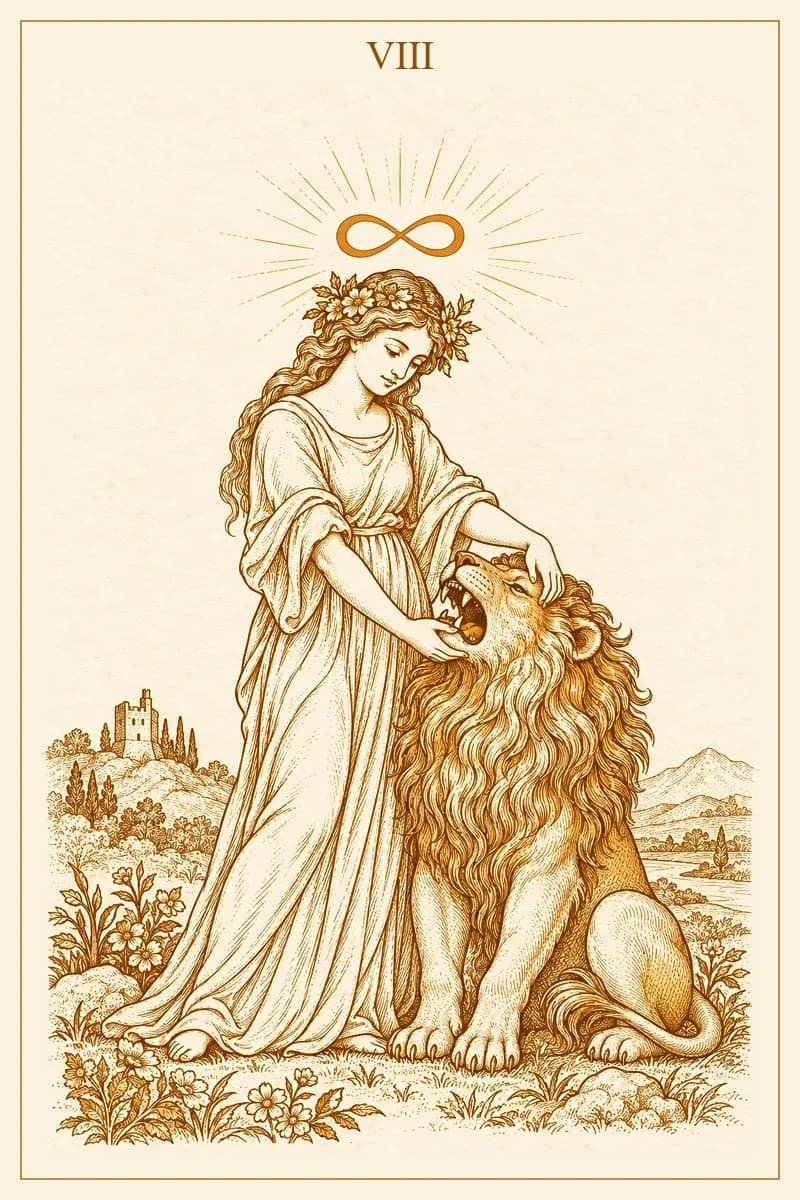
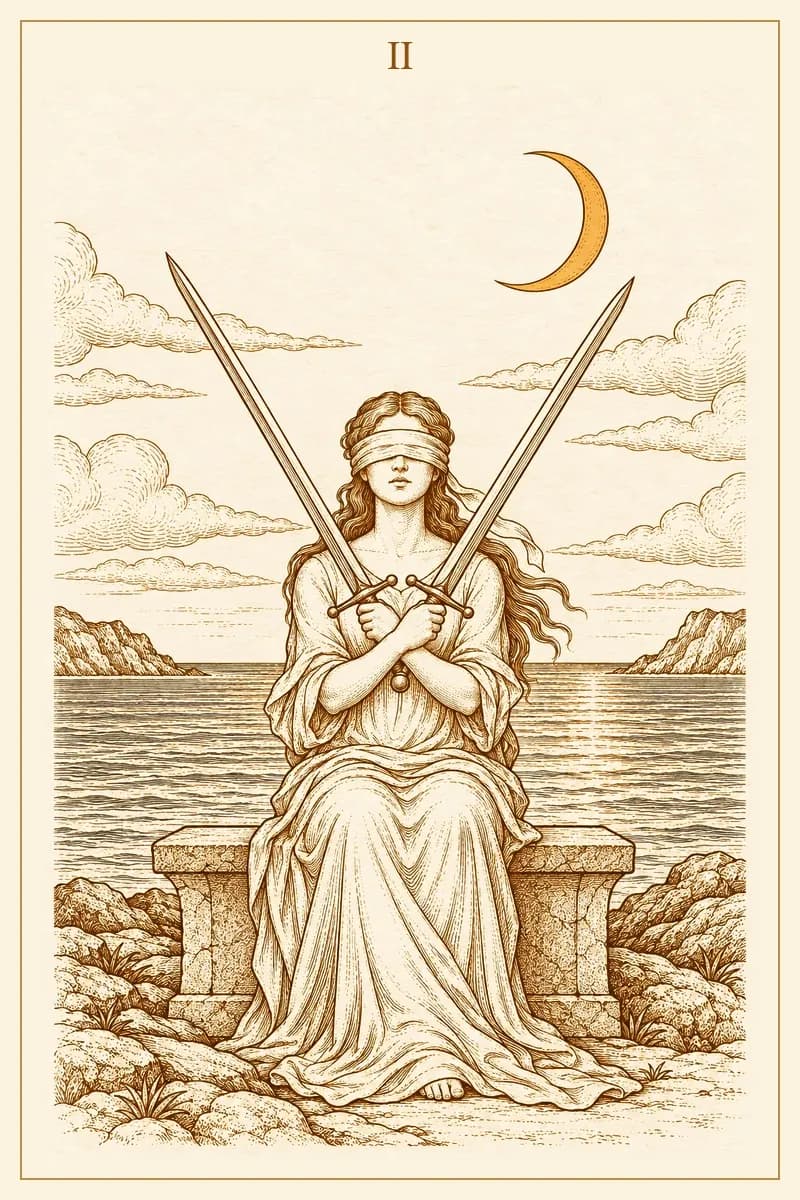
Meaning of Strength and Two of Swords Combination: When Courage Meets Paralysis
Paralysis through power
She has been sitting at the crossroads for three hours, both roads visible, both roads chosen and unchosen a dozen times already. The scouts have returned. The maps are spread. She knows the terrain on each side. What she does not have is a reason to move that feels large enough to justify the cost of being wrong. This is not cowardice — she has already proven her courage in the field. This is something more uncomfortable: the paralysis that visits the brave specifically because they understand the stakes.
Strength combined with the Two of Swords does not describe weakness. It describes exactly the opposite situation: enough inner power to sustain a standoff indefinitely, and a decision so weighted that even that power is not enough to tip the scale. The blindfold is not worn out of confusion. It is worn because looking at both options fully is almost unbearable.
The Two of Swords is a portrait of willful suspension. The figure holds swords crossed at the chest — not attacking, not defending, simply refusing to lower them until something changes. Strength whispers that you have the capacity to hold this pose far longer than is good for you. And that, precisely, is the problem this pairing names.
The Core Tension
In military terms, this is a strategist who has deployed patience as a tactical stance so long that patience has become the strategy itself. Every great general knows that choosing not to advance is sometimes correct — but the decision to hold position must be actively chosen, not passively inhabited. The Two of Swords suggests the position was originally deliberate. Strength suggests you have the endurance to maintain it past the point where maintaining it still serves you.
The core tension here is between capacity and wisdom. Having the strength to delay a decision is not the same as having a good reason to delay it. Courage is usually understood as the willingness to act under fear. But there is another form of courage this pairing demands: the willingness to stop holding your breath.
Neither card is telling you which road to take. Together, they are pointing out that you have been using your own endurance as an excuse to avoid choosing either.
Love & Relationships
In romantic situations, this pairing describes someone who holds themselves in suspension between two emotional realities. Perhaps there are two possible partners. More often, it is one relationship and two possible responses to something that has happened — stay and rebuild, or leave. The problem is not that both options are equal. The problem is that you have convinced yourself they are, because committing to one truth means grieving the loss of the other.
Strength here does not validate the indefinite holding pattern. It names the energy that makes the holding pattern feel sustainable: you are genuinely strong enough to live in this tension for a very long time. But the Two of Swords eventually becomes a form of silent cruelty — to your partner, and to yourself.
The specific wisdom this combination offers for love: the longer you maintain the suspension, the more energy goes into maintaining the position and the less remains for actual relationship. A decision made imperfectly and humanly is more generous than a perfect impasse.
Career & Purpose
Professionally, this combination appears when someone knows that a project, a direction, or a collaboration needs to be judged — go forward or stop — but keeps deferring that judgment because the stakes of being wrong feel too high. The crossed swords represent two competing analyses, two conflicting reports, two advisors who have given opposite recommendations. Strength means you have the authority and the personal capital to make the call. The Two of Swords means you are not making it.
The shadow version of this at work is analysis paralysis that is dressed up as due diligence. There is always more data available. Strength here is the quality that lets you keep commissioning reports indefinitely. The question this pairing asks in a professional context is direct: what would you need to see before deciding, and does that thing actually exist?
Shadow Side
The shadow of this combination is the strength that enables avoidance. It looks, from the outside, like composure. It feels, from the inside, like control. But what it actually is: the use of inner resources to preserve a situation that has already become untenable, because action would require acknowledging what you already know.
The deepest shadow here is not that you cannot decide. It is that you have already decided, quietly, some time ago — and you are using your own considerable inner strength to avoid living inside that decision. The Two of Swords is not confusion. It is the armor of the person who knows.
Action Steps
- 1Write down both options side by side and, for each one, complete the sentence: "If I choose this, what I am actually giving up is ___" — do not skip the grief.
- 2Identify one piece of information you keep telling yourself you need before deciding, then ask honestly whether obtaining it would genuinely change the outcome or simply delay it.
- 3Set a non-negotiable decision date within fourteen days — not because the timing is perfect, but because the cost of postponement now exceeds the cost of being wrong.
Related Pairings
Continue through published pairings that share Strength or Two of Swords.
controlled fire
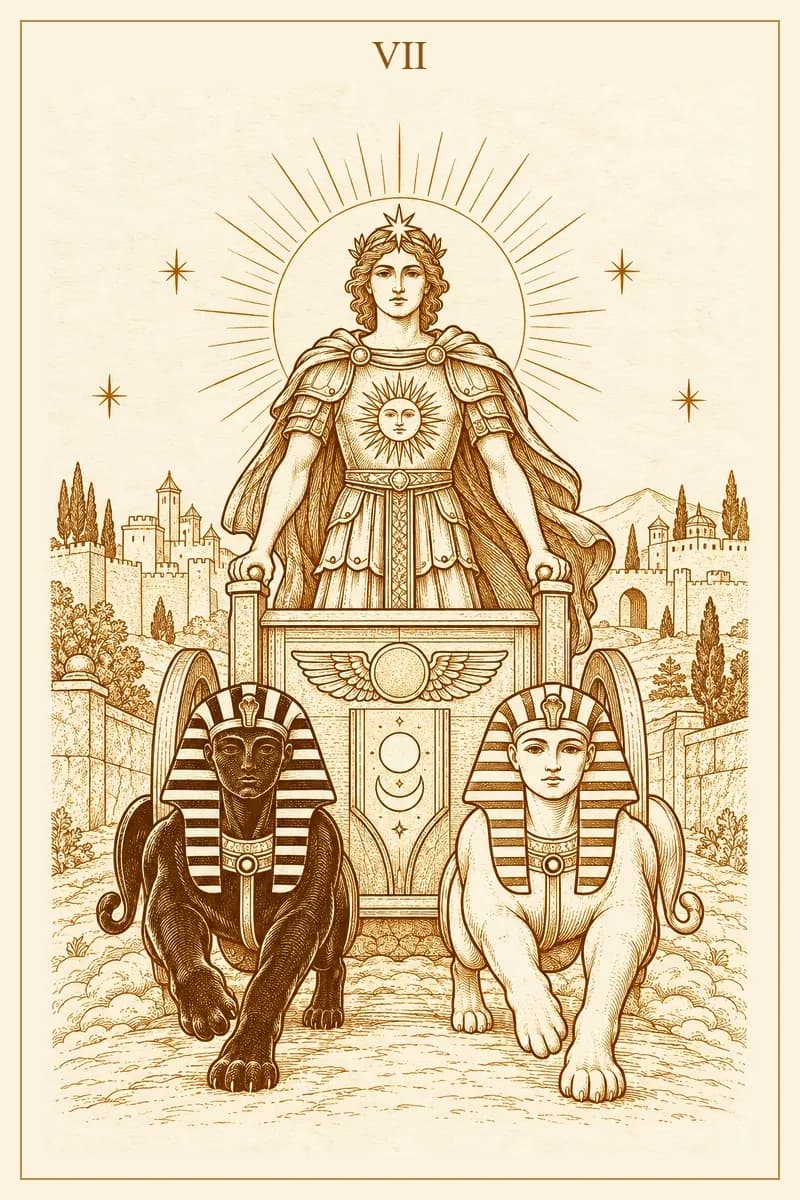
Meaning of The Chariot and Strength: Controlled Fire
Blocked momentum
Meaning of The Chariot and Two of Swords Combination: Stalled Drive

hard power vs soft power
Meaning of The Emperor and Strength: Hard Power Meets the Quiet Force
Willing blindness
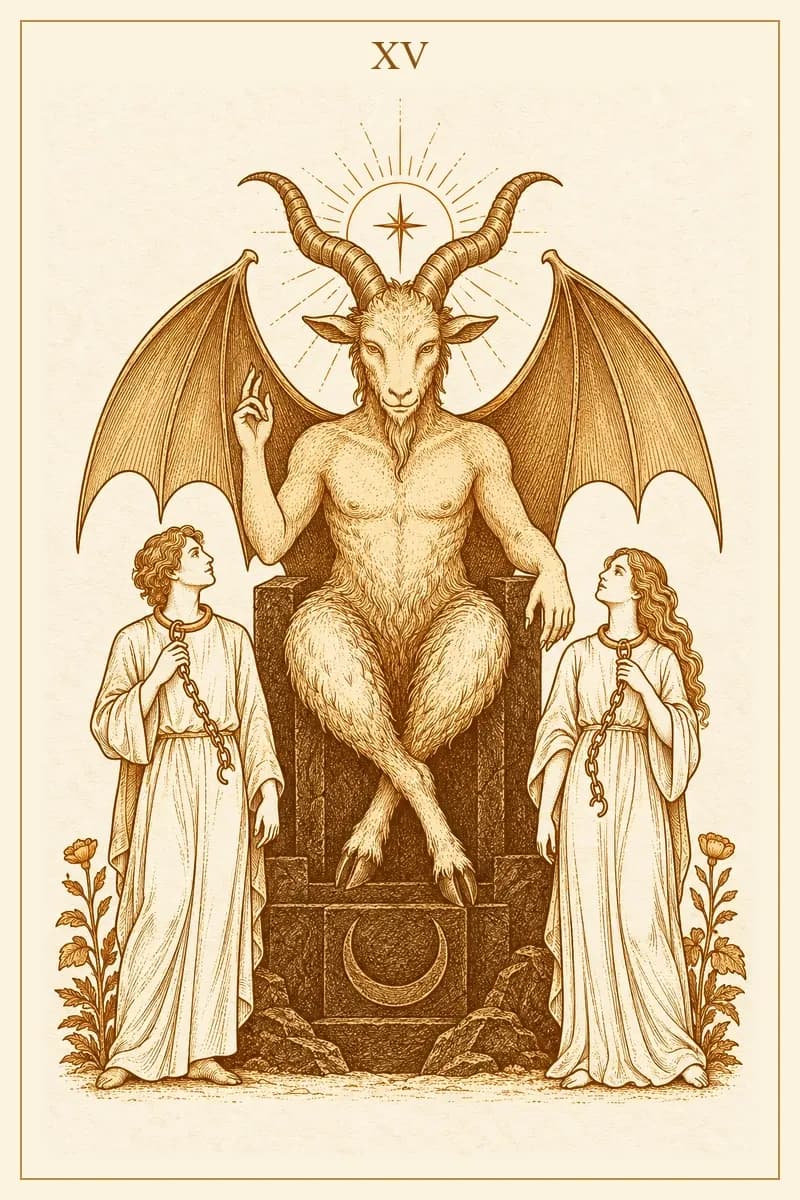
Meaning of The Devil and Two of Swords Combination: Frozen Chains
nurturing power
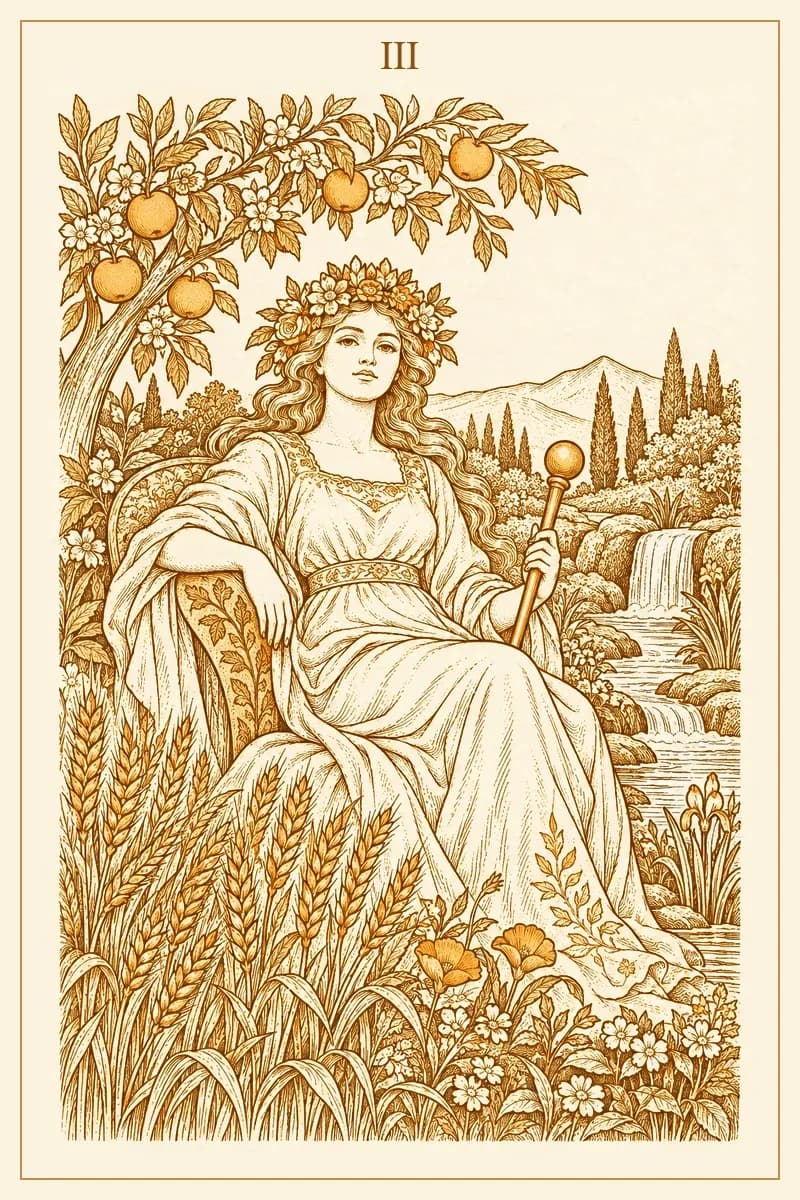
Meaning of The Empress and Strength: Gentle Power in Full Bloom
Forced decision
Meaning of The Emperor and Two of Swords Combination: Authority Meets Stalemate
✦ Bring it to the cards ✦
Bring Strength and Two of Swords into your own reading
Use this pairing as a starting point, then let a spread listen to the situation that is actually yours.
Begin a contextual reading