Loading your view
The page is gathering the latest information.
The page is gathering the latest information.
suspended choice
She stands at the workbench with two gears in her hands. One fits the machine she has been building for years—clean teeth, familiar weight, a perfect match by every measurable standard. The other gear came from somewhere unexpected. It doesn't fit yet. But she keeps turning it over, studying the way its teeth are cut, wondering if the machine itself might need to change.
That is where you are right now.
Two cards with entirely different energies are sitting across from each other, neither willing to blink. One pulls toward union, choice, and the courage to commit. The other plants its feet—or rather, hangs its head—and refuses to be rushed.
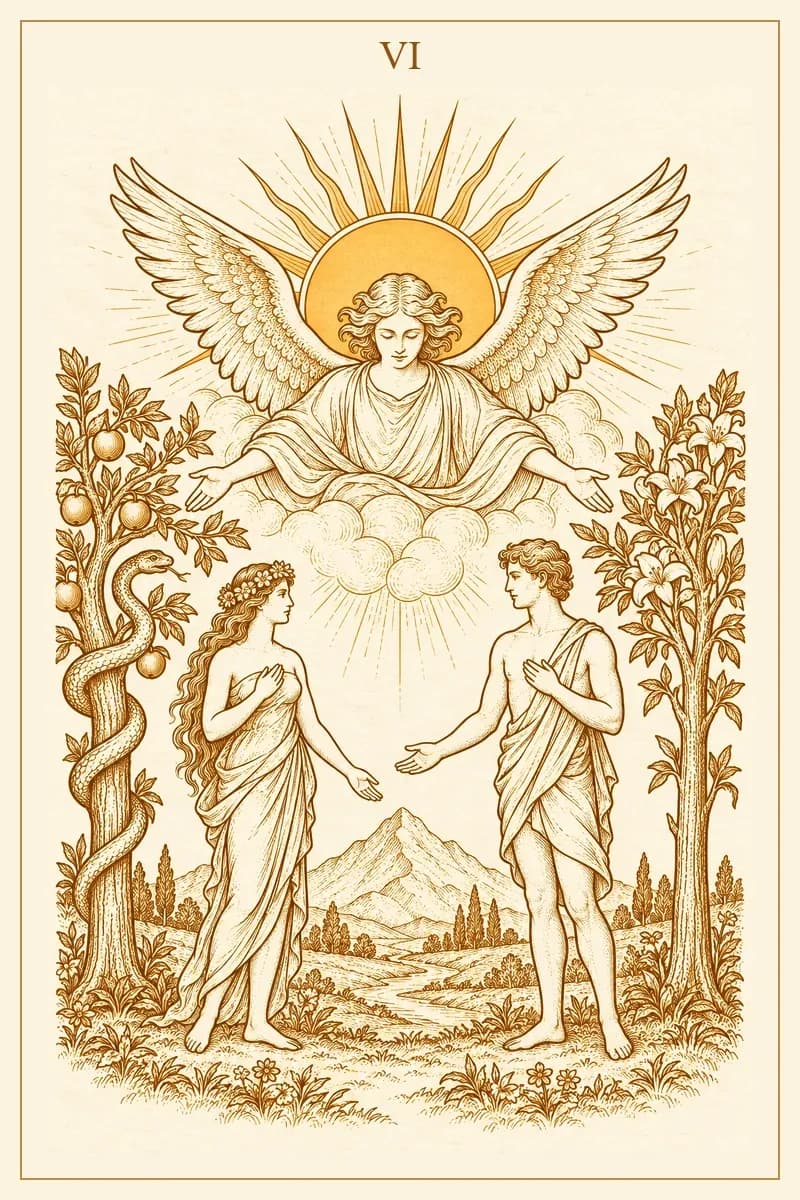
The Lovers is a card of alignment. It does not simply represent romance; it represents the moment when your values and your desires are pointing in the same direction, asking you to choose with your whole self rather than just your logic. It is the gear that clicks into place with a satisfying snap.
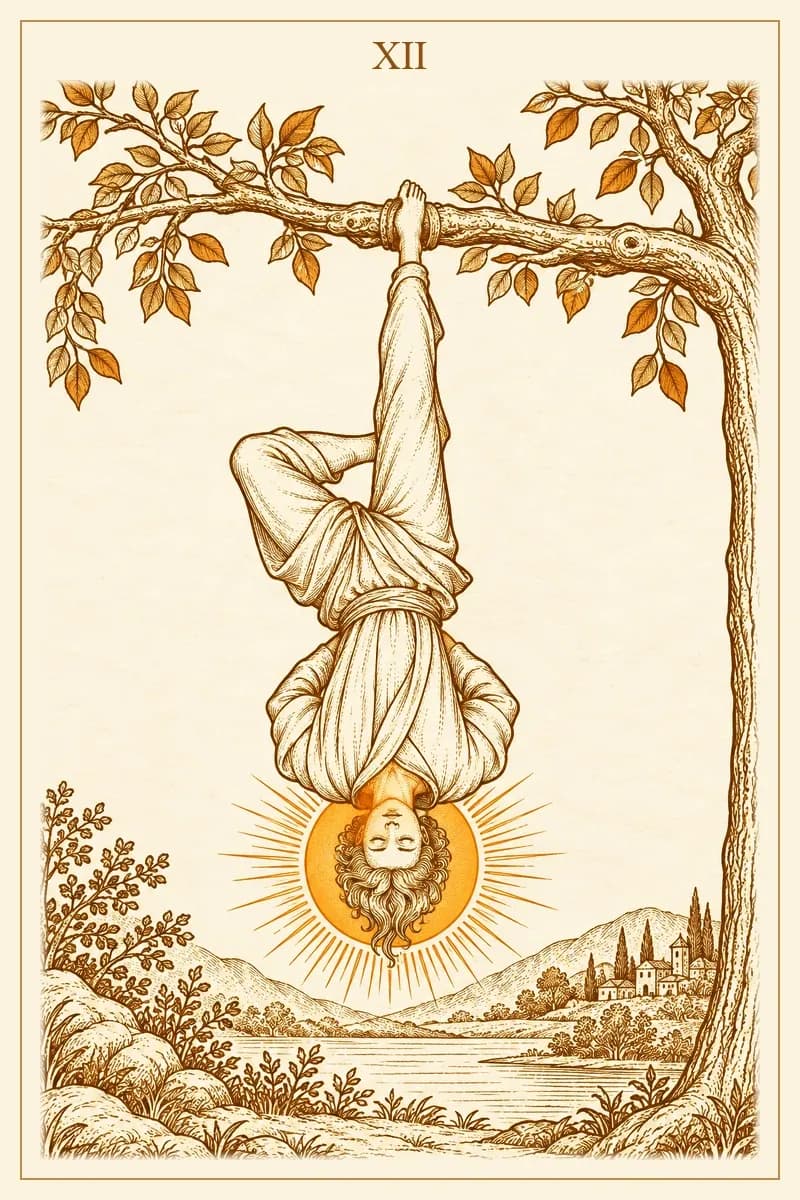
The Hanged Man is something else entirely. He has climbed the scaffolding voluntarily and suspended himself by one foot, not because he was forced but because he recognized that moving forward from the same angle would get him nowhere. He is not stuck. He is recalibrating. The machine has been paused so the mechanic can see what the motion was hiding.
Together, these cards describe a moment when love or a significant values-based decision has entered a holding pattern—and the holding pattern is not the enemy. It is the diagnostic phase.
In a relationship context, this pairing often appears when one person is ready to commit and the other is not—or when both people sense that something needs to shift before the connection can function at its full capacity.
Think of it as a drivetrain with a worn bearing. Everything might still be moving, but there is friction underneath, a vibration you feel before you hear. The Hanged Man asks you to stop the machine long enough to locate that vibration. The Lovers asks you to be honest about whether you want to repair this mechanism or build something different.
If you are single, this combination points to a pause before a significant connection. Someone may be on the horizon, but the timing requires suspension—not abandonment. You are being asked to examine what you actually value in a partner before the next gear engages.
At work, this pairing often surfaces around decisions involving partnerships, collaborations, or roles that require deep personal alignment. You may have an offer on the table, a partnership proposal, or a project that demands your genuine commitment—and something in you has seized.
That seizing is not malfunction. It is the system running its own diagnostic. The Hanged Man in a professional context asks you to tolerate the temporary inefficiency of not deciding, because a premature commitment—like forcing a mismatched gear—will create larger problems downstream. The Lovers reminds you that when you do choose, it needs to come from your values, not just your ambition or your fear of losing the opportunity.
The shadow side of this combination is paralysis dressed up as wisdom. There is a version of the Hanged Man that stops because stopping is easier than the vulnerability the Lovers demands. Waiting can become a strategy for avoiding intimacy, commitment, or the terrifying act of choosing something and being wrong.
If you have been in suspension for more than a season—romantic, professional, or otherwise—ask whether the pause is still productive. A machine left idle too long develops rust. There is a difference between a deliberate recalibration and a mechanism that has simply been abandoned in the garage.
Keep or share this combination reference
Continue through published pairings that share The Lovers or The Hanged Man.

duty vs desire

momentum versus surrender
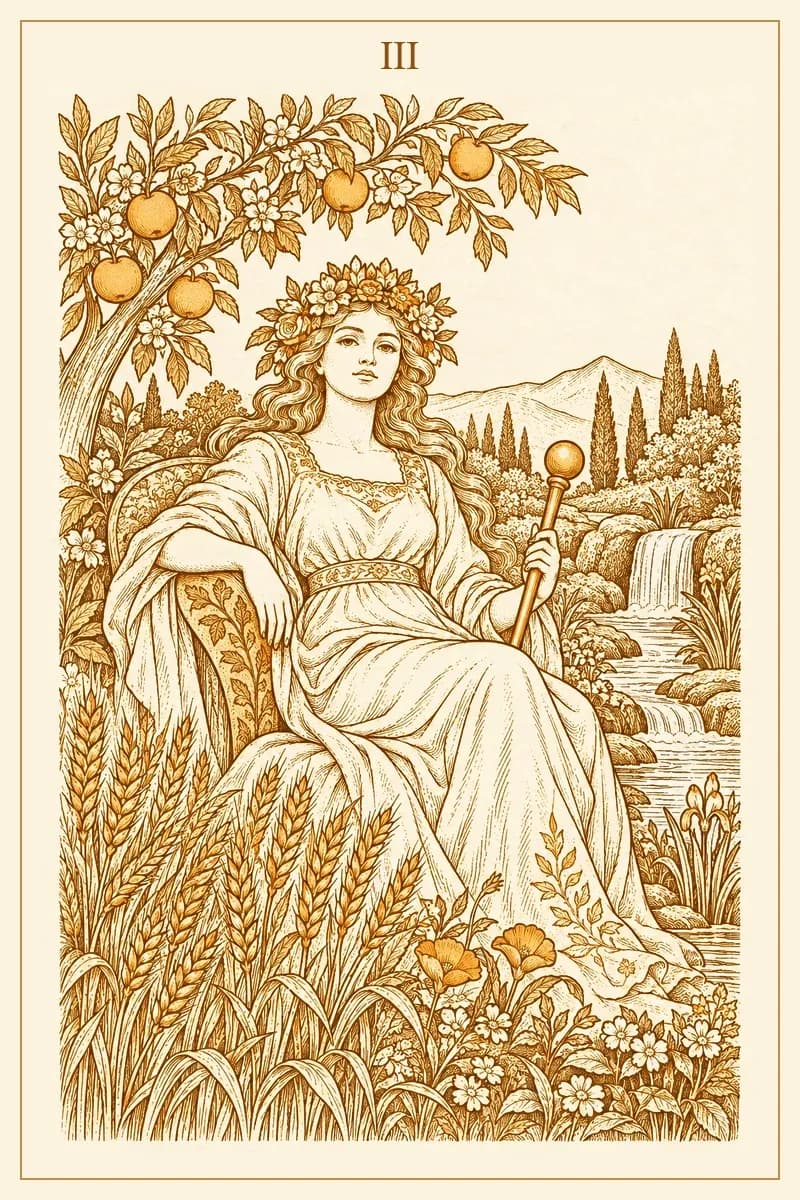
abundance meets conscious choice
control vs release
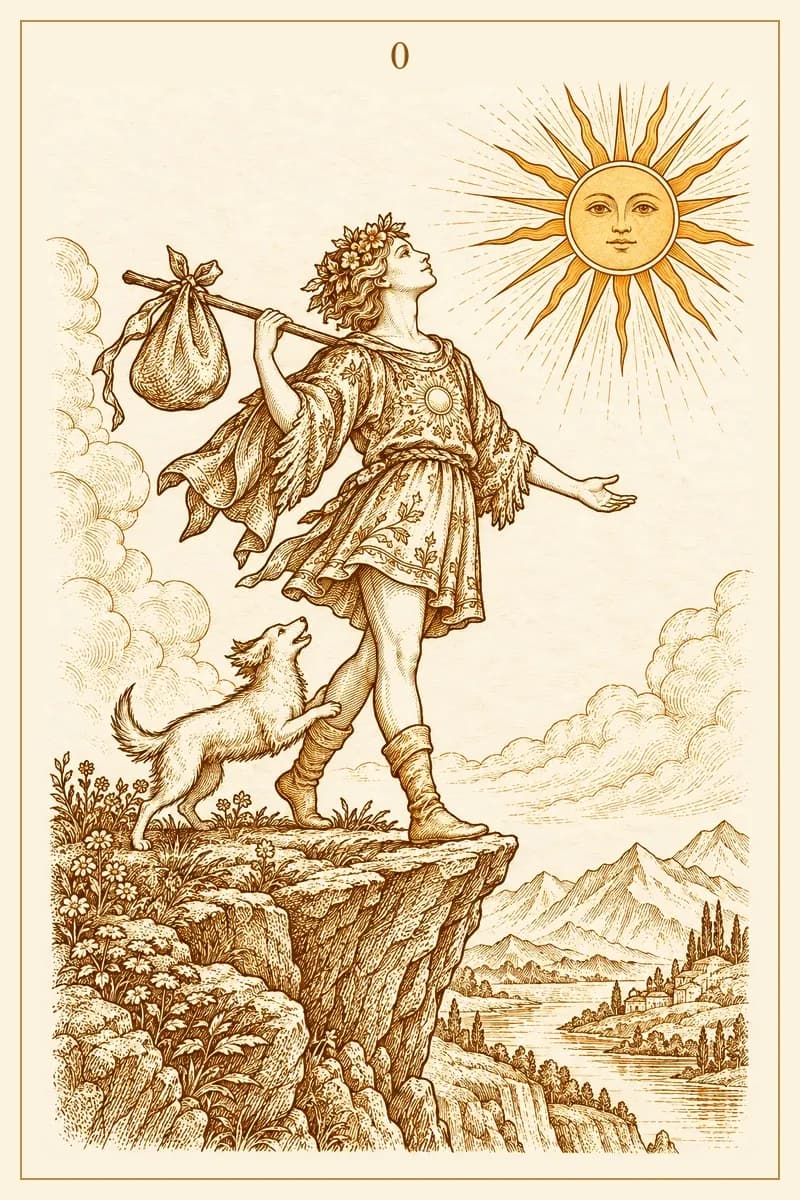
Innocent Desire
fertile suspension
✦ Bring it to the cards ✦
Use this pairing as a starting point, then let a spread listen to the situation that is actually yours.
Begin a contextual reading