
Card Combination
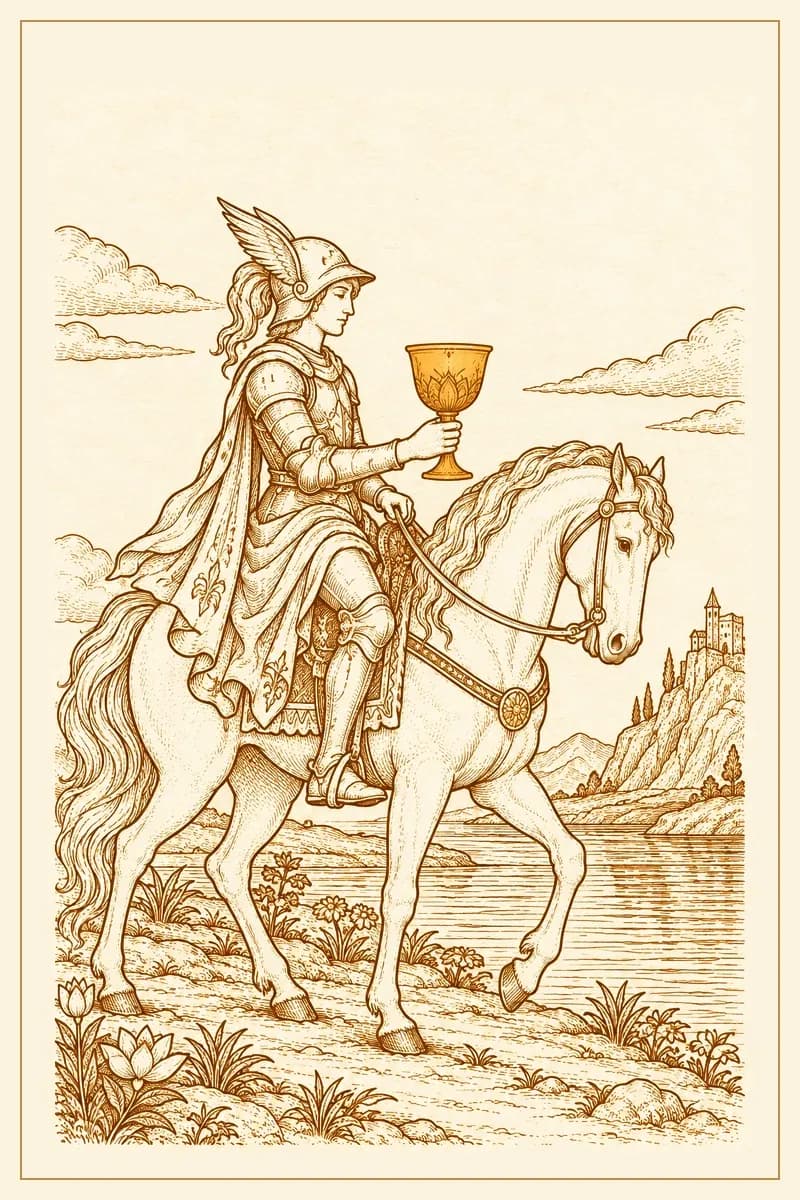
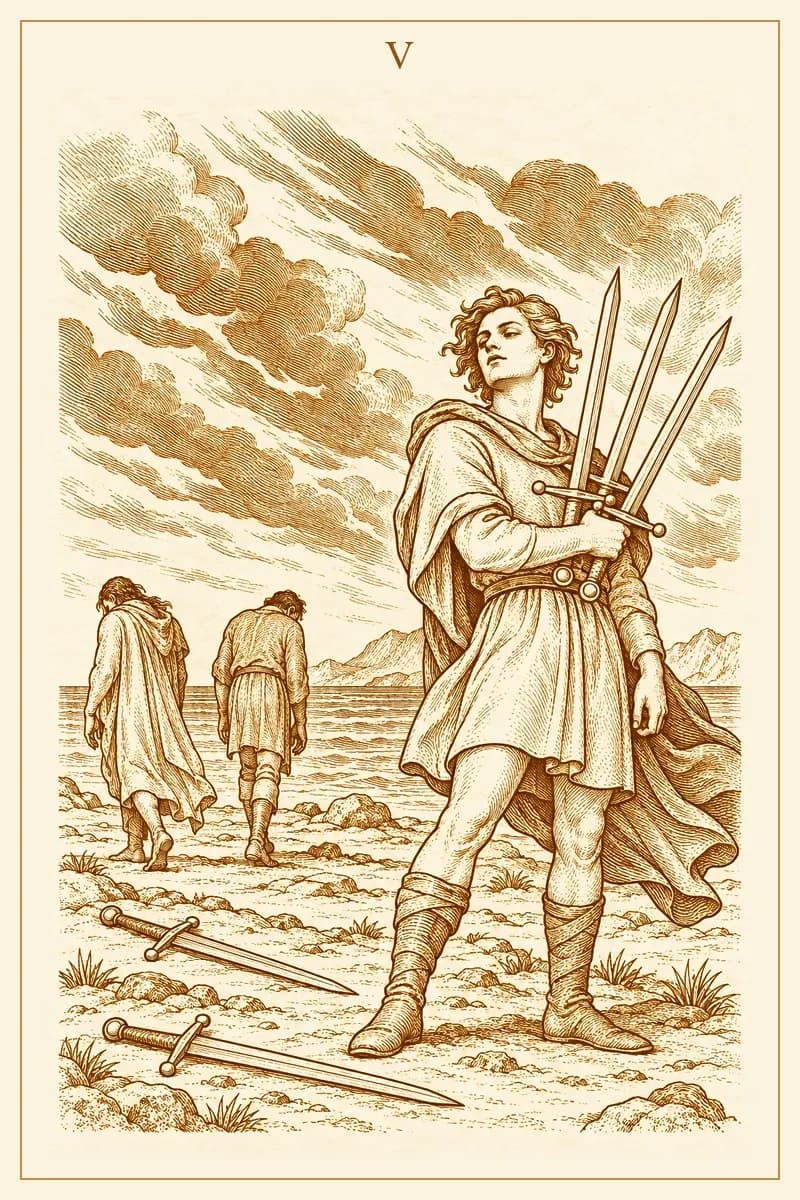
Meaning of Knight of Cups and Five of Swords Combination: The Romantic in Battle
the collision between romantic idealism and the ugly reality of interpersonal conflict
The patient was already mid-sentence when the diagnosis landed. He had been describing the relationship in clinical terms — symptoms of affection, episodes of connection, the slow onset of something that felt like hope — and then the lab results came back and the numbers told a different story. The Knight of Cups sits in the examination room holding flowers for someone who has been stealing his medication. The Five of Swords is the test result he does not want to read.
This is the moment in a reading when romantic feeling meets forensic evidence. The Knight of Cups arrives on horseback with a chalice, all gesture and devotion, believing that love is the cure for every wound. The Five of Swords lays out the X-rays: someone is not acting in good faith. The conflict is real. The manipulation is documented. And the Knight's beautiful idealism is, in this particular case, preventing accurate diagnosis.
The question is not whether the Knight's feelings are genuine. They always are. The question is whether feelings alone constitute a treatment plan.
The Core Tension
The Knight of Cups approaches life as a romantic quest. Every person is a potential beloved. Every situation is an opportunity for emotional heroism. The Five of Swords is the chart that shows what happens when that approach meets someone willing to exploit it. The tension is between what the heart wants to believe and what the evidence actually shows.
In medical terms, this is the difference between a patient's subjective experience and the objective findings. The Knight feels fine. The Five of Swords shows inflammation, elevated markers, patterns that suggest the body is fighting something the mind refuses to acknowledge. Ignoring the diagnosis does not make the illness less real. It makes it less treatable.
Love & Relationships
In romantic readings, this combination is a clinical alert. The Knight of Cups is deeply invested — emotionally, imaginatively, perhaps obsessively. The Five of Swords indicates that the object of this devotion is engaged in behavior that causes harm: dishonesty, power games, triangulation, or the kind of conflict where someone always has to lose.
The reading does not say the Knight's love is invalid. It says the Knight's love is insufficient as a treatment for the dysfunction in the relationship. You cannot heal a toxic dynamic by loving harder. You cannot outromance manipulation. The prescription here is clarity: see the situation with clinical precision, even if what you see contradicts what you feel.
If you are the one exhibiting Five of Swords behavior, this reading is the lab result you have been avoiding. The person you are hurting is also the person who loves you most openly. That fact should disturb you enough to change.
Career & Purpose
Professionally, the Knight of Cups and Five of Swords describe a situation where idealistic engagement meets political reality. You may have entered a project, partnership, or organization believing in its stated mission, only to discover that behind the mission statement lies a culture of competition, blame, and strategic dishonesty.
The Knight's instinct is to double down on sincerity — to believe that if they just care enough, the environment will respond in kind. The Five of Swords says the environment does not respond to caring. It responds to power. This is not a call to become cynical. It is a call to stop prescribing aspirin for a fracture. Diagnose the real problem, then decide whether you want to treat it or transfer to a different ward.
Shadow Side
The shadow of this combination is weaponized romanticism. The Knight of Cups in shadow uses their emotional intensity not as genuine connection but as a tool of control — the partner who drowns you in devotion so you feel guilty for having boundaries. The Five of Swords in shadow is the Knight after disillusionment — the lover who becomes a fighter, using their intimate knowledge of your vulnerabilities as ammunition.
Watch for the cycle: idealize, get hurt, weaponize. Repeat. The Knight who never processes their wounds does not stop being romantic. They become dangerously romantic — someone whose love carries a surgeon's knowledge of exactly where to cut.
Action Steps
- 1Identify one situation where your emotional investment is disproportionate to the evidence of reciprocity and write an honest assessment of what the data actually shows, separate from what you wish it showed.
- 2Set one boundary this week that your feelings resist but your judgment supports, treating it as preventive medicine rather than emotional withdrawal.
- 3Notice the difference between how a situation makes you feel and what a situation actually involves, practicing the clinical distinction between subjective experience and objective findings.
Related Pairings
Continue through published pairings that share Knight of Cups or Five of Swords.
✦ Bring it to the cards ✦
Bring Knight of Cups and Five of Swords into your own reading
Use this pairing as a starting point, then let a spread listen to the situation that is actually yours.
Begin a contextual reading