
Card Combination
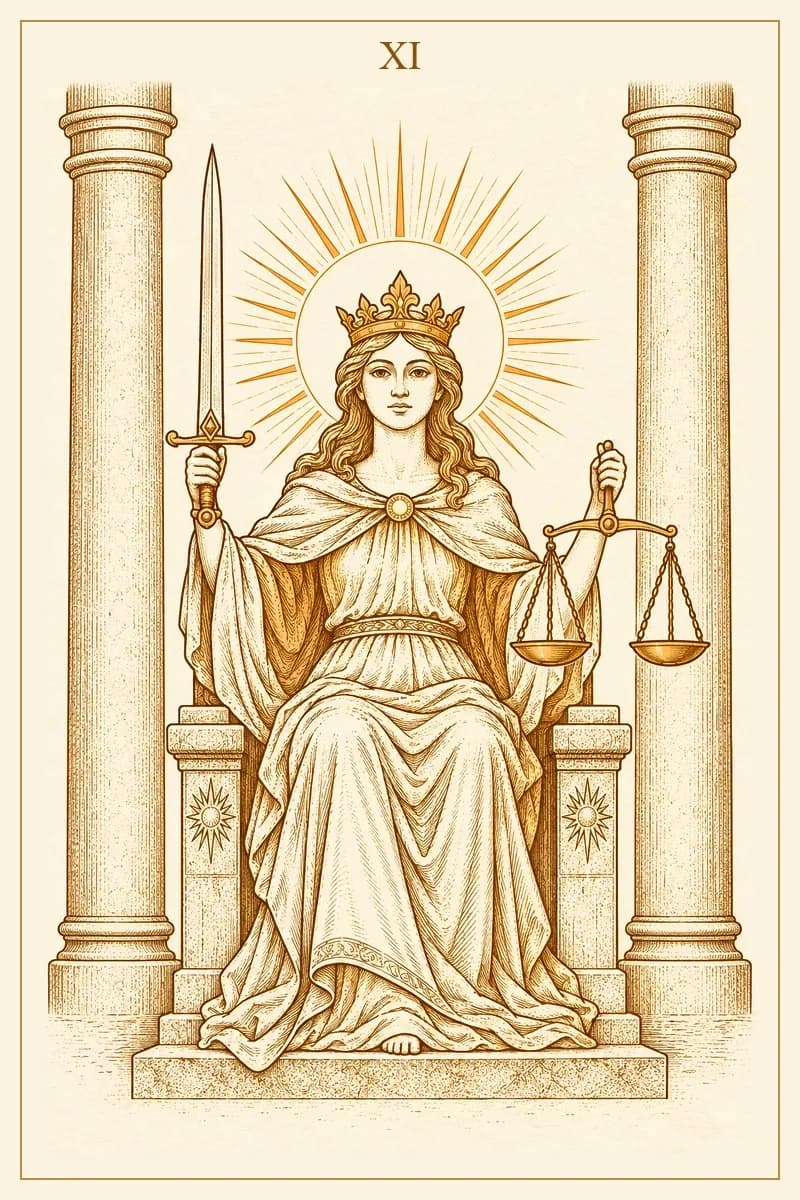

Meaning of Justice and Ace of Pentacles Combination: The Ledger Before the Foundation
Earned abundance
Every architect knows that the most expensive mistake is a flaw in the foundation—not because the crack is visible at first, but because everything built on top of it inherits the weakness. The Ace of Pentacles is a foundation card. It represents the seed of material reality: a contract, an investment, a career opening, a financial opportunity arriving with a kind of gravitational promise. But Justice, appearing alongside it, insists on surveying the ground before the first stone is placed.
This is not pessimism. It is structural intelligence. The pairing does not say the opportunity is wrong or that the abundance is undeserved. It says: look closely at the ground beneath this offer. Has the soil been prepared honestly? Are there outstanding obligations—debts unpaid, agreements unresolved, contributions unacknowledged—that could destabilize what you are about to build?
The contrast at the heart of this draw is between arrival and readiness. The Ace of Pentacles announces that something real and tangible is available to you now. Justice holds up a hand and asks whether the conditions for receiving it have been met. Not as a punitive measure, but as architectural due diligence. The structure will only be as solid as the ethics beneath it.
The Core Tension
The Ace of Pentacles carries the energy of first potential—unmanifest but full of material weight. It is the blank contract before signatures, the empty plot before construction, the idea that has just crossed from abstract to achievable. There is urgency in it, a sense that timing matters.
Justice, however, is not moved by timing. It operates outside of urgency. Its scales are calibrated, not rushed. The tension here lies in the pull between the momentum of opportunity and the deliberateness of fairness. The Ace wants to move; Justice wants to verify.
What this means practically: before committing to the opportunity in front of you—whether that is a job offer, a financial agreement, a business venture, or even a significant purchase—something needs to be checked, acknowledged, or settled. The combination asks you to name what that thing is before proceeding.
Love & Relationships
In romantic contexts, the Ace of Pentacles speaks to the possibility of a relationship that could become something stable and lasting—something with material and emotional ground beneath it. Justice alongside it asks about the fairness of the exchange you are entering.
Is this dynamic being built on reciprocity? Are both people contributing in ways that are visible and acknowledged? The Ace of Pentacles is partly about worth—your own and what you bring. Justice asks whether that worth is being accurately seen. If you have been underselling yourself, minimizing your contributions, or accepting less than what the situation warrants, this combination marks the moment to recalibrate.
For those considering a serious commitment—moving in together, combining finances, entering a formal relationship structure—Justice and the Ace of Pentacles call for explicit conversations about expectations, responsibilities, and what each person understands as fair. This is not romantic, but it is the kind of groundwork that prevents resentment from taking root in the walls later.
Career & Purpose
This is a particularly strong combination for anyone making a financial or contractual decision. A job offer on the table. A freelance contract to sign. A business partnership forming. The Ace of Pentacles brings genuine opportunity; Justice asks you to read every clause.
Look specifically at whether the terms reflect an equitable exchange of value. Are you being offered what your contribution is worth? Is the responsibility distribution proportionate to the reward structure? This combination often surfaces in moments where one party is being asked to accept less than they should—and where the inequity is subtle enough that it might not be noticed without deliberate scrutiny.
For those in leadership or management, Justice and the Ace of Pentacles can appear as a call to examine compensation structures, resource allocation, or how opportunities are distributed across a team. Fairness in material outcomes is being evaluated here, not just processes.
Shadow Side
The shadow of this combination is the rationalization of gain at someone else's expense. When Justice is present alongside new material potential, it can reveal a quiet ethically compromised choice: the business opportunity that benefits you while quietly disadvantaging a partner, supplier, or employee. The justification tends to be that the person "would have done it anyway" or "didn't really need it."
There is also a shadow in excessive caution—using the language of fairness and diligence to avoid taking any risk at all. Justice does not ask you to refuse the opportunity. It asks you to enter it with clean hands and clear terms. Paralysis in the name of principle is still paralysis.
The line between due diligence and avoidance is crossed when the reviewing becomes its own form of inaction.
Action Steps
- 1Before agreeing to any financial, contractual, or professional arrangement this week, identify the one term or condition you have been glossing over and examine it directly.
- 2Audit one ongoing exchange—at work or in a personal relationship—for whether the balance of contribution and recognition is proportionate, and name the adjustment needed.
- 3If you have been delaying a financial or material decision out of discomfort rather than genuine uncertainty, clarify what specifically needs to be resolved before you can proceed.
Related Pairings
Continue through published pairings that share Justice or Ace of Pentacles.

Earned victory
Meaning of The Chariot and Justice Combination: Victory Demands a Price
Ambition meets opportunity
Meaning of The Chariot and Ace of Pentacles Combination: Driven Material Gain

Authority meets accountability
Meaning of The Emperor and Justice Combination: Authority Meets Accountability
Gilded grip
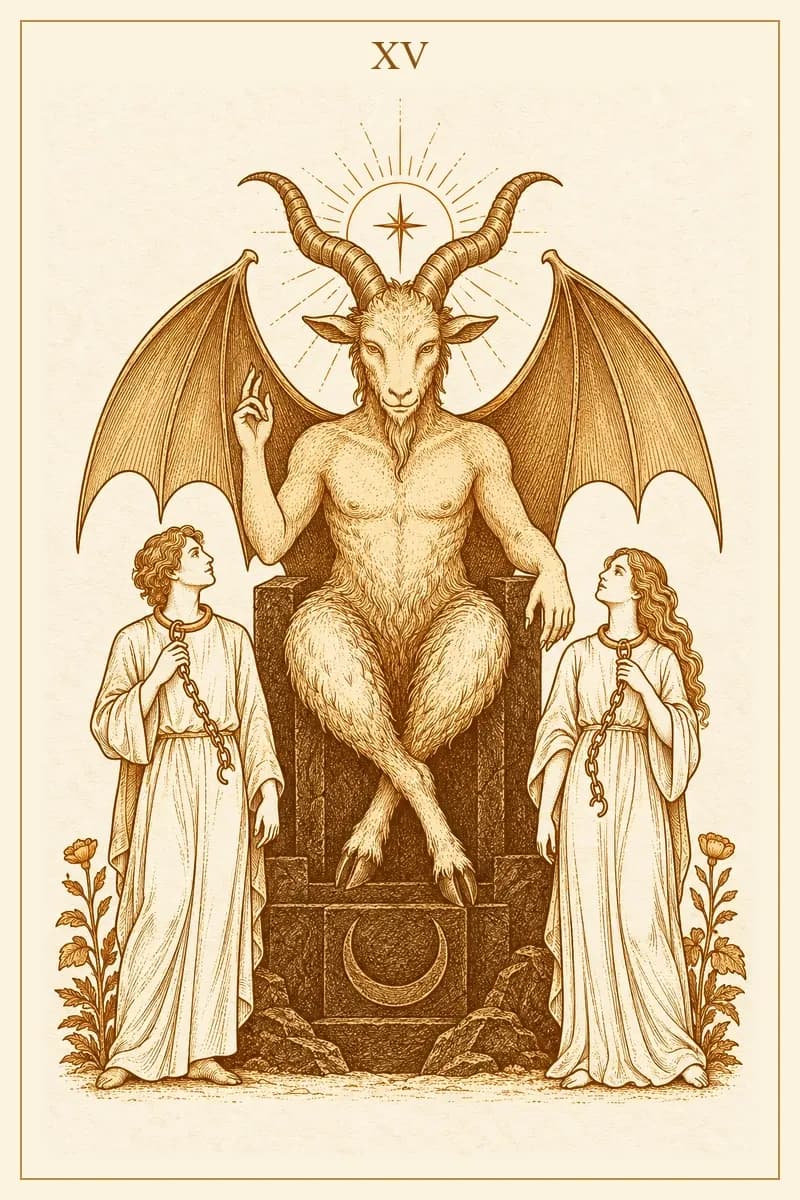
Meaning of The Devil and Ace of Pentacles Combination: Gilded Grip

Abundance under judgment
Meaning of The Empress and Justice Combination: Abundance Under Judgment
Structured abundance
Meaning of The Emperor and Ace of Pentacles Combination: Building on Solid Ground
✦ Bring it to the cards ✦
Bring Justice and Ace of Pentacles into your own reading
Use this pairing as a starting point, then let a spread listen to the situation that is actually yours.
Begin a contextual reading