
Card Combination
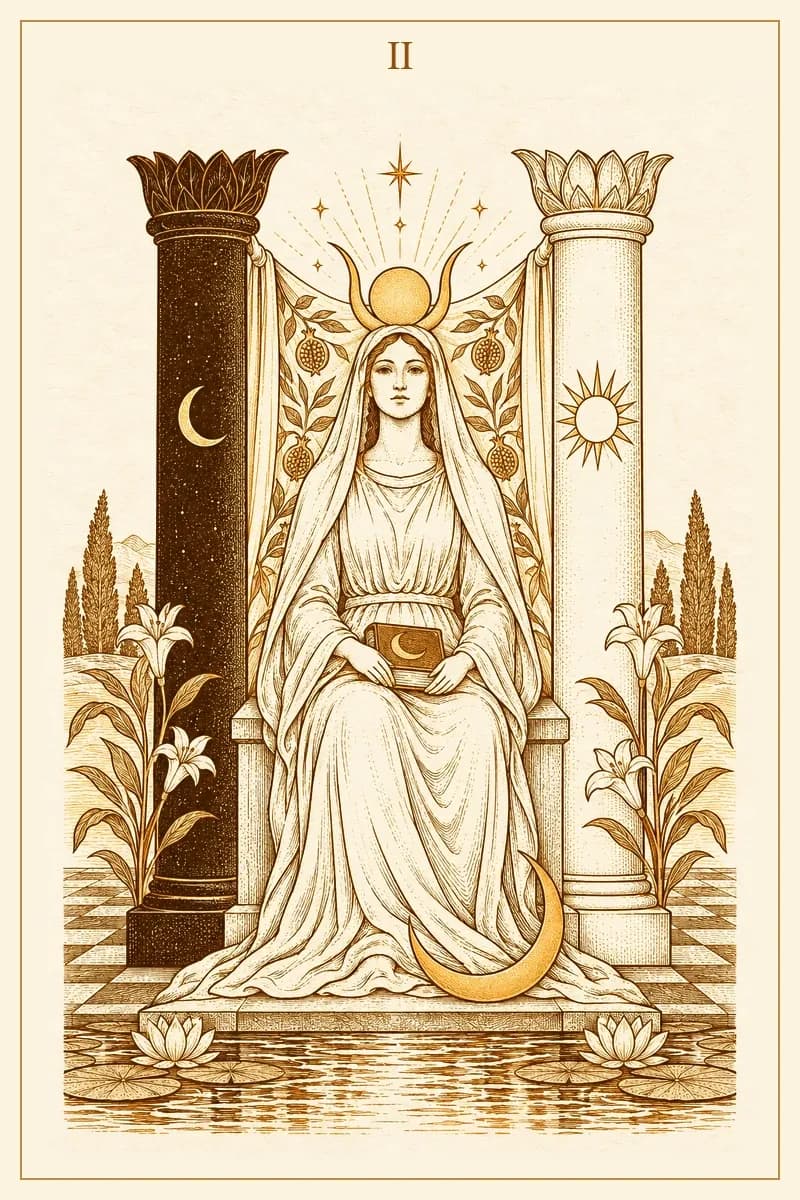
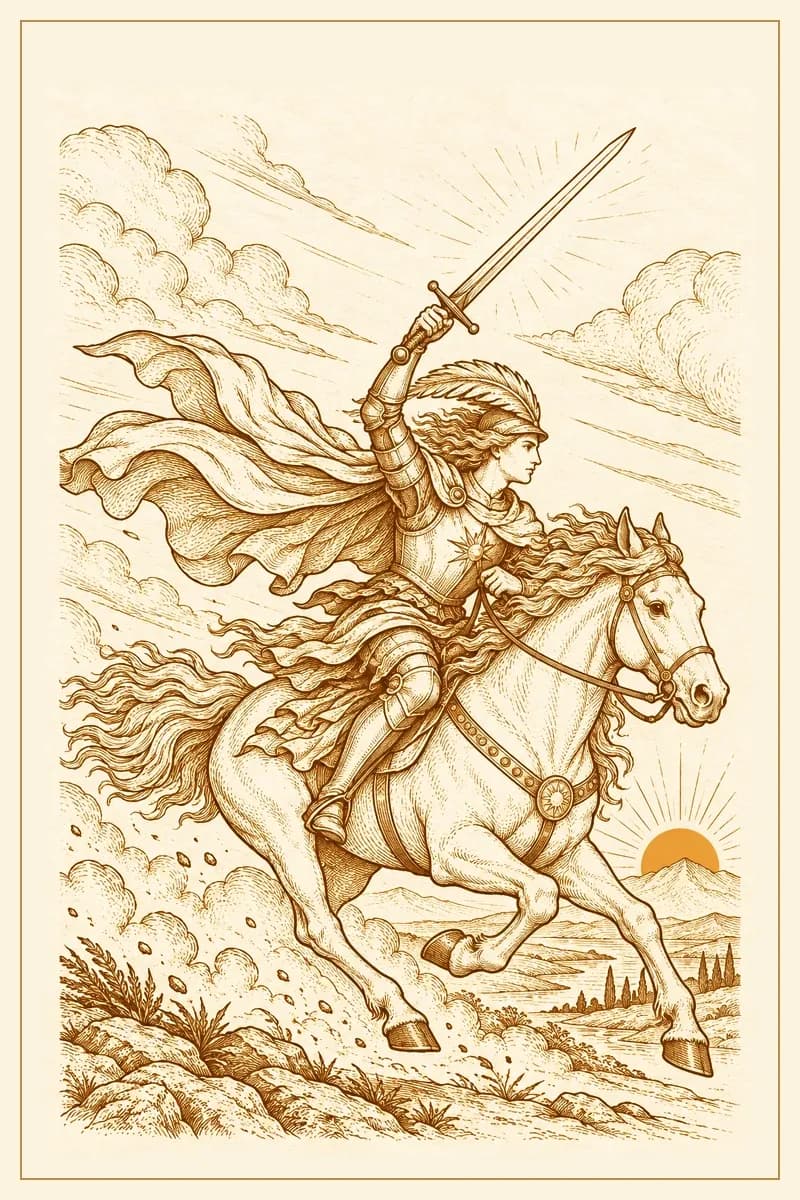
Meaning of The High Priestess and Knight of Swords Combination: Speed Meets Depth
Speed versus depth
One card is completely still. The other is all motion, all charge, horse mid-gallop, sword extended forward, committed to this direction and not looking back. The High Priestess and the Knight of Swords do not naturally occupy the same room, and that is precisely why their combination is so instructive.
The Knight of Swords is the fastest thinker in the deck. He processes, decides, and acts before most people have finished processing. His strength is genuine: clarity under pressure, the willingness to cut through deliberation and move. His weakness is equally genuine: the tendency to move so fast that he overtakes his own wisdom, to arrive at conclusions before the deeper knowing has had a chance to weigh in.
In orchestral music, there is the soloist who plays ahead of the ensemble—technically precise, interpretively bold, but no longer in the shared time that makes music music rather than exhibition. The High Priestess is the conductor who holds the collective tempo. When she appears beside the Knight of Swords, she is saying: brilliant. Now slow down enough to play with the rest of us.
The Core Tension
The tension here is between two legitimate modes of intelligence. The Knight of Swords operates through rapid synthesis—he takes in information, processes it quickly, and produces a conclusion. The High Priestess operates through slow accumulation—she takes in everything, processes nothing urgently, and produces knowing that has been properly composted.
Both are needed. The problem is that the Knight's mode, when dominant, doesn't leave room for the Priestess's contribution. He's already decided by the time she would have spoken. And what gets lost in that speed is often precisely the nuance that would have changed the decision—the pattern beneath the pattern, the implication that takes longer to see, the information your gut was holding that your verbal mind hadn't yet received.
This combination asks: where are you moving too fast to hear what you already know?
Love & Relationships
In relationships, The High Priestess and Knight of Swords describe a dynamic in which someone is processing the relationship through rapid, verbal, mental activity—analyzing, concluding, communicating, revising, concluding again—without leaving sufficient space for deeper knowing to inform those conclusions.
This might be a person cycling through interpretations of a partner's behavior so quickly that no single interpretation is actually tested. It might be the pattern of reaching a conclusion about a relationship, acting on it, discovering it was incomplete, reaching another conclusion, and repeating—all without the stillness that would allow a more stable understanding to emerge.
The Priestess's gift to the Knight in love is not a different conclusion—it's a different pace. What you feel about this situation is under all the processing. Dropping below the mental activity, even briefly, will find it.
Career & Purpose
Professionally, this combination often appears when someone's thinking has outpaced their wisdom—when the rapid production of strategy, output, or analysis has not been balanced by the kind of reflective pause that allows genuine insight to surface.
The Knight of Swords produces a great deal in a short time; the High Priestess produces less but at a higher quality of insight. In periods of high pressure or high output, the Knight can dominate so completely that the Priestess has nothing to offer—not because her knowing is absent, but because there is no space created for it to arrive.
The practical application here is structural: building in genuine pauses in your work process where you stop producing and simply observe what you know. The insight that doesn't arrive during output often arrives immediately upon cessation of it.
Shadow Side
The shadow of the Knight's side in this combination is the use of speed as a defense against depth. Moving fast enough that there's no time to feel, to question, to notice the signals that would complicate the current direction. Busyness as strategy—not because you're productive but because stillness is uncomfortable.
The shadow of the Priestess's side is using the call for depth as a reason to resist the Knight's necessary action. Sometimes the situation genuinely requires speed, and the search for deeper knowing becomes an obstacle to timely response. The two are not mutually exclusive: it is possible to move quickly and remain in contact with what you know.
Action Steps
- 1Before acting on your next significant decision, create a ten-minute pause where you sit quietly with what you know about the situation—not what you've concluded, but what you sense.
- 2Notice where you've been cycling through the same mental territory rapidly without producing new insight. That cycling is the Knight without the Priestess. Stop the cycle; let the silence speak.
- 3Identify one recent decision you made quickly that you might now revisit—not to reverse it, but to see what the Priestess would add to the Knight's conclusion.
Related Pairings
Continue through published pairings that share The High Priestess or Knight of Swords.
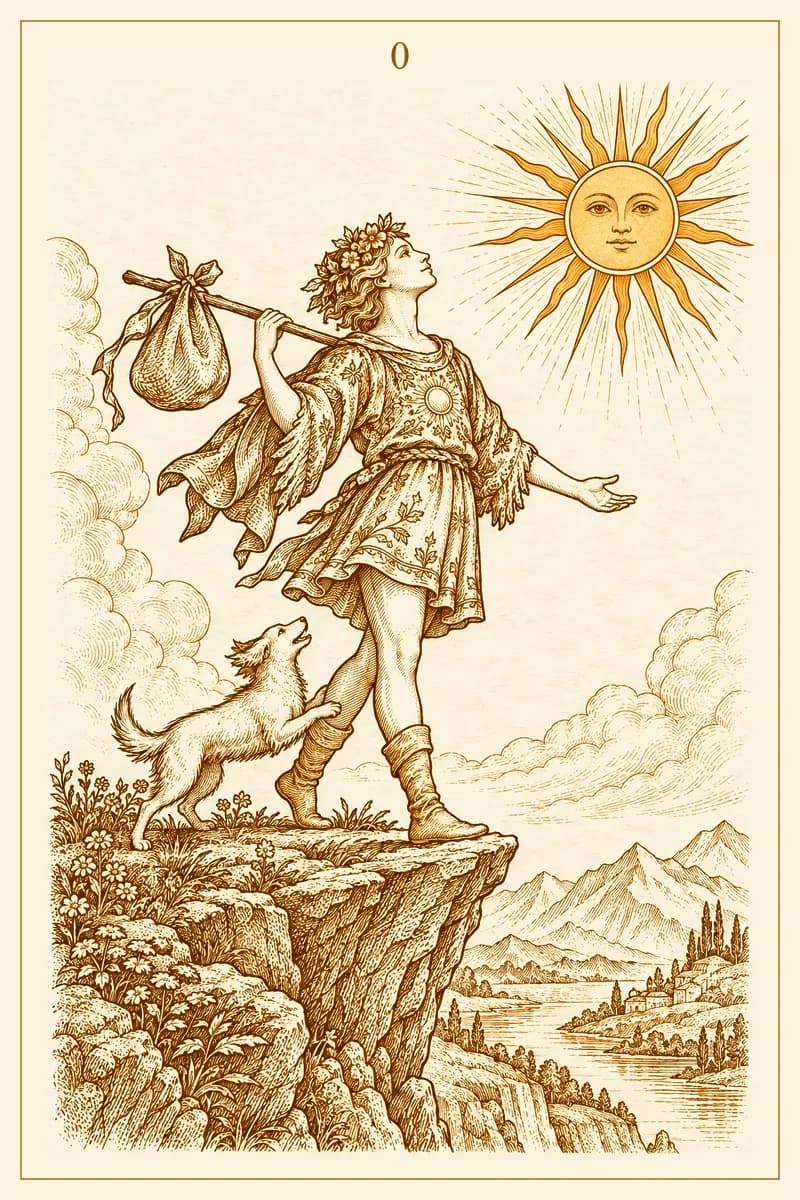
Innocent knowing
Meaning of The Fool and The High Priestess Combination: Innocent Knowing
Unconditioned openness encountering aggressive intellectual momentum
Meaning of The Fool and Knight of Swords Combination: Reckless Meets Relentless
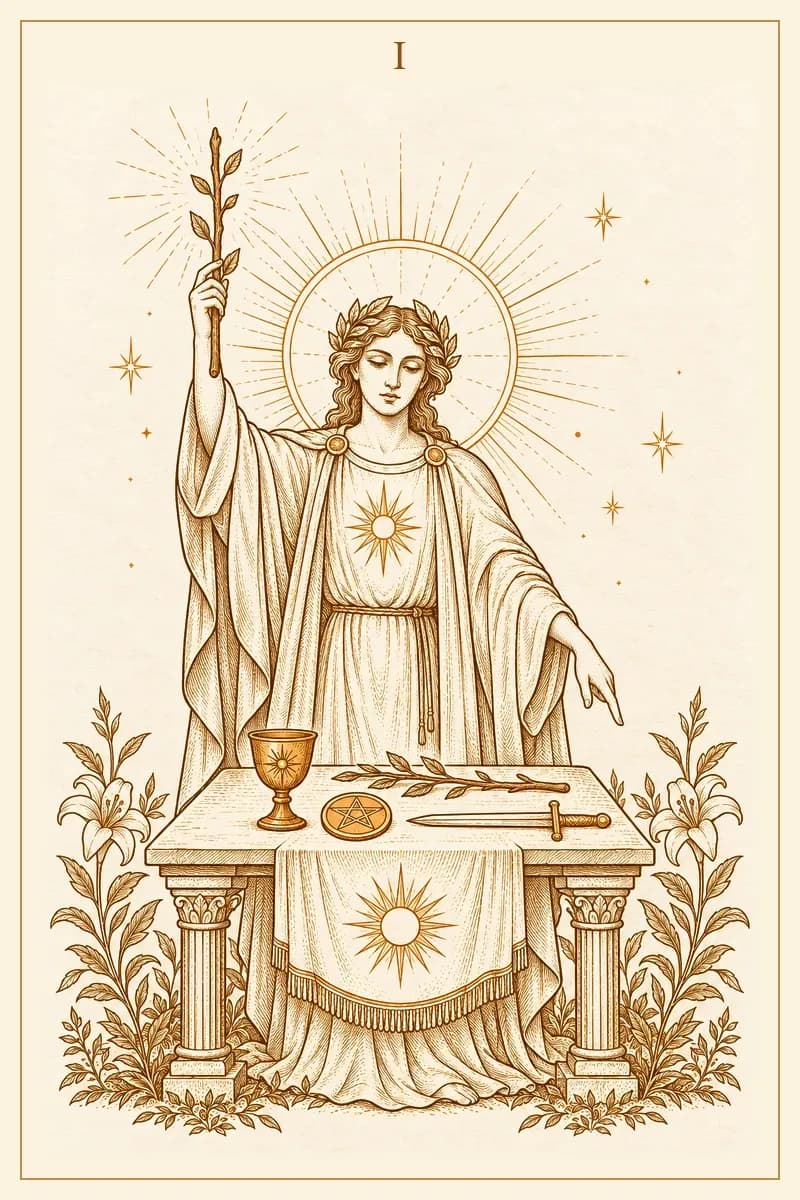
Conscious action harmonizing with unconscious knowing
Meaning of The Magician and The High Priestess Combination: The Conductor and the Silence Between Notes
Deliberate strategy confronting unrestrained speed
Meaning of The Magician and Knight of Swords Combination: Strategy Meets the Charging Cavalry
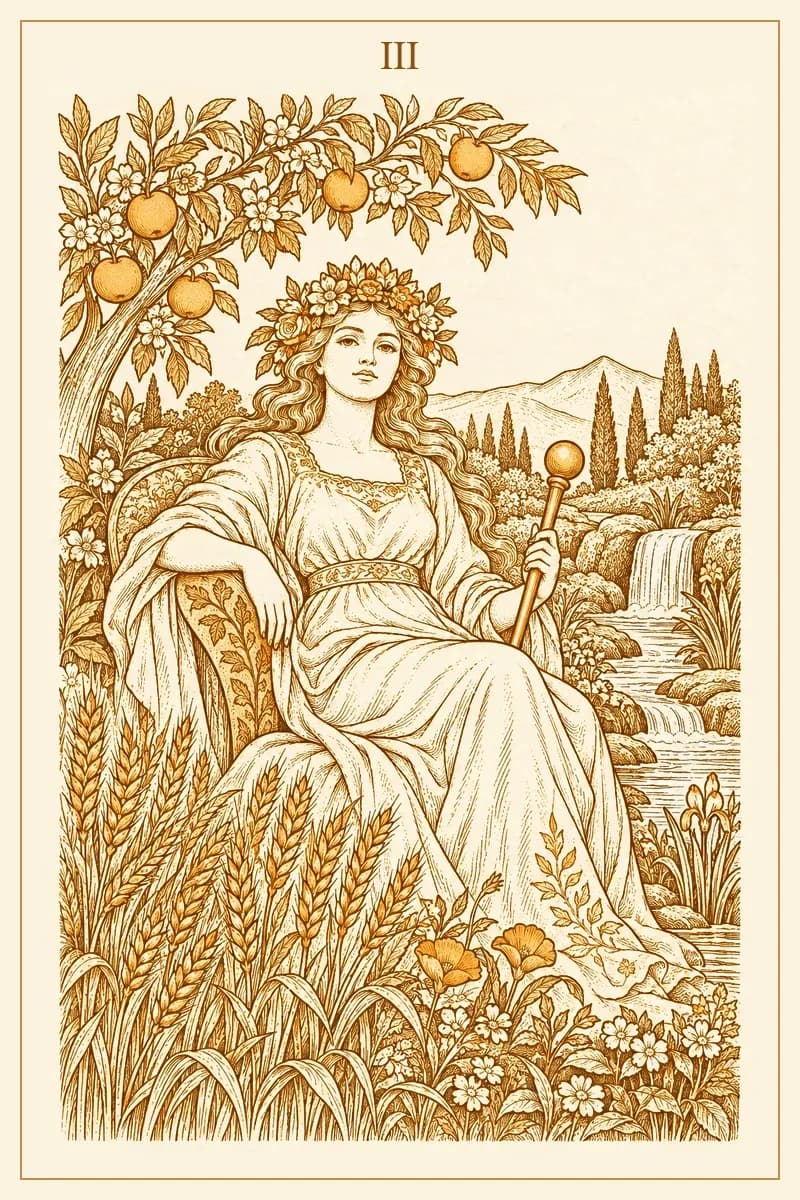
Sacred abundance
Meaning of The High Priestess and The Empress Combination: Sacred Abundance
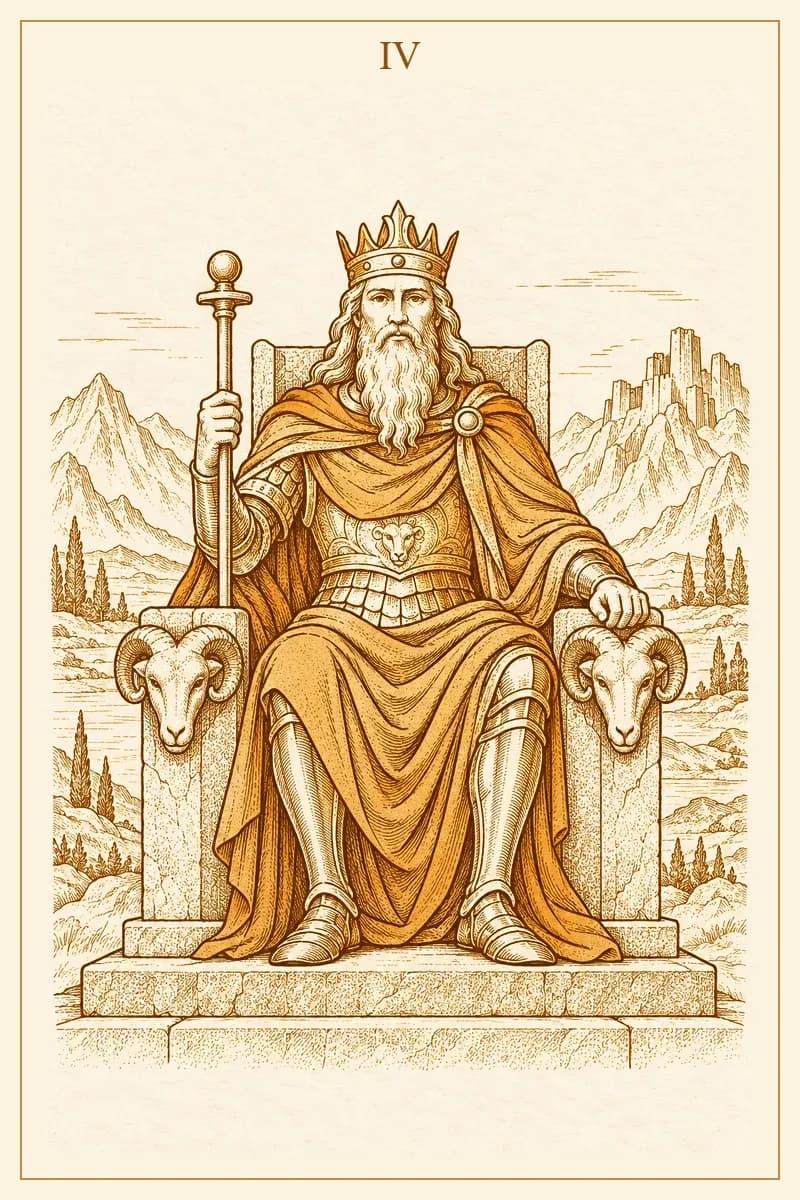
Hidden order
Meaning of The High Priestess and The Emperor Combination: Hidden Order
✦ Bring it to the cards ✦
Bring The High Priestess and Knight of Swords into your own reading
Use this pairing as a starting point, then let a spread listen to the situation that is actually yours.
Begin a contextual reading