
Card Combination

Meaning of The Hermit and Four of Wands: Coming Home to Yourself
earned homecoming
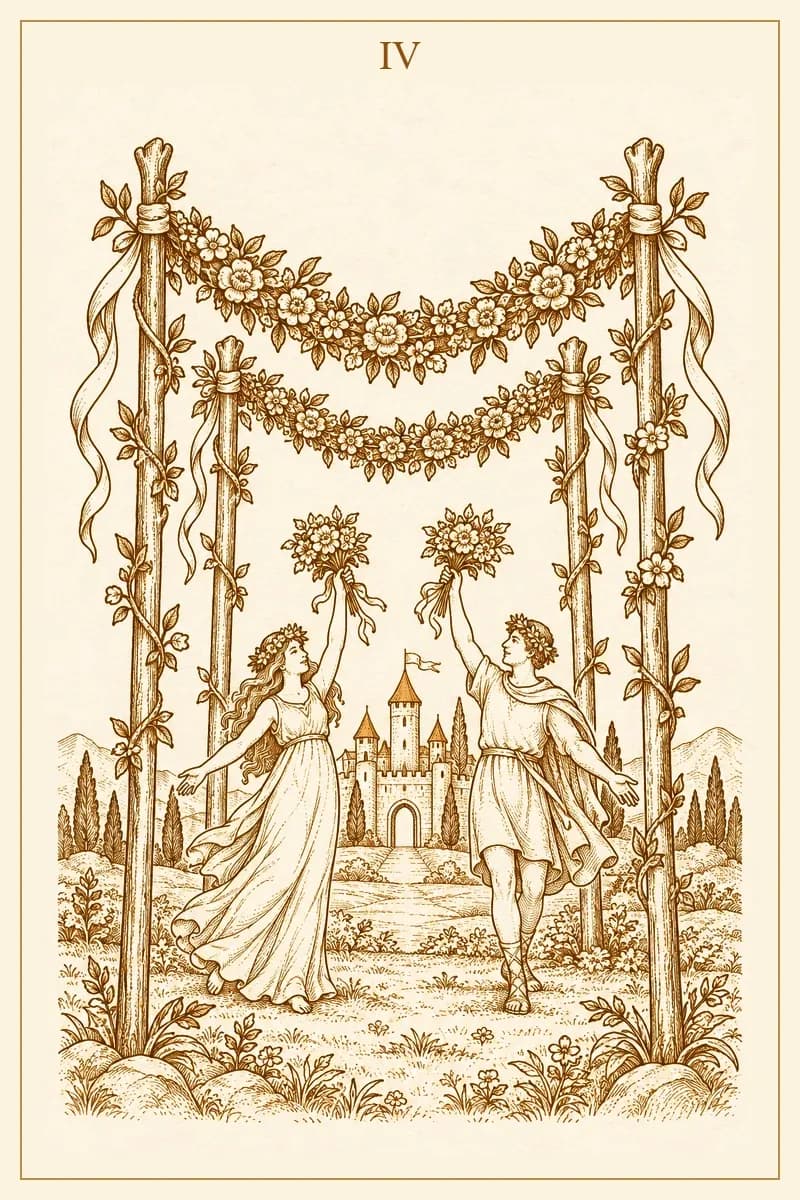
The lantern goes out. The gates are decorated with flowers. And somewhere between those two images lives the entire arc that the Hermit and the Four of Wands trace together — the slow, unglamorous offstage preparation and the bright moment when the curtain finally rises.
Most people only see the performance. They see the decorated archway, the people gathered in welcome, the warmth spilling out of the scene. What they do not see is the long rehearsal that made it possible — the solitary figure who walked away from the audience months or years earlier, not because connection was unwanted, but because there was work that could only be done alone. The Hermit and the Four of Wands are not opposites. They are sequential acts in the same production.
What changes when you read them together is the quality of the arrival. A Four of Wands on its own can describe any celebration — including hollow ones, premature ones, parties thrown more from social obligation than genuine cause. Add the Hermit and the homecoming earns its weight. You have done the solitary labor. The welcome awaiting you is one you can receive without flinching.
The Core Tension
Theater offers the right lens here. Before a performance opens, there is a long period of darkness — rehearsals in empty rooms, lines learned in solitude, a cast living in a kind of productive isolation. Then the house lights come up. The Hermit is the rehearsal period. The Four of Wands is opening night.
The tension is this: the skills developed in solitude do not automatically translate to the shared stage. Some people rehearse brilliantly and then freeze when the audience arrives. Others push to opening night before the material is ready, mistaking the warm lights for a signal that the work is done. The Hermit and the Four of Wands together ask you to hold both realities simultaneously — the discipline of solitude and the willingness to finally perform.
There is also a subtler tension around belonging. The Hermit often holds a complicated relationship with community. The Four of Wands is community at its most welcoming. Sitting with this pair means asking honestly whether you can let yourself be celebrated — not just tolerated, not just included, but genuinely welcomed home.
Love & Relationships
In love, this combination describes a readiness that has been genuinely prepared rather than merely declared. The Hermit's long interior season has produced something real: a person who knows themselves well enough to show up without the defensive behaviors that come from unexamined wounds.
The Four of Wands in love context speaks of celebration and commitment — the formalization of something that has been building. Together, these cards suggest a threshold. Someone who has been doing the inner work is approaching a moment of genuine relational arrival. This might look like a relationship deepening to a new level of honesty, a long-deferred conversation that finally happens, or the recognition that what you have built quietly between two people is worth celebrating aloud.
The caveat is that the Hermit cannot stay in rehearsal forever on the grounds that they are not yet ready enough. At some point the curtain rises whether you feel prepared or not. The Four of Wands is the curtain rising.
Career & Purpose
Professionally, this pairing often marks the end of a period of invisible effort. The Hermit phase of a career — deep skill development, solo projects, work that few witnessed and fewer understood — gives way to a moment of public recognition. Not fame necessarily, but the right people seeing what you actually built.
This is a meaningful combination for anyone who has spent time developing expertise in a quiet, unglamorous way and is now entering a phase where that work gets acknowledged. The Four of Wands does not require a grand stage. It might be as modest as a team that finally understands what you were working toward, or a client who recognizes the depth of what you brought to the table.
The practical implication: stop underselling the interior work you have done. The Hermit earned the celebration the Four of Wands represents. You are allowed to let people see it.
Shadow Side
The shadow of this pairing lives in the gap between preparation and arrival. Some people become so attached to the Hermit's identity — the seeker, the loner, the one who walks apart — that they cannot allow the Four of Wands to happen. They approach the decorated gates and find a reason to keep walking. The celebration feels suspicious. The welcome feels unearned.
The shadow question this combination asks: are you withholding yourself from genuine community because you are actually not ready, or because belonging has come to feel more threatening than solitude?
Action Steps
- 1Name one thing you have been quietly working on that deserves to be shared with at least one other person this week — then share it.
- 2Notice where celebration or acknowledgment feels uncomfortable to receive, and sit with that discomfort for five minutes without explaining it away.
- 3Identify one relationship or community you have been standing outside of and consider what a single step through the gates might actually look like.
Related Pairings
Continue through published pairings that share The Hermit or Four of Wands.
driven introspection
Meaning of The Chariot and The Hermit: Driven Inward
triumphant arrival
Meaning of The Chariot and Four of Wands Combination: Victory Comes Home

outer vs inner authority
Meaning of The Emperor and The Hermit: Command Meets Solitude
Gilded Captivity
Meaning of The Devil and Four of Wands Combination: Gilded Cage
abundance meets withdrawal
Meaning of The Empress and The Hermit: Abundance Meets Solitude
authority and celebration
Meaning of The Emperor and Four of Wands: Authority Celebrates Achievement
✦ Bring it to the cards ✦
Bring The Hermit and Four of Wands into your own reading
Use this pairing as a starting point, then let a spread listen to the situation that is actually yours.
Begin a contextual reading