
Card Combination

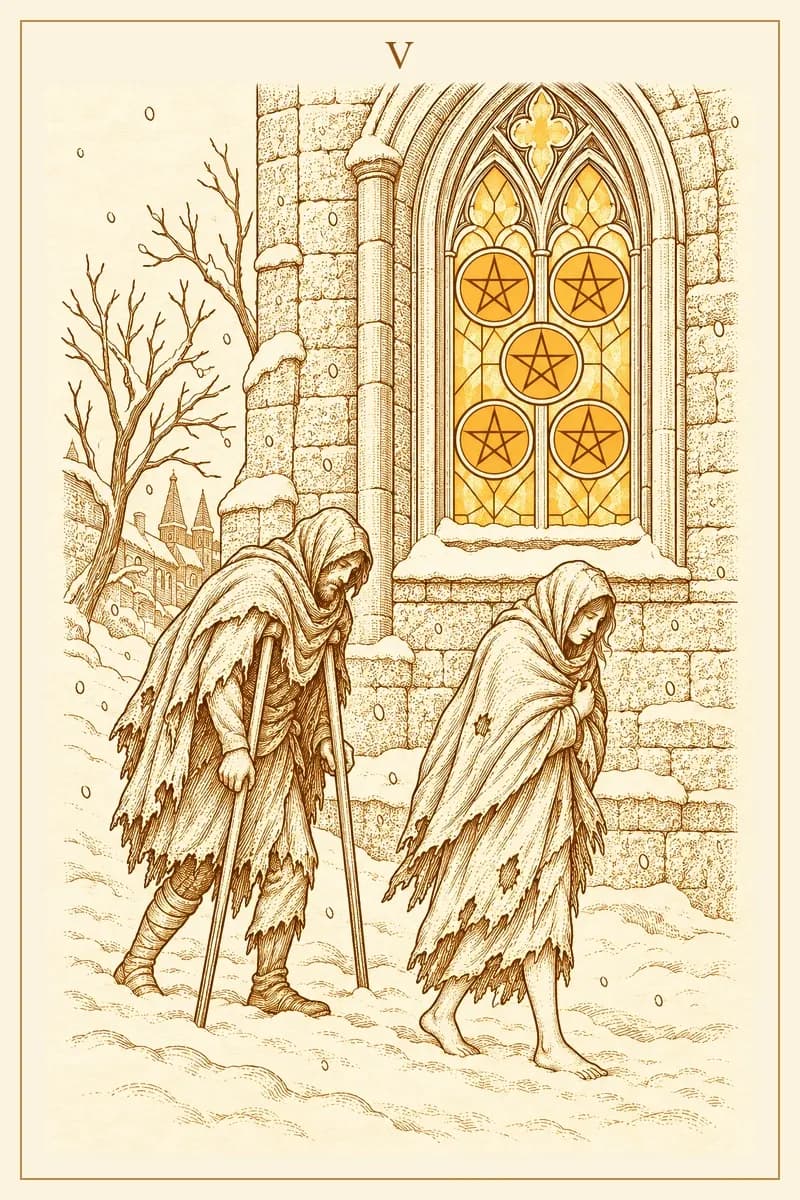
Meaning of The Emperor and Five of Pentacles Combination: When Control Meets Crisis
Control versus collapse
On one side of the table sits a king who has built everything through discipline, rule, and force of will. On the other side: a figure limping through snow, coat torn, stained glass of a warm church glowing just out of reach. These two cards do not speak the same language. One commands; the other endures. When they land together in a reading, the question being asked is not about power alone — it is about what happens when power is not enough to stop the cold from getting in.
The Emperor represents structure made visible. He is the architect of systems — laws, hierarchies, budgets, plans. He does not improvise; he builds load-bearing walls. The Five of Pentacles is the moment those walls develop a crack. It is financial strain, social exclusion, the particular shame of needing help and not knowing how to ask for it. Together, these cards do not cancel each other out. They create a specific kind of pressure: the pressure of someone who believes control is the answer, standing in circumstances where control has already failed.
This combination often appears when a person's identity is bound up in being capable, competent, and self-sufficient — and something has gone wrong that punctures that identity. The Emperor's instinct is to double down: more structure, more authority, more rules. But the Five of Pentacles is not a problem that responds to authority. It responds to humility, to reaching for the door of that church, to admitting that the foundation has cracked.
The Core Tension
The architectural metaphor fits this pairing exactly. The Emperor builds in stone — permanent, imposing, resistant to erosion. The Five of Pentacles is what happens when the foundation was built on ground that shifted: the structure stands, impressive from the outside, but inside the walls there is cold and damp and the smell of something failing. The core tension here is between the appearance of stability and the reality of a slow structural collapse. One card wants to project authority; the other refuses to let the projection hold.
This is also a tension between isolation and need. The Emperor is a solitary figure by nature — he governs, he does not lean. The Five of Pentacles depicts two figures who have only each other. The card asks something the Emperor resists: cooperation, vulnerability, the admission that one person's will cannot hold everything together.
Love & Relationships
In relationships, this pairing describes a dynamic where one partner holds the controls — the finances, the decisions, the emotional temperature of the household — while the other (or both) quietly experiences deprivation. This is not always dramatic. It can look like a relationship that appears stable from the outside but where one person feels shut out, unseen, or financially dependent in ways that breed resentment.
If you are in this combination, examine who is playing which card. The Emperor energy in a partnership can be protective and grounding, but paired with the Five, it may have tipped into control that inadvertently creates scarcity — emotional distance, withheld warmth, a relationship where the rules are followed but the nourishment is missing.
Career & Purpose
Professionally, this combination points to situations where a rigid organizational structure has failed the people within it — layoffs managed coldly, cutbacks that disregard human cost, a leader who enforces protocol while the team is burning out or struggling. If you are in leadership, the Five of Pentacles is a warning that your systems are producing hardship you may not be looking at directly.
For those not in authority, this pairing can describe working within a structure that offers no support during a difficult period — being expected to perform at Emperor-level standards while privately dealing with Five-of-Pentacles-level circumstances. The gap between what is demanded and what is being given is the defining wound of this combination at work.
Shadow Side
The shadow of the Emperor is rigidity disguised as competence. The shadow of the Five of Pentacles is victimhood disguised as helplessness. Together, their combined shadow is the refusal to change anything — the Emperor refusing to soften his structures, the Five figure refusing to try the door of the church. Pride holds both of them in the cold.
There is also a shadow pattern of shame here. The Emperor's authority depends on appearing capable. The Five of Pentacles is the experience of visible failure. The combination can produce someone who is suffering significantly but will not allow anyone to see it, who builds thicker walls precisely when they need to open a window.
Action Steps
- 1Identify one area where you have been applying more control to a problem that actually requires flexibility or outside help — and deliberately try the other approach.
- 2If you are experiencing financial or material strain, take one concrete step toward a resource you have been avoiding out of pride: a conversation, an application, a request.
- 3Review the structures you maintain — in your work, your relationships, your finances — and ask which of them are serving the people inside them and which are serving only the appearance of order.
- 4The Emperor and Five of Pentacles together are not a condemnation of authority or structure. They are a diagnostic: the structure exists, but something within it is not working, and the person most invested in the structure may be the last to admit it. The card combination asks for an audit, not a demolition. But the audit has to be honest. The walls are impressive. Check the foundation.
Related Pairings
Continue through published pairings that share The Emperor or Five of Pentacles.
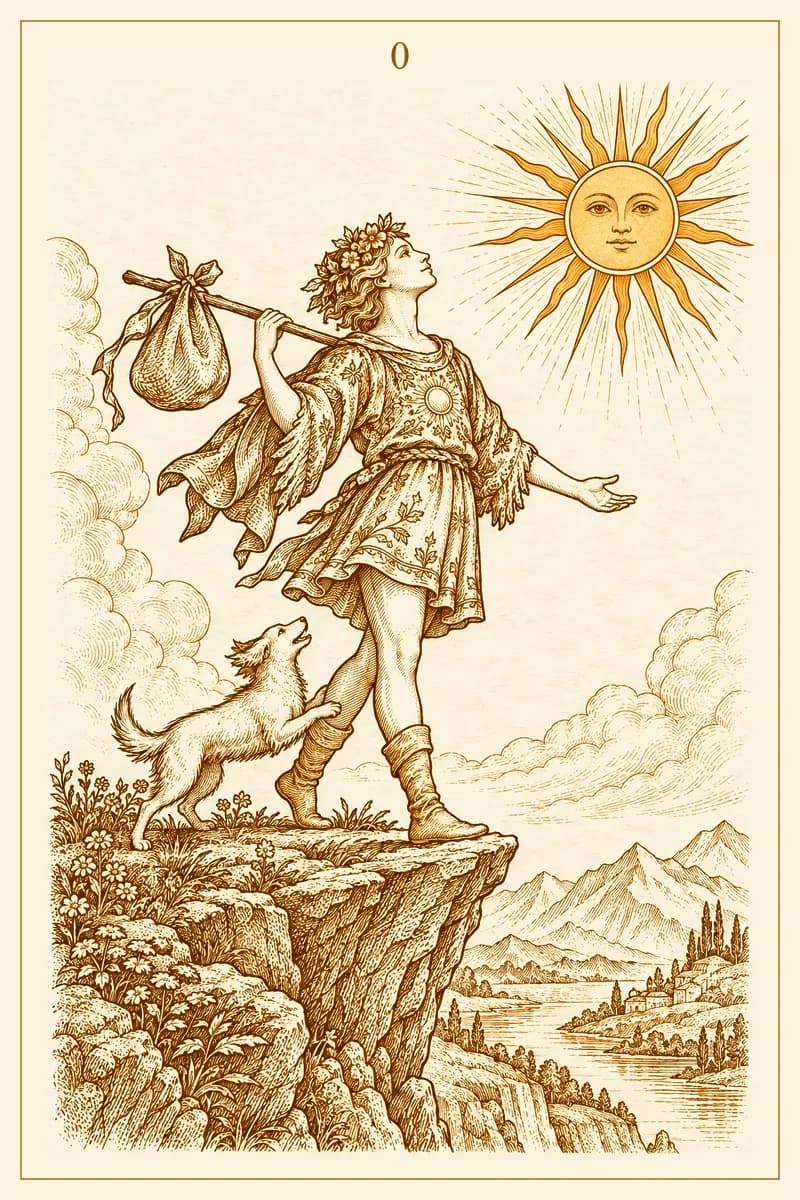
Structured freedom
Meaning of The Fool and The Emperor Combination: Structured Freedom
Optimism meets hardship
Meaning of The Fool and Five of Pentacles Combination: Leaping Into the Cold
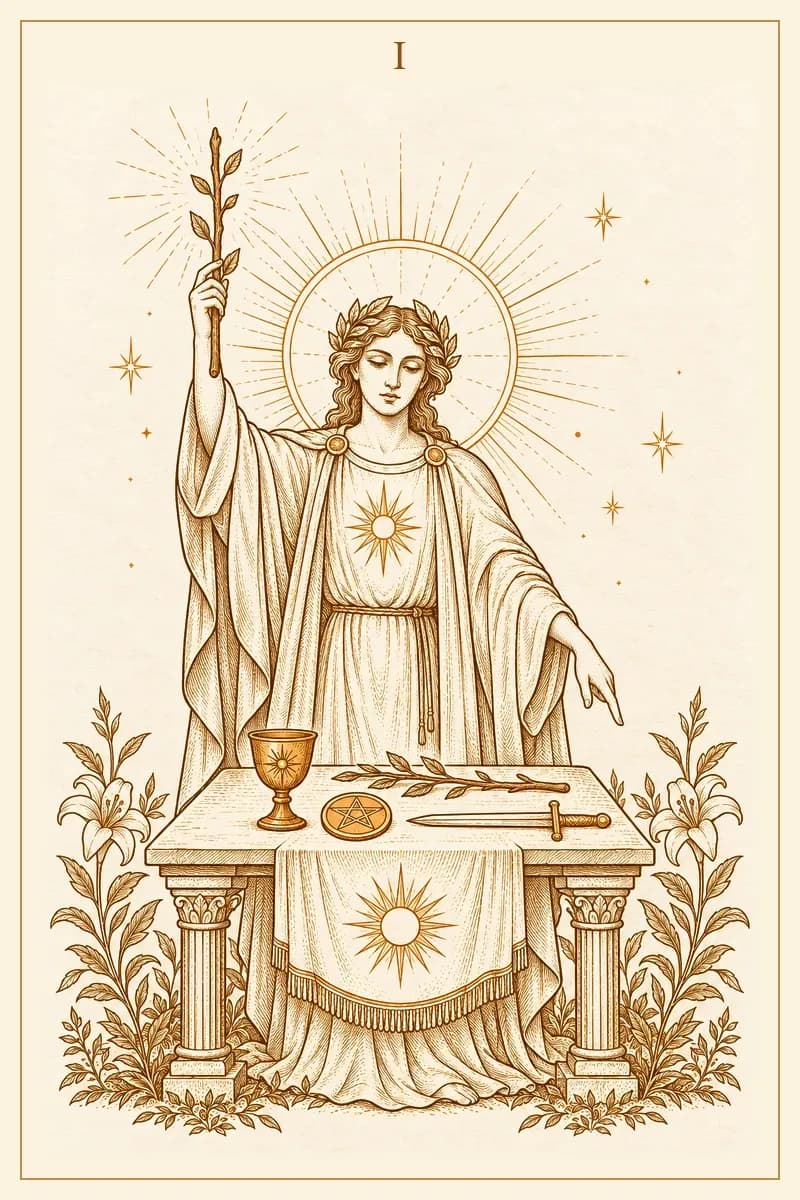
Disciplined mastery
Meaning of The Magician and The Emperor Combination: The Architect of Command
Scarcity and skill
Meaning of The Magician and Five of Pentacles Combination: Scarcity and Skill
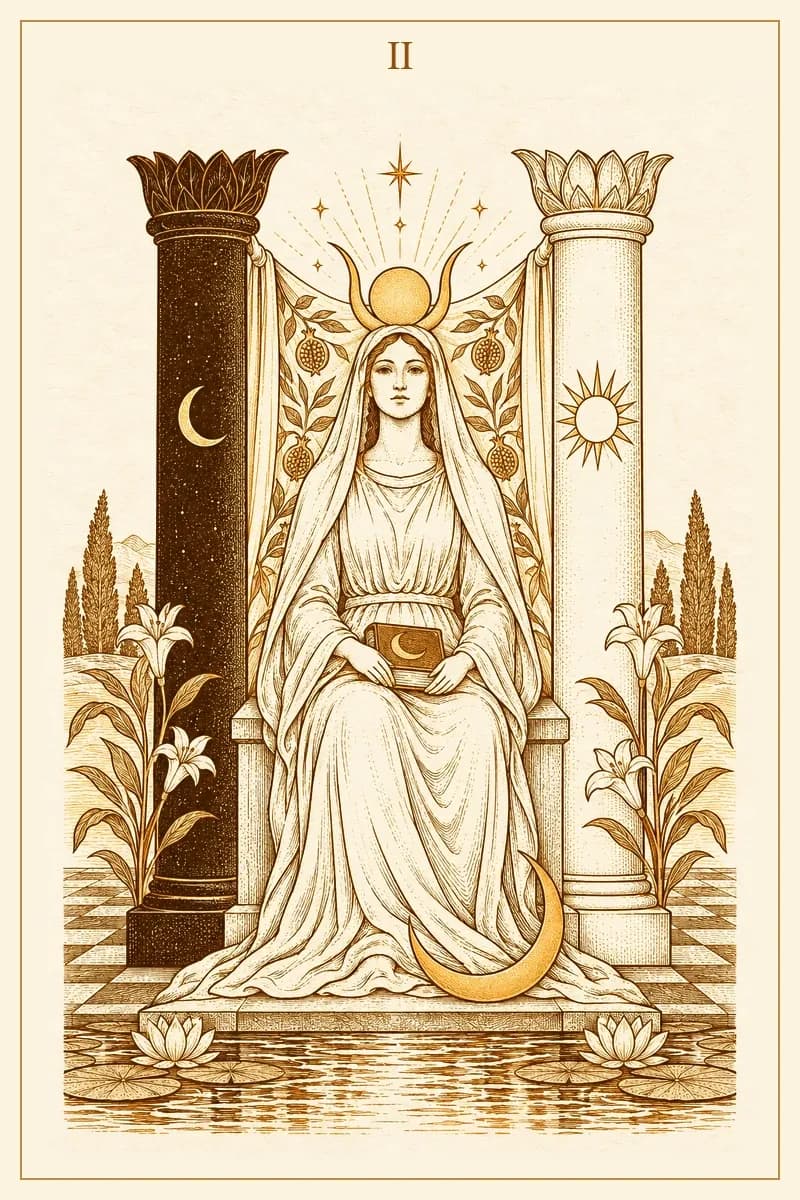
Hidden order
Meaning of The High Priestess and The Emperor Combination: Hidden Order
Intuition in scarcity
Meaning of The High Priestess and Five of Pentacles Combination: Wisdom in the Cold
✦ Bring it to the cards ✦
Bring The Emperor and Five of Pentacles into your own reading
Use this pairing as a starting point, then let a spread listen to the situation that is actually yours.
Begin a contextual reading