How to Choose Your First Tarot Deck: A Beginner's Complete Guide
Veil Soul
Published on · 7 min read
Why Your First Deck Matters (But Not As Much As You Think)
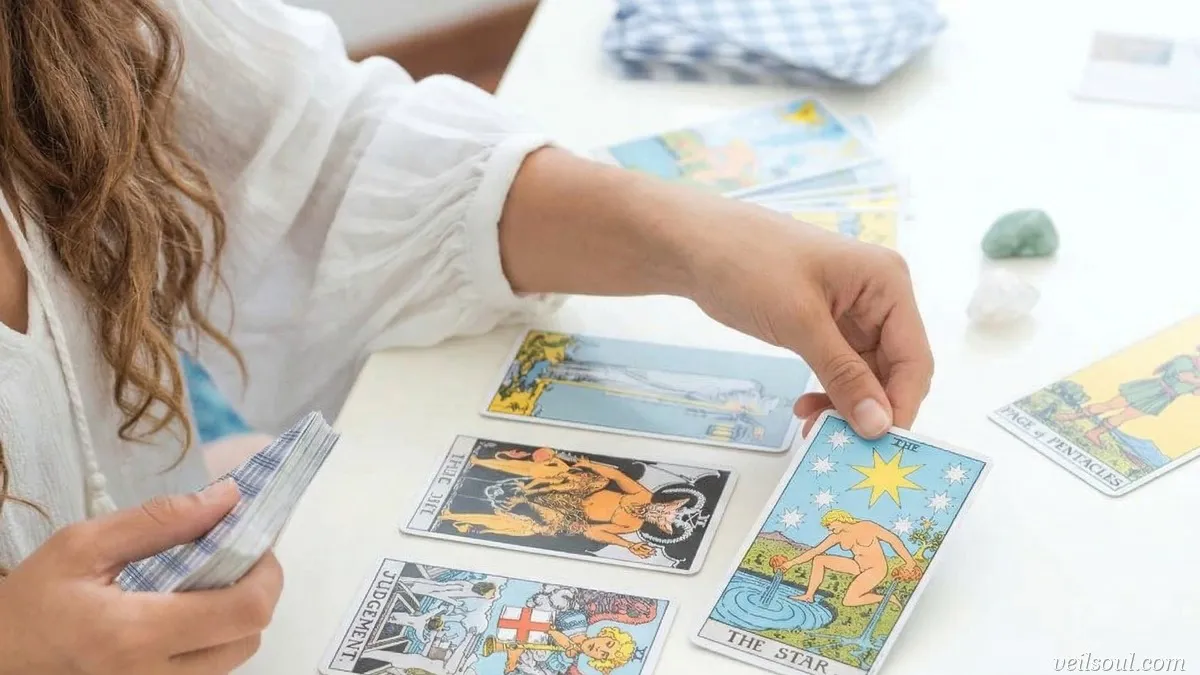
Choosing your first Tarot deck is exciting — and if you've browsed any Tarot shop or website, possibly a little overwhelming. There are hundreds of decks available, from the classic Rider-Waite-Smith to stunning modern reimaginings featuring everything from cats to cosmic landscapes to Renaissance art.
Here's the good news: there is no wrong first deck. The "perfect" deck is simply the one that makes you want to pick it up every day. That said, some decks are genuinely easier for beginners to learn with, and understanding why can save you time, money, and frustration.
Understanding Tarot Deck Structure
Before choosing a deck, it helps to understand what you're choosing. Every standard Tarot deck contains 78 cards divided into two groups:
- Major Arcana (22 cards): The "big life themes" cards — The Fool, The Magician, Death, The World, and so on. These represent major life lessons, spiritual milestones, and archetypal energies.
- Minor Arcana (56 cards): Four suits (Wands, Cups, Swords, Pentacles) of 14 cards each. These represent everyday experiences, emotions, challenges, and situations.
Some decks rename the suits (Wands might become Staffs, Pentacles might become Coins), but the structure remains the same. When choosing your first deck, look for one that follows this standard 78-card structure — it will make learning from books and online resources much easier.
The Most Beginner-Friendly Decks
These decks are recommended for beginners not because they're "simple" but because they have fully illustrated Minor Arcana cards (scenes, not just patterns of suit symbols) and extensive learning resources available:
Rider-Waite-Smith (RWS)
The gold standard for learning. Created in 1909, this deck's imagery has become the foundation for most modern Tarot — meaning almost every book, course, and online resource references its symbolism. The artwork is iconic but can feel dated to some readers.
Best for: Learners who want maximum resources and don't mind classic art.
Modern Witch Tarot
A contemporary reimagining of RWS imagery with diverse, modern characters. Follows the same symbolism but feels fresh and relatable. An excellent bridge between tradition and modern aesthetics.
Best for: Learners who want RWS compatibility with modern representation.
The Light Seer's Tarot
Dreamy, evocative watercolor art that makes intuitive reading feel natural. Follows RWS symbolism closely enough to learn from standard resources while offering a more emotional, intuitive feel.
Best for: Intuitive learners who connect through emotion and atmosphere.
Morgan Greer Tarot
A borderless deck with rich, saturated colors and close-up compositions. Based on RWS imagery but with a more immersive, intimate feel. The lack of borders draws you into each scene.
Best for: Visually-oriented learners who want rich imagery without distraction.
What to Look For in a First Deck
Beyond specific deck recommendations, here are the qualities that make any deck beginner-friendly:
Fully Illustrated Minor Arcana
This is the single most important criterion. Some decks (like the Marseille tradition) show Minor Arcana cards as simple patterns — the Three of Cups is literally three cups, with no scene or figures. For beginners, illustrated scenes are essential because they give you visual stories to interpret, which is how you build intuitive reading skills.
Clear, Readable Imagery
Abstract or heavily stylized art can be gorgeous but hard to read when you're learning. Look for decks where you can easily identify what's happening in each card — who the figures are, what they're doing, what symbols are present.
RWS-Based Symbolism
Decks based on the Rider-Waite-Smith system share a common symbolic language. This means you can use virtually any Tarot book or website to learn your deck's meanings. Non-RWS decks (Thoth, Marseille, or unique systems) are wonderful but require deck-specific study.
Standard Size
Tarot cards are larger than playing cards. Standard Tarot size is approximately 7 × 12 cm (2.75 × 4.75 inches). Some decks are oversized or miniature — both can be harder to shuffle comfortably, especially with smaller hands.
Quality Cardstock
You'll be shuffling these cards frequently. Good cardstock should feel substantial but flexible, with a smooth or lightly textured finish that allows cards to glide. Avoid decks described as "flimsy" or "sticky" in reviews.
What About the "A Deck Must Be Gifted" Myth?
You may have heard that your first Tarot deck must be given to you as a gift. This is a common Tarot myth with no basis in tradition or practice. Absolutely buy your own deck. In fact, choosing your own deck is a meaningful first act of connection — you're selecting the tool that will become your partner in self-reflection and growth.
Where to Buy
- Local metaphysical shops: The best option if available, because you can hold decks, feel the card quality, and see the art in person.
- Online retailers: Wider selection but no physical preview. Look for "flip-through" videos on YouTube before purchasing.
- Independent artists: Many stunning indie decks are available through Etsy or Kickstarter. These tend to be more expensive but often include detailed guidebooks and premium materials.
The Guidebook Question
Most decks come with a small guidebook (called a Little White Book or LWB) that provides brief card meanings. Some decks include comprehensive companion books. For beginners, a deck with a good guidebook can be extremely helpful — but don't rely on it exclusively. Building your intuition means looking at the cards themselves, not just reading definitions.
How to Know You've Found the Right Deck
When you find the right first deck, you'll likely feel:
- Visual attraction: The art style genuinely appeals to you — not because it's "correct" but because it speaks to your aesthetic sense.
- Curiosity: You want to look at each card closely. The images spark questions and stories in your mind.
- Comfort: The cards feel good in your hands. The size, weight, and texture feel natural.
- Excitement: You're eager to start learning, not intimidated by the deck's complexity.
Trust this feeling. Your first deck doesn't have to be your forever deck — many readers collect several over time. What matters is that it gets you started.
Your First Steps After Choosing
Once your deck arrives:
- Look through every card. Don't read meanings yet — just notice which cards attract you, which ones make you uncomfortable, and which spark curiosity. This is your first intuitive reading.
- Start with a daily one-card draw. Pull one card each morning and sit with it. This is the simplest and most effective way to learn your deck.
- Read about the deck structure to understand how the pieces fit together.
- Try a simple spread when you feel ready — but don't rush. One card at a time is enough.
Remember: The best Tarot deck is the one you actually use. Don't agonize over finding the "perfect" choice — choose one that calls to you, start practicing, and trust that the cards will teach you everything you need to know.
chat_bubble 0 Comments
Leave a Comment