
The One-Card Daily Draw: The Simplest Tarot Practice With the Biggest Impact
Veil Soul
Published on · 7 min read
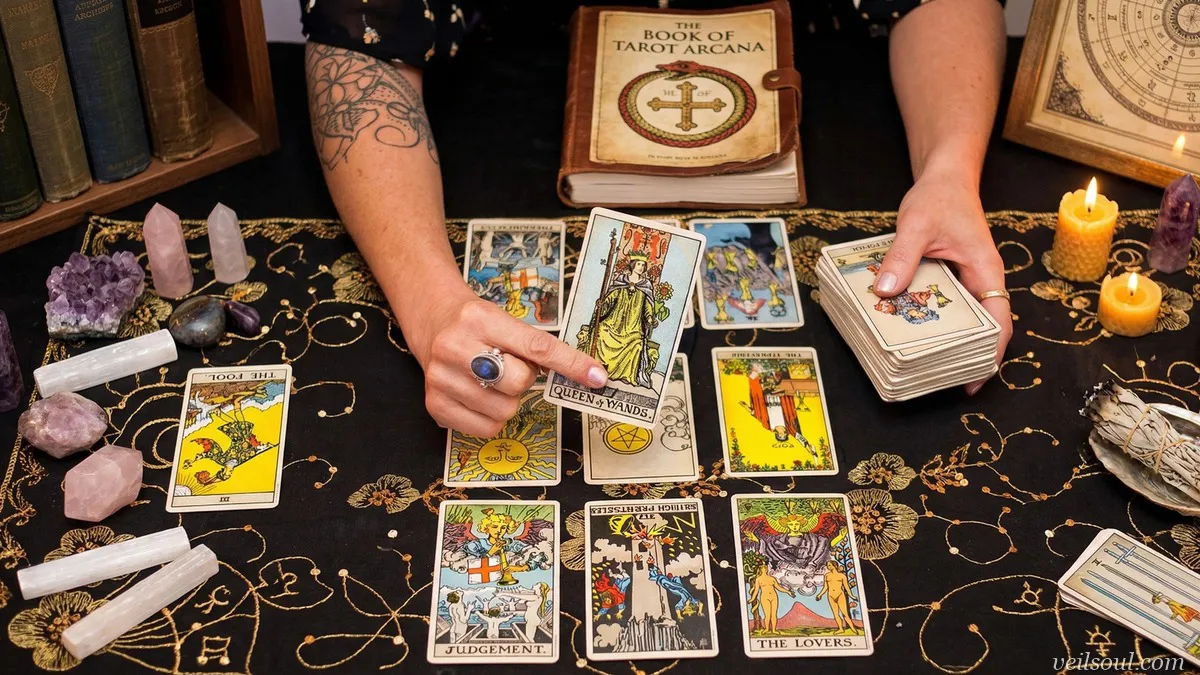
Why One Card Is Enough
In a world of elaborate spreads and complex interpretations, the humble one-card daily draw might seem too simple to matter. But ask any experienced Tarot reader what transformed their practice, and most will point to this single habit: one card, every day, no excuses.
The daily draw works because it replaces information overload with intimacy. Instead of trying to absorb 78 card meanings at once, you spend an entire day with just one. You notice it in the morning, observe it playing out in your afternoon, and reflect on it at night. Over weeks and months, every card in the deck becomes not a definition you memorized but an experience you lived.
This is how intuition is built — not through study alone, but through repeated, personal encounter. The daily draw is your most powerful tool for becoming a confident reader.
How to Set Up Your Daily Draw
Choose Your Moment
Most readers draw in the morning, setting an intention for the day ahead. But there's no rule — some prefer evening draws as a reflection on the day just passed, and some draw at lunch as a midday check-in. What matters is consistency. Pick a time and protect it.
Create a Simple Ritual
Your daily draw doesn't need elaborate ceremony, but a brief ritual helps your mind shift from autopilot to awareness:
- Pause. Take three conscious breaths. Arrive in the present moment.
- Shuffle. Use whatever shuffling method feels natural. There's no minimum — shuffle until the deck feels ready.
- Ask. You can use a specific question or a general prompt:
- "What energy is present for me today?"
- "What do I need to be aware of?"
- "What lesson is available to me today?"
- Or simply: "Show me what I need to see."
- Draw. Pull from the top, cut the deck, or fan the cards and choose one that calls to you. All methods are valid.
- Look. Before reading any meanings, spend 30 seconds just looking at the image. What do you notice first? What feeling does it evoke? What story does the image tell?
How to Interpret Your Daily Card
The daily draw is the perfect place to practice intuitive reading. Here's a simple three-layer approach:
Layer 1: First Impression (5 seconds)
What's the first word that comes to mind? Don't filter it — even if it seems random or unrelated. Write it down. This first impression often proves to be the most accurate by day's end.
Layer 2: Visual Story (30 seconds)
Look at the card as if you've never seen it before. Ask yourself:
- What is the figure doing? (Action reveals energy)
- What is the figure feeling? (Expression reveals emotion)
- What's in the background? (Setting reveals context)
- What colors dominate? (Colors reveal mood)
Layer 3: Personal Connection (1 minute)
Now bring yourself in: How does this card relate to what's happening in your life right now? Where might this energy show up today? Is there a decision, conversation, or situation where this card's message might be relevant?
Only after this personal reflection should you consult a guidebook for additional insight — and even then, treat the book's meaning as one perspective, not the final word.
What to Do With Your Card Throughout the Day
- Take a photo of your daily card and set it as your phone wallpaper or keep it in your camera roll for reference.
- Leave the card out on your desk, nightstand, or altar where you'll see it throughout the day.
- Check in at midday: Has the card's energy shown up yet? In what form? Sometimes the connection is obvious; sometimes it's subtle.
- Reflect at night: Before bed, revisit the card. How did it play out? Were you surprised? What did you learn about this card that you didn't know this morning?
Tracking Your Daily Draws
Keeping a record transforms your daily practice from casual to powerful. You don't need anything fancy — a notebook, a spreadsheet, or a Tarot journal all work. For each day, record:
- Date
- Card drawn
- First impression (one word or phrase)
- Evening reflection (one sentence about how it manifested)
Over time, you'll notice patterns: cards that appear repeatedly (your "stalker cards"), cards that consistently mean something specific in your life, and your evolving relationship with cards that once confused or intimidated you.
Common Daily Draw Questions
"I pulled a 'negative' card — is my day going to be bad?"
No. Cards like the Tower, Death, or the Ten of Swords in a daily draw are not predictions of doom — they're invitations to awareness. The Tower might mean a surprising change in plans. Death might signal the end of a project phase. The Ten of Swords might mean you'll finally let go of something that's been weighing on you. Approach every card as guidance, not prophecy.
"I keep pulling the same card repeatedly"
This is extremely common and deeply meaningful. Recurring cards are messages you haven't fully received yet. Instead of frustration, try curiosity: What is this card trying to teach me that I'm not yet seeing? Ask a more specific question about the card's message.
"I don't understand the card I pulled"
Perfect. Some of your most powerful daily draws will be cards that make no sense in the morning. Carry the confusion with you — by evening, the meaning often reveals itself through the day's events. If it still doesn't click, write down your confusion and move on. Understanding sometimes arrives days later.
"Should I read reversals in my daily draw?"
That's entirely your choice. Reversals add nuance but also complexity. Many beginners start with upright-only readings and add reversals later when they feel confident with the base meanings. Either approach is valid.
Building the Habit
The hardest part of the daily draw isn't interpretation — it's consistency. Here's how to make it stick:
- Pair it with an existing habit: Draw your card right after your morning coffee, right before meditation, or right after brushing your teeth. Habit-stacking works.
- Keep your deck accessible: Don't bury it in a drawer. Keep it where you'll see it — on your nightstand, next to the kettle, on your desk.
- Start with 7 days: Commit to just one week. After seven days, review your draws. The patterns and insights that emerge usually provide enough motivation to continue.
- Forgive missed days: You will miss days. Don't let a missed day become a missed week. Simply pick up where you left off. The cards don't keep score.
The daily draw promise: If you pull one card every day for 30 days, you will know your deck better than any book could teach you. You will have a personal relationship with at least 30 cards, and your confidence in reading will have transformed. One card. Every day. That's all it takes.
chat_bubble 0 Comments
Leave a Comment