
Card Combination
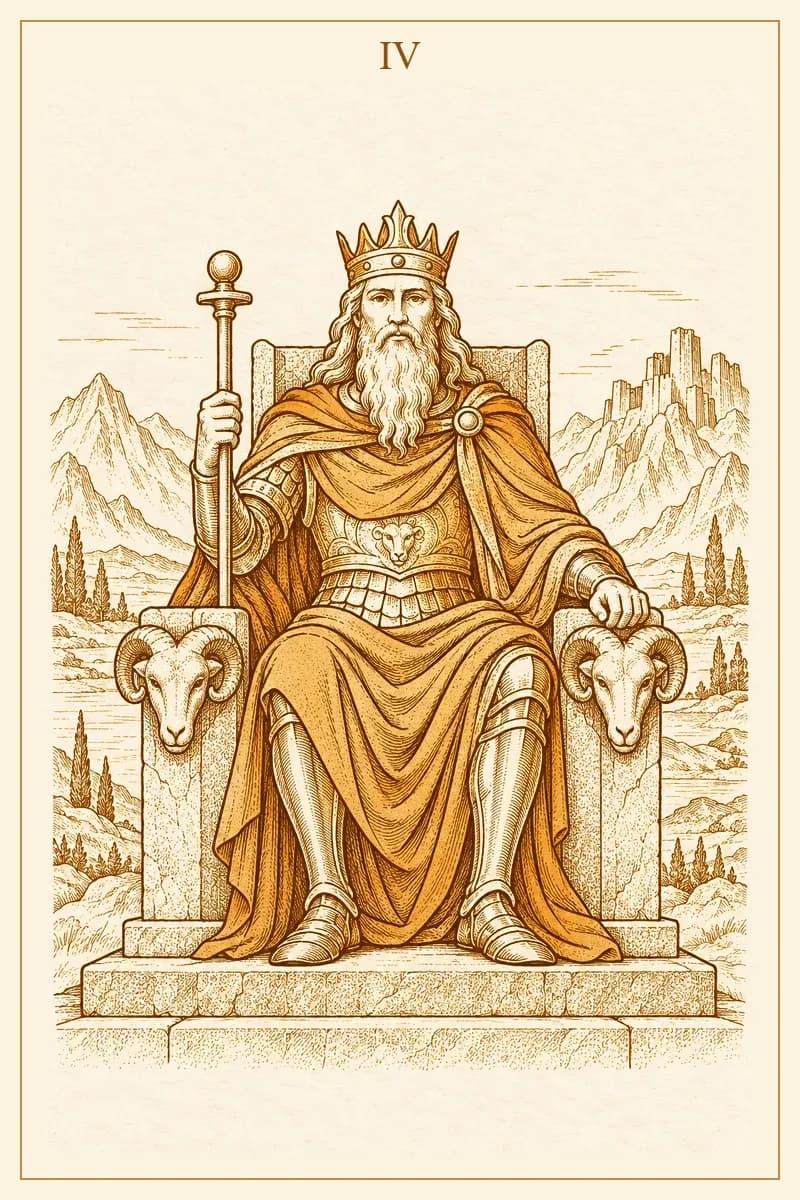

Meaning of The Emperor and King of Wands Combination: Two Kings, One Kingdom
Aligned commanding power
No kingdom survives two rulers who refuse to acknowledge each other. History has proven this. Every war of succession, every fractured alliance, every partnership that dissolved into rivalry began the same way: two powerful forces occupying the same territory without agreeing on how it would be governed. That is where this combination begins.
The Core Tension
Both the Emperor and the King of Wands are commanders. Neither is a follower, and neither operates well in subordination. But they command in fundamentally different ways.
The Emperor leads through order — institutional authority built on systems, hierarchies, and long-term strategic plans. He is credible, consistent, and reliable. People follow him because the structure he creates works.
The King of Wands leads through vision — inspirational authority built on bold ideas, entrepreneurial energy, and personality. He does not manage systems; he burns through them toward a goal. People follow him because he makes the goal feel worth reaching.
Together, they mark a moment where two commanding forces must coordinate or collide. The outcome depends on whether there is enough shared purpose to justify both being in the room — and enough mutual respect to prevent one from undermining the other.
This pairing often surfaces in readings about business partnerships, leadership transitions, or the internal conflict between the part of you that wants stability and the part that wants conquest.
Love & Relationships
In a romantic context, this pairing typically describes two people who are both used to leading — or one person navigating an internal divide between security-seeking and ambition-driven instincts.
The first question this pairing raises is: who defines the direction? The Emperor wants a stable, structured partnership with agreed-upon terms. The King of Wands wants to pursue a vision together — but the vision is usually his, and he expects his partner to be energized by it rather than negotiate its terms.
Extraordinary alignment is possible when both are committed to the same goal. A shared mission is the glue. Without it, the relationship becomes a low-grade power struggle where neither yields and both feel unappreciated.
For singles, this often points to an unresolved question: do dominant personalities energize you, or deplete you?
Career & Purpose
This is where this pairing is most legible. Two kings in one professional space has clear possible outcomes: alliance, competition, or creative tension that produces what neither could build alone.
In an ideal alignment, the Emperor provides the architecture and the King of Wands provides the momentum — one builds the machine, the other drives it. Organizations that have both can achieve significant things, provided the roles are clearly defined and both leaders respect each other's domain.
The failure mode is equally clear. When neither defers, decisions stall. When the Emperor imposes structure without understanding the vision, it dies in committee. When the King of Wands charges ahead without the Emperor's framework, he builds on sand.
The key question: is there a structural agreement about who has authority over what? Without that, every decision becomes a negotiation about power rather than outcomes.
Shadow Side
The shadow of this pairing is ego protecting itself behind legitimate leadership language. Both the Emperor and the King of Wands can justify almost any power move as being "for the good of the mission" or "in service of the organization." The shadow is when that justification becomes a cover for the simple refusal to share authority.
Watch for the Emperor using policy as a weapon — not to protect the system, but to limit the King of Wands' influence. Watch for the King of Wands using inspiration as a bypass — rallying people around his vision in ways that deliberately exclude or discredit the Emperor's framework.
In personal terms, this shadow shows up as an inability to delegate. If you carry both energies, you may find yourself simultaneously over-controlling and over-extending — micro-managing the details while also trying to be the visionary. This is exhausting and ultimately unsustainable.
Action Steps
- 1Map the authority in one key area of your life — who actually decides what, and whether that map matches reality. If it does not, the gap is where the conflict lives.
- 2If you are in a two-leader situation, name one domain where you will defer completely to the other person this week, without caveats. Notice what that feels like.
- 3Separate your strategic plan from your vision. Write down where you want to go (King of Wands) and separately how you intend to get there (Emperor). If those two documents contradict each other, that contradiction is your real work.
- 4Two kings in one kingdom is not inherently a problem — it is a structural question. When the Emperor and the King of Wands appear together, they are asking whether commanding power can be shared without losing its force. The answer is yes, but only under one condition: both parties must care more about the outcome than about who gets credit for it. That is a harder requirement than it sounds, and most of the time it is exactly what this combination is here to test.
Related Pairings
Continue through published pairings that share The Emperor or King of Wands.
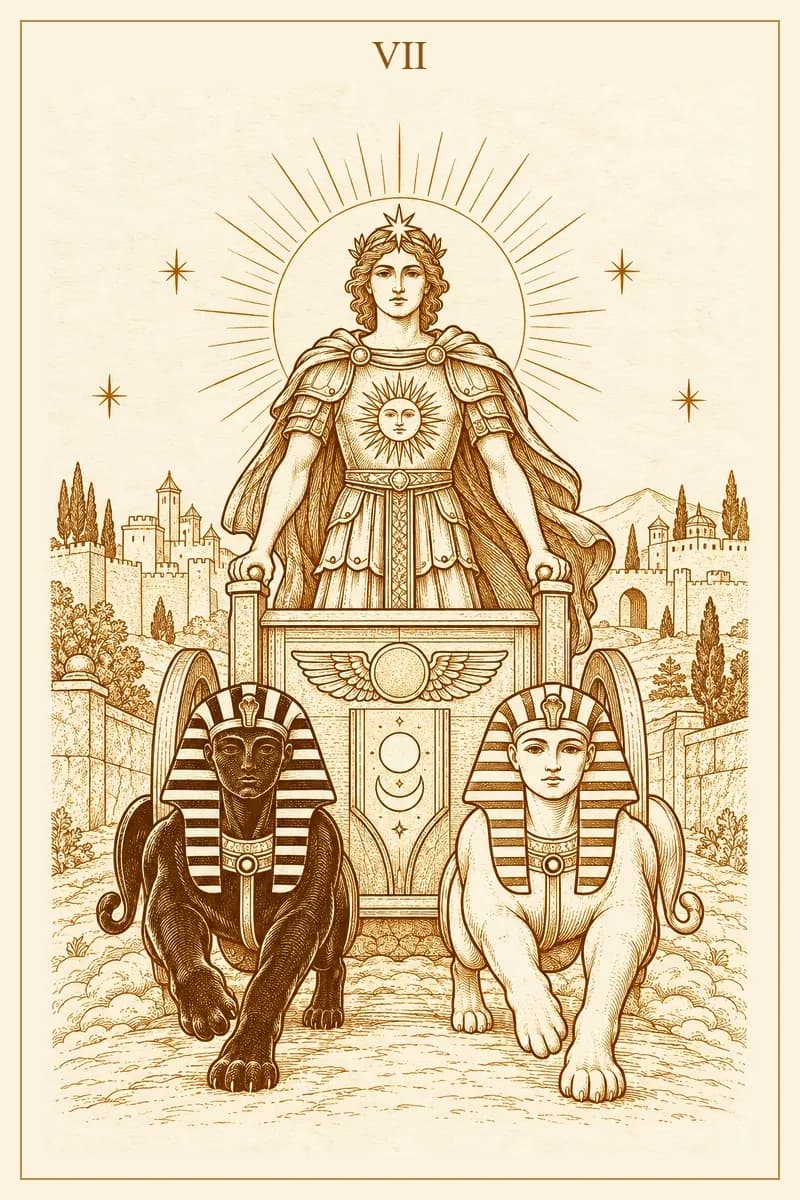
Structured forward momentum
Meaning of The Emperor and The Chariot Combination: Authority in Motion
Controlled conquest
Meaning of The Chariot and King of Wands Combination: Fire With a Blueprint
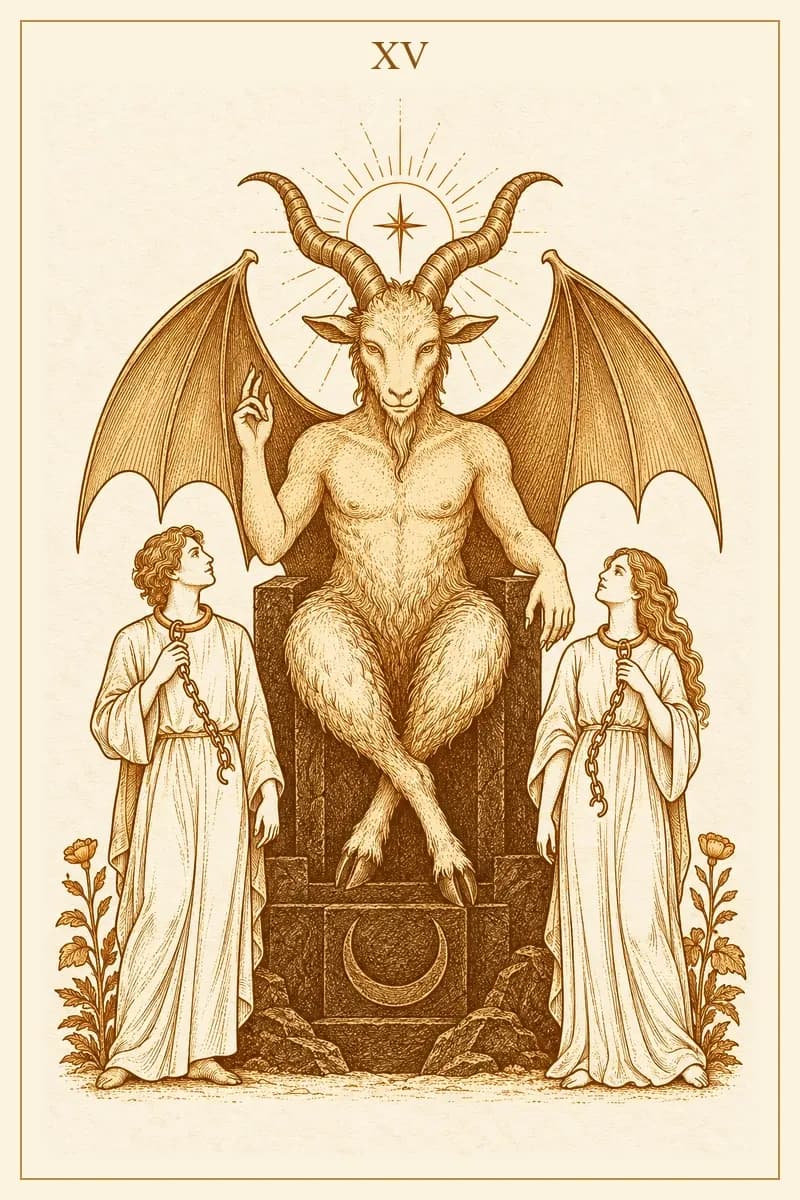
Authority versus control
Meaning of The Emperor and The Devil Combination: When Authority Becomes a Cage
Ruthless vision
Meaning of The Devil and King of Wands Combination: Ruthless Ambition
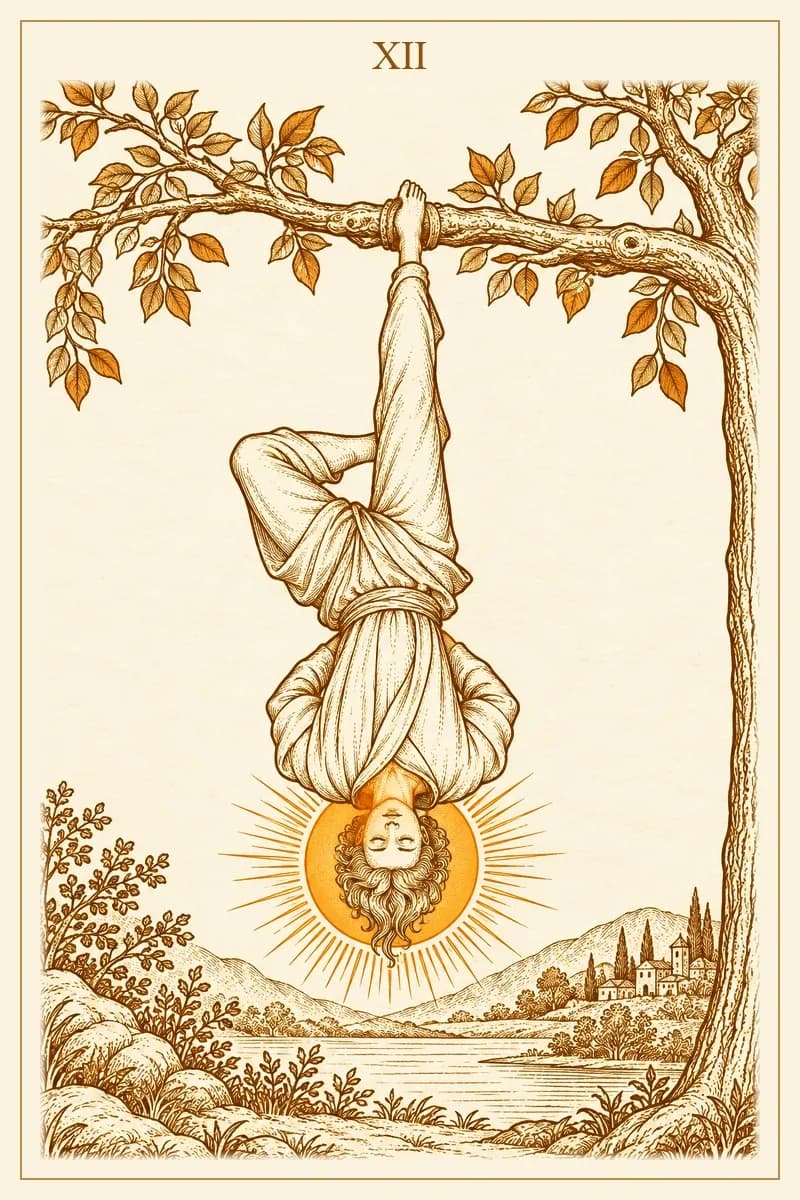
Control vs release
Meaning of The Emperor and The Hanged Man Combination: When Control Meets Surrender
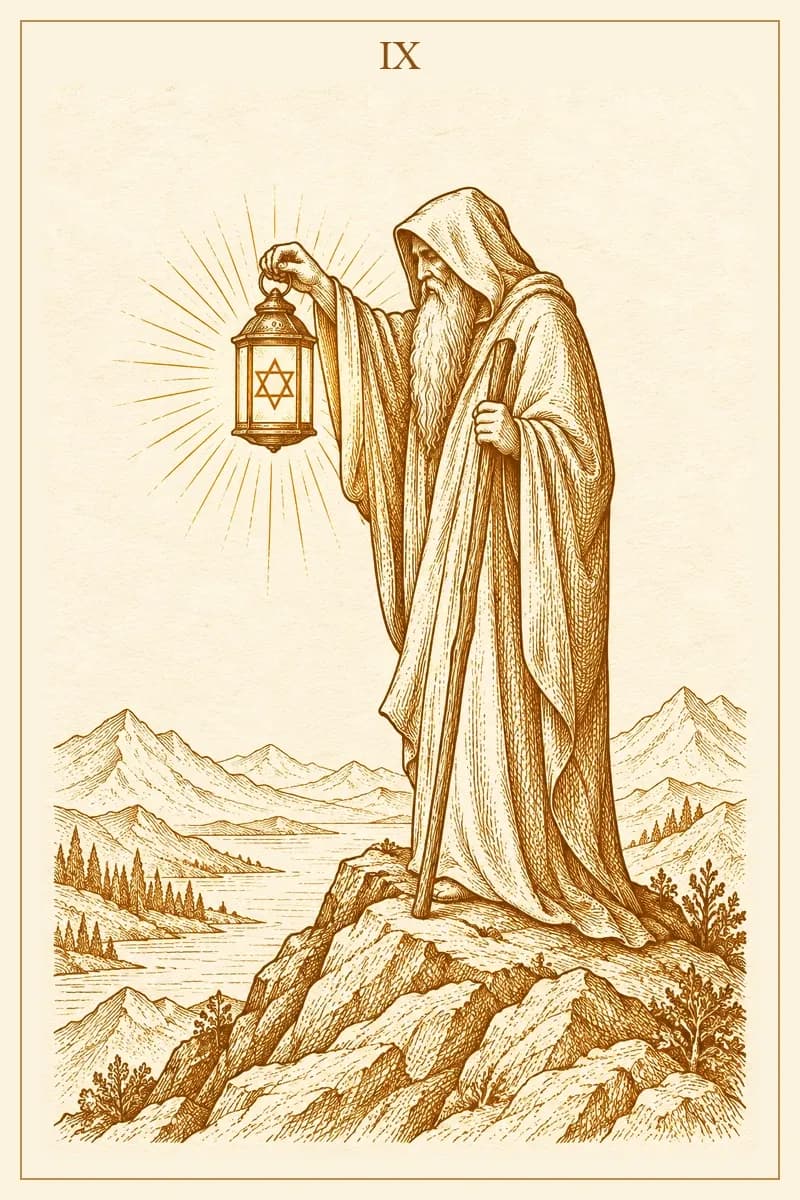
Outer vs inner authority
Meaning of The Emperor and The Hermit Combination: Command Meets Solitude
✦ Bring it to the cards ✦
Bring The Emperor and King of Wands into your own reading
Use this pairing as a starting point, then let a spread listen to the situation that is actually yours.
Begin a contextual reading