
Card Combination
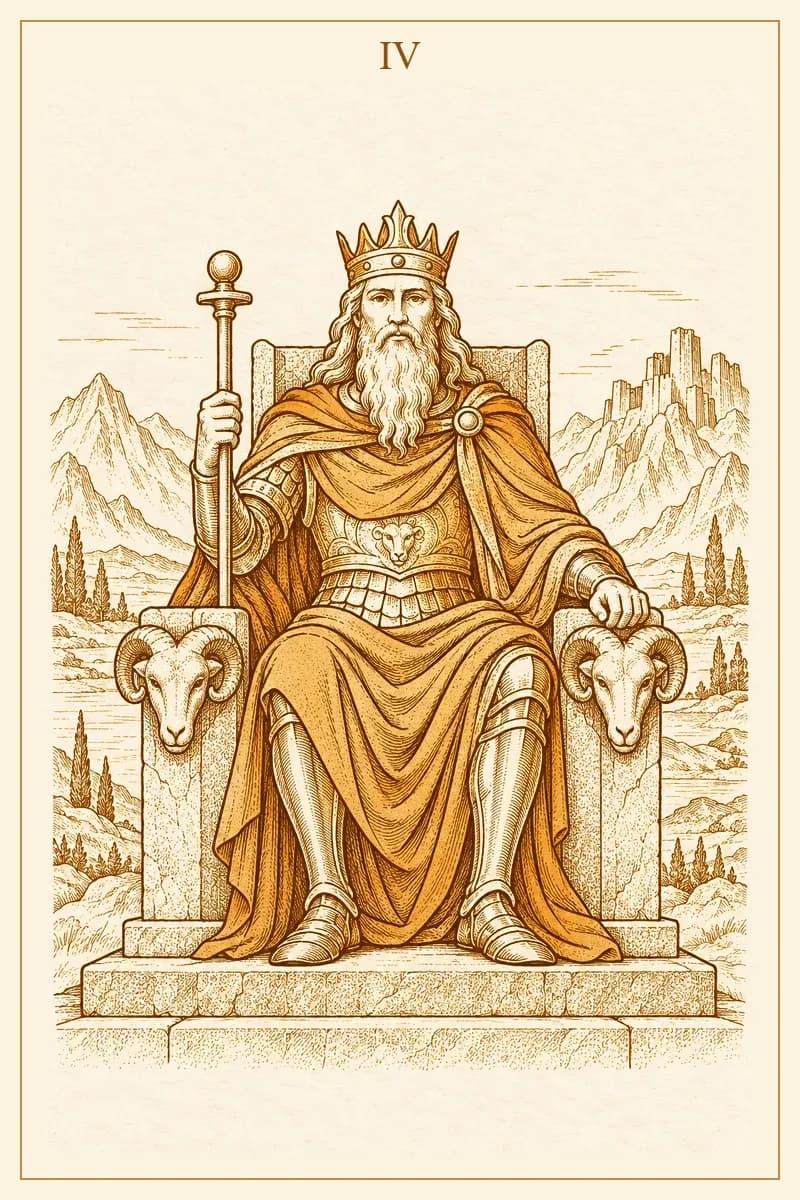
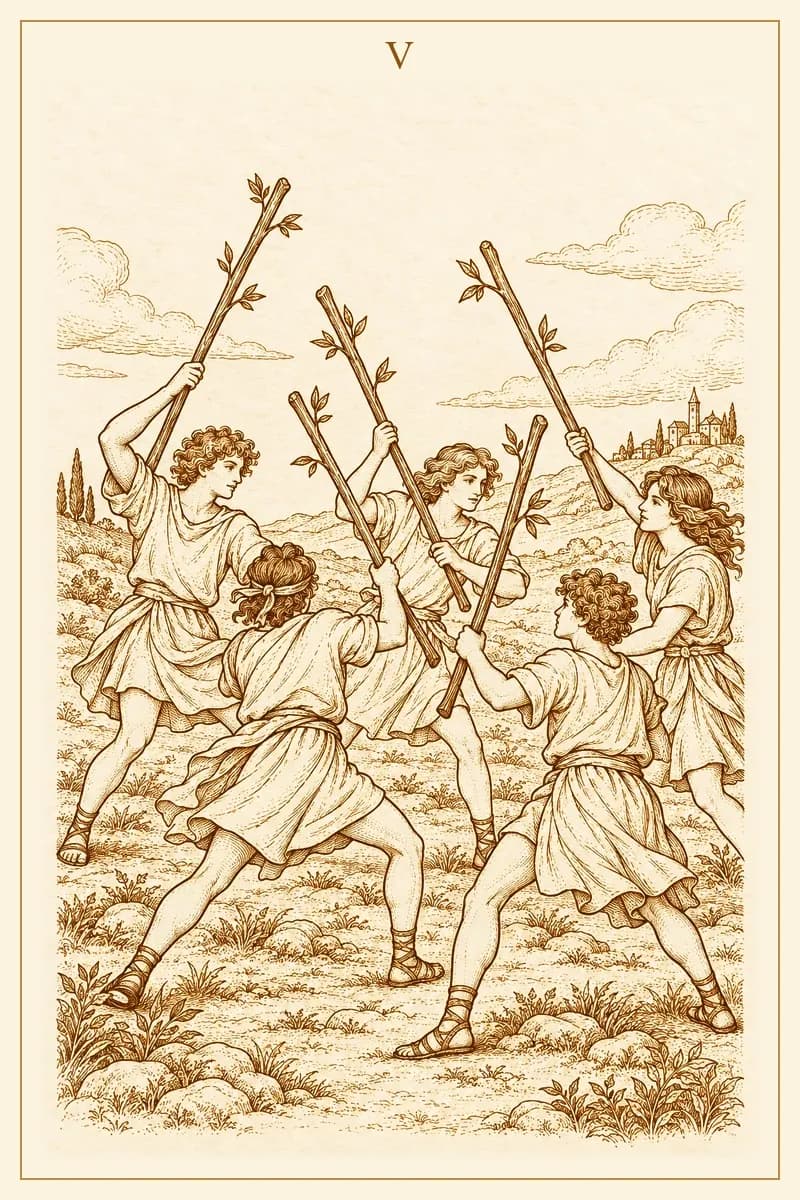
Meaning of The Emperor and Five of Wands Combination: Order Confronting Chaos
Order versus chaos
A newly appointed commander reaches a frontier fort after dark. He has read every report on the region, studied the terrain, and drafted a defense plan on the long ride in. Before he has even unbuckled his saddlebags, he hears it through the wall of the officers' hall: five captains shouting over one another, each slapping a different map on the table, each certain that his own plan is the only one that will hold the pass. Nobody has asked who is in charge. Nobody has stopped long enough to hear the answer.
He stands in the corridor with his own plan rolled under his arm, deciding whether to open the door.
When the Emperor and the Five of Wands appear together, structure walks into a room already full of competing energy. The pairing is about what that structure does next: whether it brings the noise into order or simply adds one more voice to it.
The Core Tension
The general arrives at the battlefield and finds not an enemy but a brawl — his own soldiers fighting each other, sticks raised, everyone convinced their strategy is the right one, nobody listening.
This is the Emperor meeting the Five of Wands.
He has maps. He has years of experience reducing complex, dangerous situations into manageable sequences. He understands the terrain, the resources, the objective. And none of that knowledge is currently useful because the people in front of him are not executing a plan — they are competing for the right to make one.
The Five of Wands is not malicious chaos. It is the chaos of too much energy with insufficient direction. Five figures with five staves, each certain they are correct, none of them coordinated. It is a team meeting where everyone talks and nothing is decided. It is a creative brainstorm that never lands anywhere. It is the friction of strong personalities that haven't been assigned clear roles.
The Emperor is the solution to the Five of Wands — but only if he can resist the urge to simply impose his will, which creates a different kind of disorder. Genuine command does not end the chaos by crushing it. It ends it by giving each competing energy a lane in which to run.
Love & Relationships
In relationships, the Emperor and Five of Wands together describe a dynamic of constant low-level friction — disagreements about direction, competing visions for the future, power struggles that are rarely about what they appear to be about on the surface.
The Five of Wands in love is the argument that keeps coming back in different forms. You resolve the question of where to spend holidays and two weeks later you're arguing about money, and underneath both is the same unresolved question: who leads here, and in what domains? That foundational question, unaddressed, generates endless surface-level skirmishes.
The Emperor arrives with the capacity to establish order — but in a partnership, authority must be negotiated, not installed. The Emperor's instinct is to declare the structure: this is how we will operate. The Five of Wands resists that declaration because the competing energies in this combination haven't yet agreed that any single authority is legitimate.
What this pairing asks of both parties is a genuine, possibly uncomfortable, conversation about structure. Not who wins arguments but how decisions are made. Not who is right but who is responsible for which domains. The Emperor's greatest gift in a chaotic relationship is not dominance — it is clarity.
If you are single, this pairing can describe your own internal conflict about what you want from a partner: the competing narratives inside you about independence versus structure, passion versus stability, the life you have versus the life you think you should want.
Career & Purpose
This is where the Emperor and Five of Wands combination most clearly earns its reputation for difficulty — and for transformative potential when handled well.
Professionally, Five of Wands energy describes a workplace or project environment where everyone is capable, everyone has opinions, and the absence of clear authority or process has allowed those opinions to become a form of combat. Meetings become performance. Decisions made in one room get relitigated in another. Priorities shift based on whoever spoke last.
The Emperor in this environment represents either the leader who is being called to impose genuine clarity, or the aspiration for such a leader. This is not about eliminating dissent — healthy teams argue. This is about establishing the difference between productive conflict and circular confusion.
The practical intervention this pairing points toward: define who decides what, and make it public. Not consensus on every decision (the Five of Wands has already demonstrated where that leads) but clear accountability at clear decision points. The Emperor does not need everyone to agree with him. He needs everyone to know where the structure is, so they can push against it intelligently rather than flailing in all directions.
Watch for the temptation to interpret "imposing order" as "eliminating competing voices." The Five of Wands contains energy that is genuinely useful — innovation, multiple perspectives, the willingness to challenge assumptions. The Emperor's job is not to extinguish it but to channel it.
Shadow Side
The shadow of this combination points in two directions, and both are worth examining.
The first shadow is the Emperor's: using the genuine chaos of the Five of Wands as justification for increasingly authoritarian control. Every time disorder appears, the response is a tighter grip. The rules become more rigid. The space for input shrinks. Eventually, what was a brawl becomes a silence — and silence is not the same as order.
The second shadow is the Five of Wands': using perpetual competition as a way of avoiding the accountability that comes with genuine authority. If everyone is always competing, no one is ever responsible for outcomes. The chaos becomes protective. Nobody led, so nobody failed.
The combined shadow asks: are you fighting because you genuinely disagree, or because the fight itself is easier than making a decision and being held to it?
Action Steps
- 1Map the conflicts currently active in your life — professional, personal, or internal. For each one, identify whether the dispute is about substance or about who gets to decide. Clarity on this distinction changes what you do next.
- 2In any group context this week, practice the Emperor's move: not weighing in on every point, but identifying the decision that actually matters and making it clearly. Let the smaller skirmishes resolve themselves.
- 3Locate one area where you have been generating noise rather than direction. Choose one position, state it clearly, and hold it — not aggressively, but without retreating when challenged.
- 4Scattered energy and structured authority are in direct friction here. Neither is entirely right: the Emperor without the challenge of the Five of Wands becomes stagnant, and the Five of Wands without the Emperor's direction becomes exhausting. The work is finding how clarity can emerge from genuine competition — not by silencing the competing voices, but by giving them a structure within which the best argument can actually win.
Related Pairings
Continue through published pairings that share The Emperor or Five of Wands.
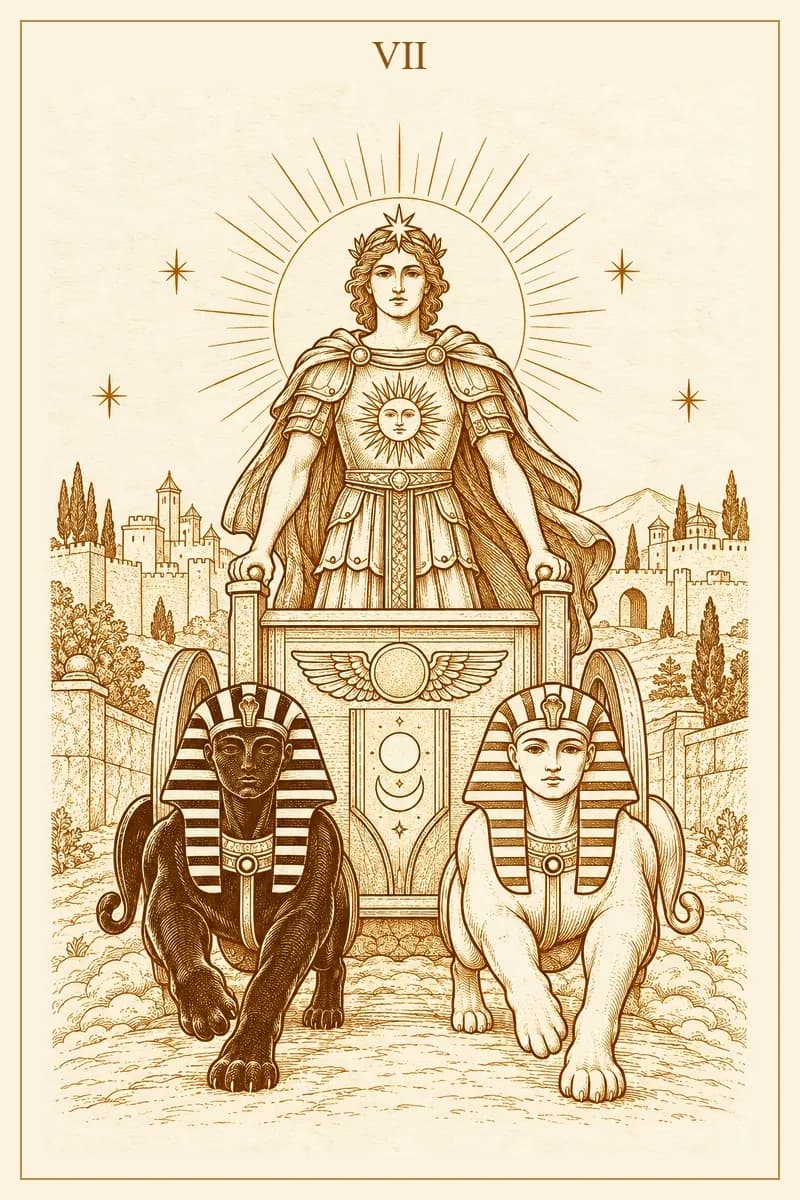
Structured forward momentum
Meaning of The Emperor and The Chariot Combination: Authority in Motion
Contested momentum
Meaning of The Chariot and Five of Wands Combination: Drive Through the Storm
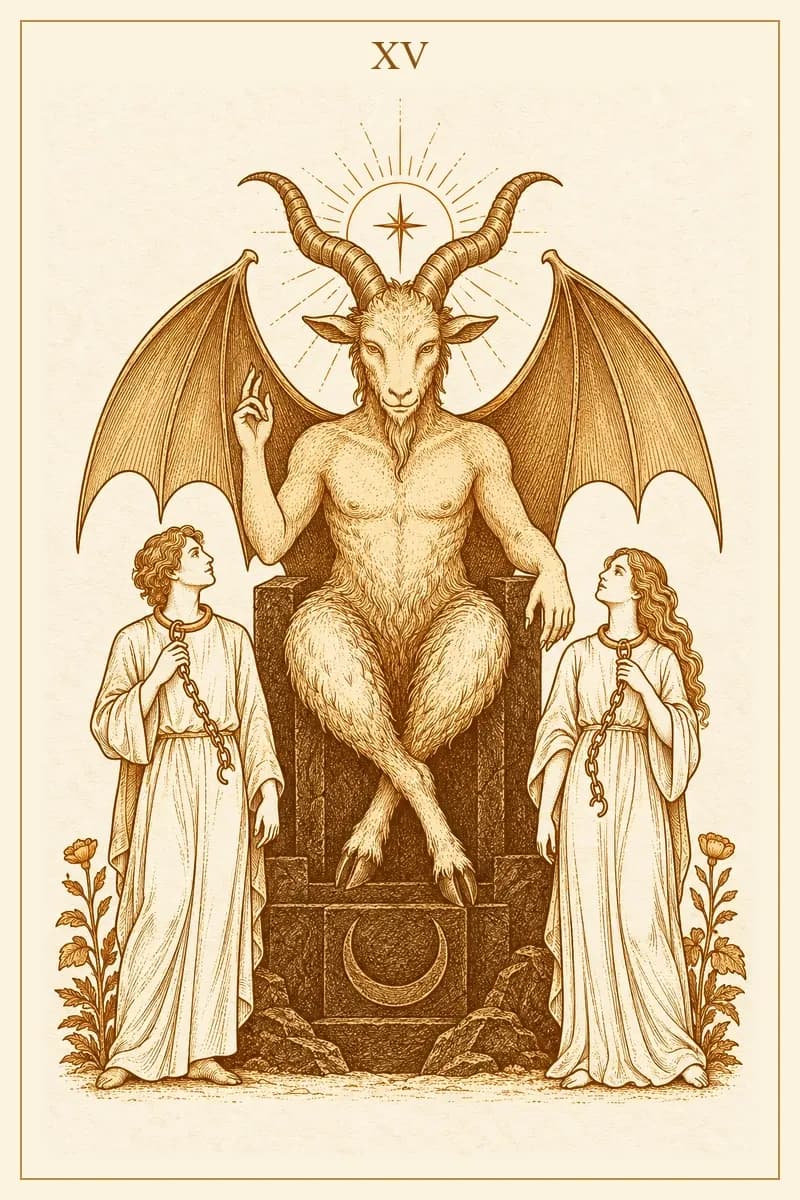
Authority versus control
Meaning of The Emperor and The Devil Combination: When Authority Becomes a Cage
Toxic competition
Meaning of The Devil and Five of Wands Combination: Toxic Competition
Control vs release
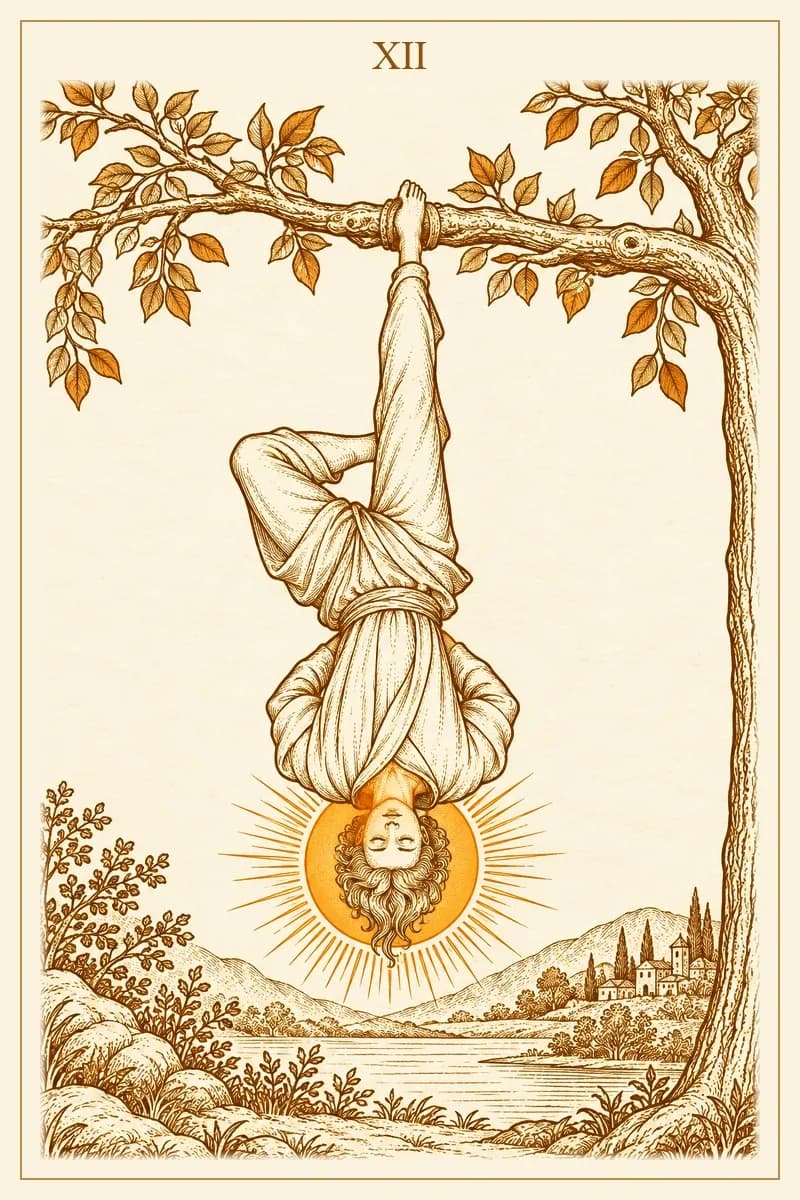
Meaning of The Emperor and The Hanged Man Combination: When Control Meets Surrender
Outer vs inner authority
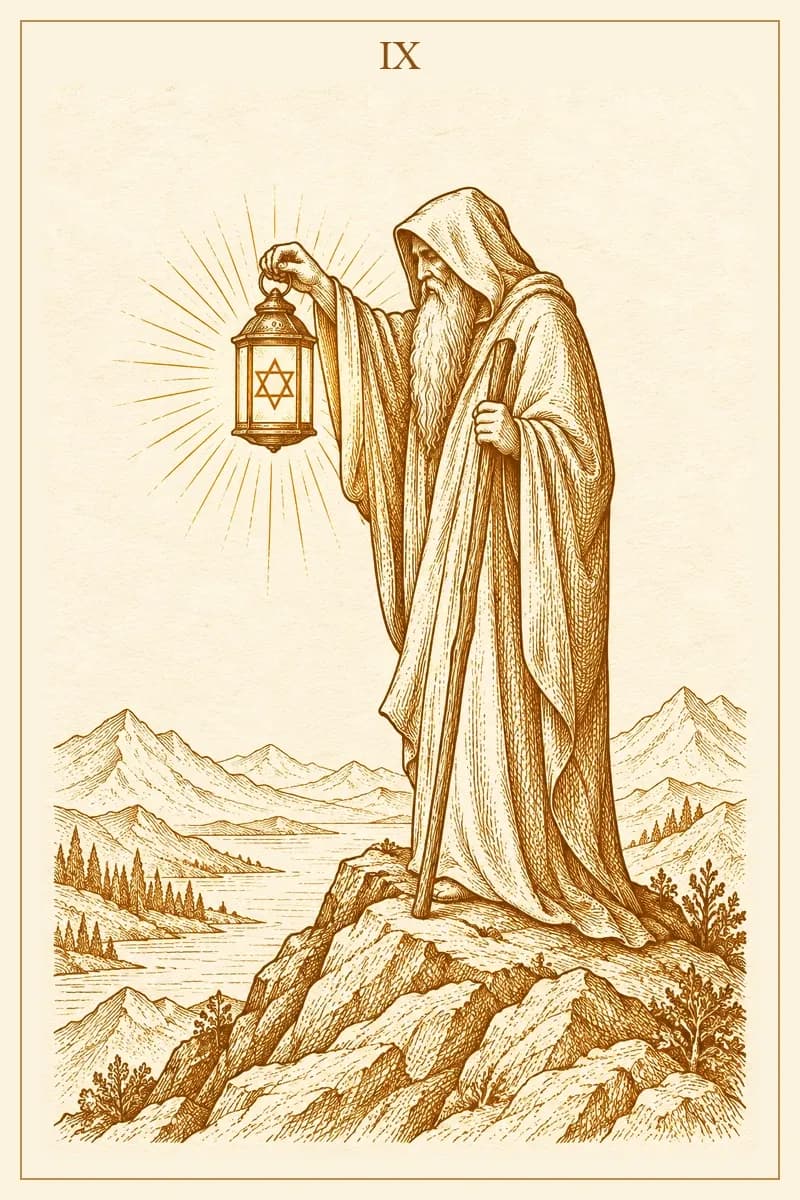
Meaning of The Emperor and The Hermit Combination: Command Meets Solitude
✦ Bring it to the cards ✦
Bring The Emperor and Five of Wands into your own reading
Use this pairing as a starting point, then let a spread listen to the situation that is actually yours.
Begin a contextual reading