
Card Combination
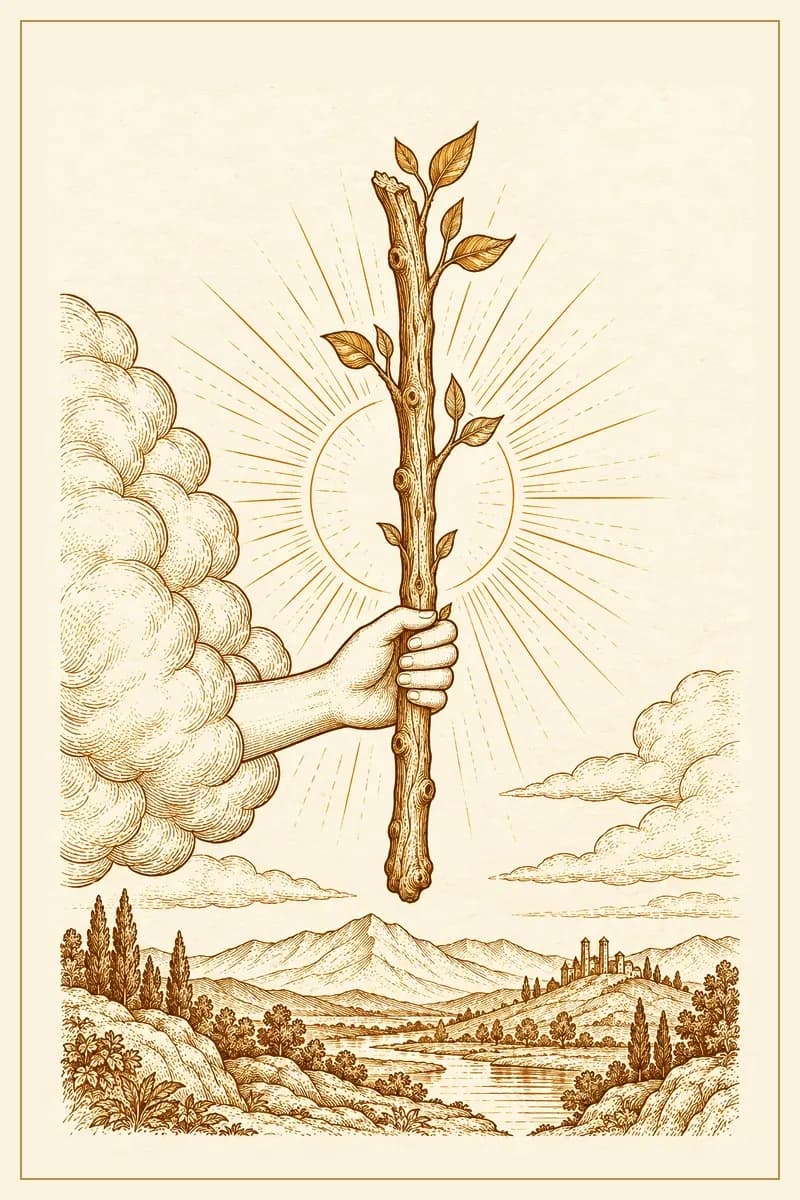
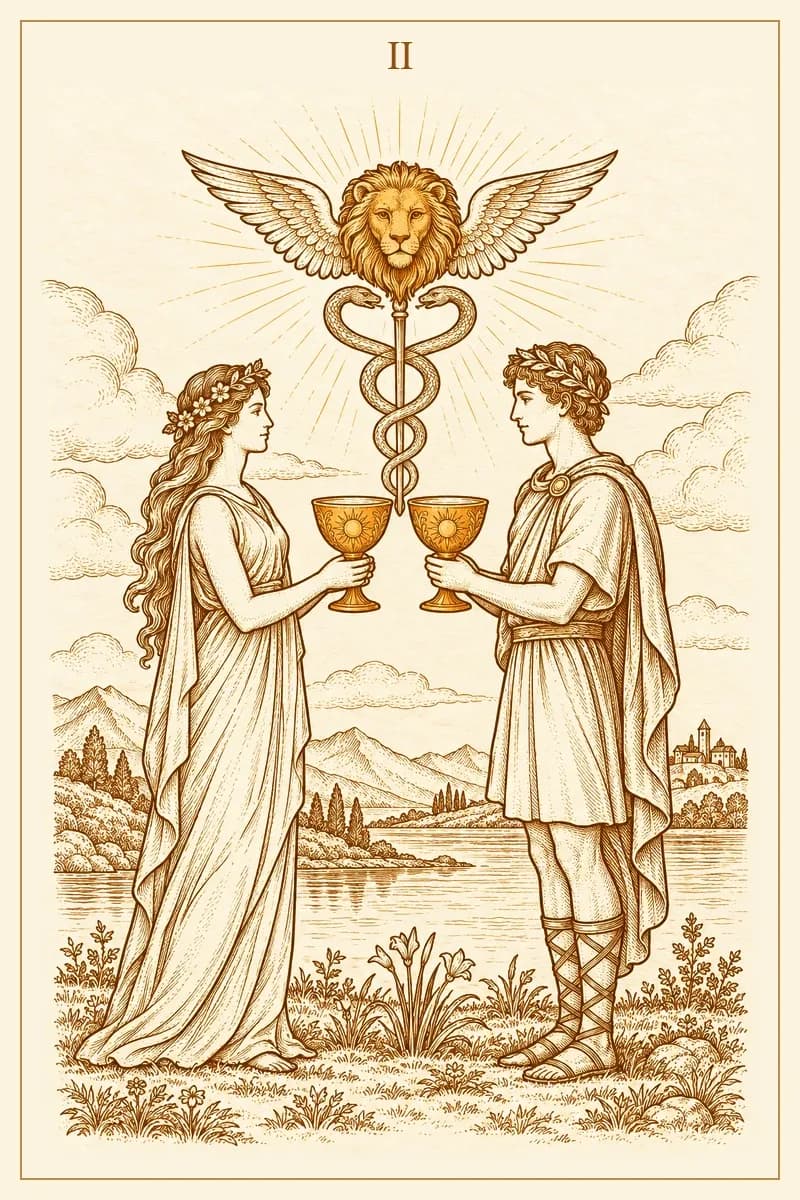
Ace of Wands and Two of Cups Tarot Combination: Passion Meets Partnership
Creative passion channeled through genuine human connection and partnership
She has been rehearsing the monologue alone in her apartment for three weeks — pacing the kitchen, projecting to the back wall of an imaginary theater, adjusting every pause and breath mark until the performance feels airtight. Then on the first day of rehearsal, her scene partner walks in, reads the opening line differently than she expected, and everything she prepared cracks open into something far more alive than what she had polished in solitude.
The Core Tension
The Ace of Wands is the solo performer — electric, fully committed, burning with the need to express something that has been building backstage for too long. The Two of Cups is the moment the curtain rises and another actor is standing there, equally committed, equally ready, and the scene becomes a duet neither performer could have scripted alone.
The tension is between individual vision and collaborative magic. A solo performance can be technically flawless, but theater exists in the space between people. The glance exchanged mid-scene, the improvised half-second pause that makes the audience hold its breath, the chemistry that transforms two memorized scripts into a single living story — none of this happens alone.
This combination asks whether you can let your creative fire be shaped by another person without feeling diminished. The actor who refuses to listen to her scene partner delivers a monologue, not a scene. The one who listens too much disappears into the other person's performance. The goal is two distinct voices creating something neither could produce solo.
Love & Relationships
This is a spotlight-bright romantic combination. The Ace of Wands carries desire that has been building in the wings, waiting for its entrance cue. The Two of Cups provides the scene partner who makes that entrance meaningful — not an audience watching from a distance, but someone stepping onto the same stage with matching commitment.
New relationships under this influence feel like opening night — nerves, excitement, the electric awareness that something is happening in real time that cannot be rehearsed or repeated. There is a mutual recognition that goes beyond surface attraction. You see each other's creative spirit, not just the costume.
For existing relationships, this pairing stages a revival. A production that had grown stale gets a new director, new lighting, and both leads rediscover why they auditioned for these roles in the first place. Plan something together that requires creative collaboration — redecorating a room, cooking an ambitious meal, building something with your hands.
Singles should pay attention to who makes their creative energy feel amplified rather than threatened. The right scene partner does not compete for center stage — they make the whole stage feel larger.
Career & Purpose
Professionally, this is the combination that produces the best creative partnerships. Think of the screenwriting duo, the co-founders who finish each other's pitches, the mentor-mentee relationship that evolves into genuine collaboration. The Ace's raw creative vision finds a partner who not only understands it but adds dimensions the original vision lacked.
If you have been working solo, consider bringing someone into the production. A collaborator, a co-presenter, an accountability partner who shares your professional passion. The Two of Cups does not dilute your vision — it gives your vision someone to play against, and the resulting work carries a depth that solo projects often miss.
For job seekers, this combination favors interviews where you demonstrate chemistry with the interviewer. Show that you can riff, respond, and build on someone else's ideas in real time. Companies hire performers who elevate the whole cast, not just their own scenes.
Shadow Side
The shadow of this combination is the performer who becomes so intoxicated by the chemistry with their scene partner that they forget the play has other acts. You pour everything into the relationship — romantic or professional — and neglect your own solo development. Your creative identity becomes inseparable from the partnership, and if the partnership ends, you cannot remember how to perform alone.
There is also the danger of casting someone in a role they did not audition for. The Ace's passionate energy can project qualities onto the Two of Cups' willing openness, creating a fantasy partnership that exists only in your directorial imagination. Make sure you are responding to who the other person actually is, not the character you have written for them.
Watch for the tendency to rush past the rehearsal period. Great scenes are built through trust developed over time, not through the intensity of a single read-through.
Action Steps
- 1Identify your scene partner. Name one person — romantic interest, colleague, friend — whose presence makes your creative energy feel more alive. Reach out to them this week with a specific invitation to collaborate on something, even something small like brainstorming over coffee.
- 2Rehearse vulnerability. In one conversation this week, share an unfinished idea or an uncertain feeling with someone you trust. Do not polish it first. Let them see the rough draft and notice how their response shapes what the idea becomes.
- 3Give the other person a line. In your next collaborative moment, deliberately hold back your own contribution and ask the other person to go first. Listen to their complete thought before adding yours. Notice how the scene changes when you are not always delivering the opening monologue.
Related Pairings
Continue through published pairings that share Ace of Wands or Two of Cups.
ignition at speed
Meaning of Ace of Wands and Eight of Wands Combination: Full Throttle Forward
dynamic tension
Meaning of Ace of Wands and Page of Wands Combination: Raw Spark Meets Restless Hands
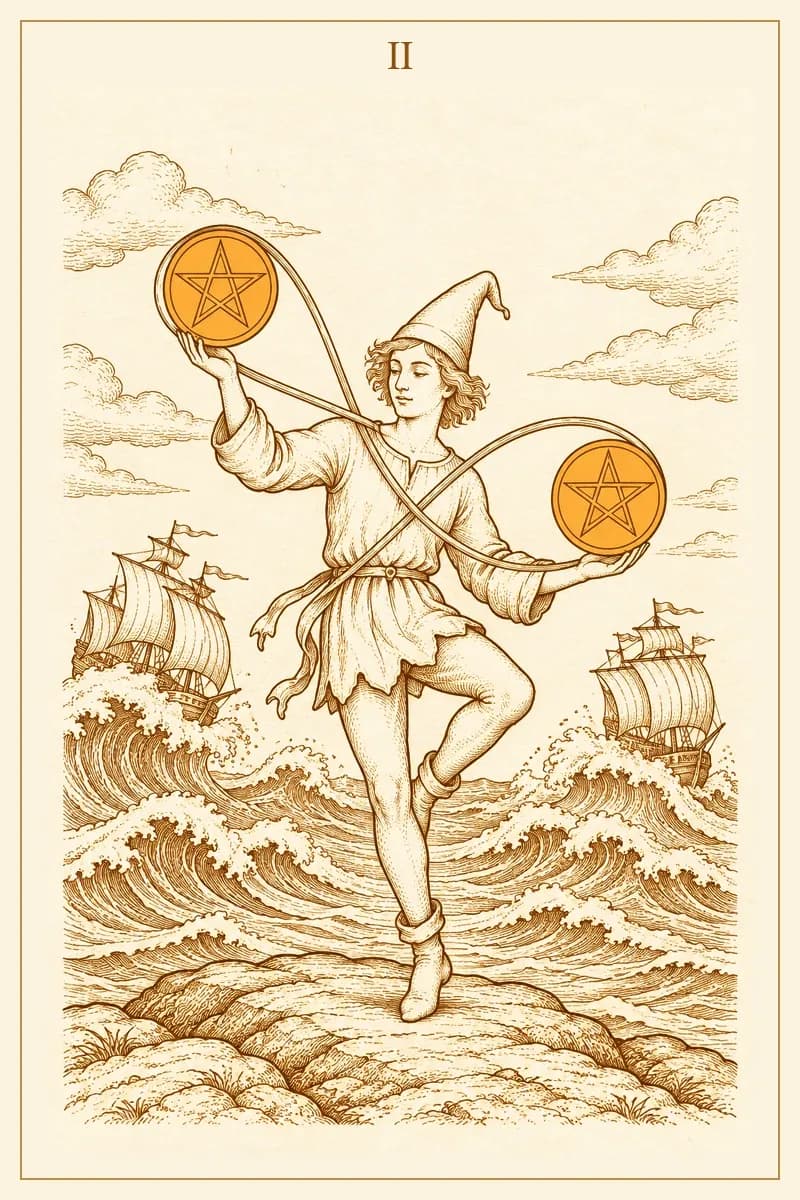
maintaining genuine connection while managing the logistics of shared life
Meaning of Two of Cups and Two of Pentacles Combination: Love in Motion

ignition meets mastery
Meaning of Ace of Wands and King of Wands Combination: Raw Fire Meets Mastery
✦ Bring it to the cards ✦
Bring Ace of Wands and Two of Cups into your own reading
Use this pairing as a starting point, then let a spread listen to the situation that is actually yours.
Begin a contextual reading